
Get Free Content Sample

 Add as preferred on Google →
Search Engine Optimization, or SEO, helps build organic traffic by optimising your business website for higher search rankings. According to AHREFS, “The top 3 organic Google results receive 68.7% of all clicks on the search page.” So, these rankings highly impact the visibility of your brand’s website.
On the other hand, Pay-Per-Click, or PPC purchases visibility through paid ads. In this case, you have to pay a fee each time a user clicks on the ad you’re running.
While SEO delivers more sustainable and long-term value, PPC provides instant, targeted results. But which one between pay per click vs. SEO is the best-suited strategy for your business? To answer that, you must first discover PPC and SEO meanings in detail and what their impact is as marketing strategies in 2026.
Search Engine Optimization vs. Pay per Click: How are they Different?
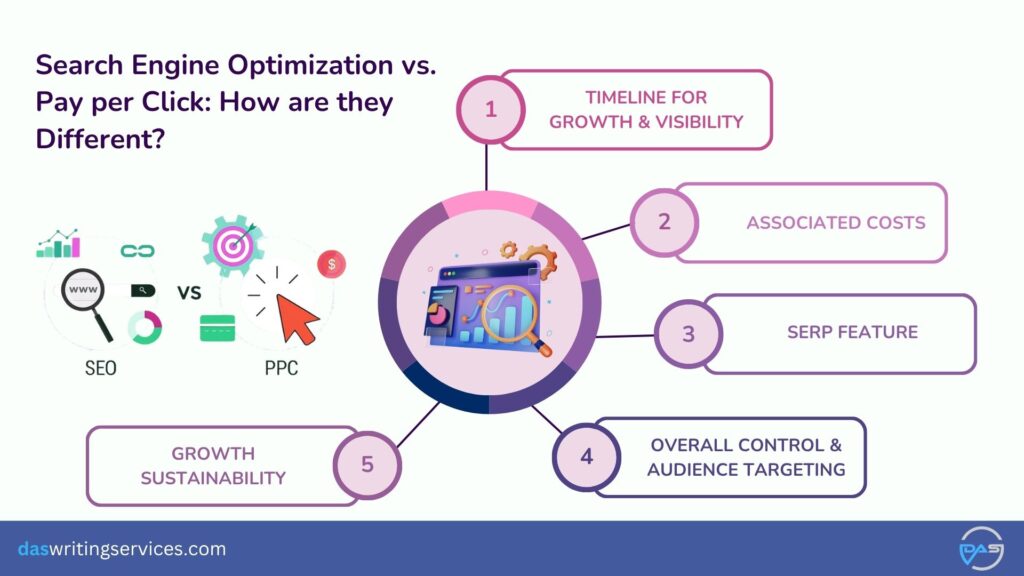
Search Engine Optimization (SEO) prioritises earning free, organic rankings over a period of time through helpful content and site optimisation. Pay Per Click (PPC) lets businesses instantly buy visibility. It boosts a content piece’s position, making it appear at the top of the search results by charging a fee for each click.
Here are the key differences between organic SEO vs. pay per click routes:
- Timeline for Growth & Visibility
PPC brings immediate traffic. As soon as your campaign goes live, it takes the top spots, bringing in traffic.
SEO, on the other hand, takes time. This timeline can often span weeks or even months. Time goes into dedicated research, optimisation efforts, and achieving high ranks organically.
But SEO helps build compounding, long-term visibility while PPC traffic stops once the funds stop pouring in.
- Associated Costs
For SEO, there is an initial requirement of time and resource investment. This means that the concerned brand has to hire a marketing agency or a specialist. But when the strategies are ideally implemented, and rankings are in place, SEO optimised content generates free clicks in the long term, even months after publication.
PPC, however, requires consistent budget allocation. As soon as you stop paying for ads, you will see your traffic decline (and no reach in some cases).
- SERP Feature
PPC ads are marked as “Sponsored” or “Ad,” and they occupy the top slots of a Search Engine Results Page or SERP. On the other hand, organic SEO results may appear directly below the paid advertisements.
SEO improves brand trust and credibility as potential customers don’t see a sponsored tag next to the Meta title on the SERP. It appears to be the ‘real match’ to their search.
- Overall Control & Audience Targeting
PPC wields granular control over who is shown the ads. This option allows you to target users based on filters like location, specific keywords, and devices they use.
However, SEO is much broader as it relies on keyword intent, structural site health, and relevance of the content as per search intent.
- Growth Sustainability
Wondering how to ensure sustainable growth for your business through content marketing? Search Engine Optimisation is the answer if sustainable growth is your priority. With the initial work done, your brand will be able to reap the rewards for a long time.
Building a brand’s voice and image organically takes time, but it pays off big time. It’s true that you get an incredible boost with PPC; it’s usually for a shorter time period. This time frame stays as long as you pay for sponsored listings.
So, if you’re looking to improve your organic traffic, choose us at Das Writing Services for professional SEO writing that actually fetches results. Let us help your brand steadily and surely build authority, as it’ll result in easily sustainable growth in the long run.
Pay per Click vs. SEO: Which One is better for your Business in 2026?
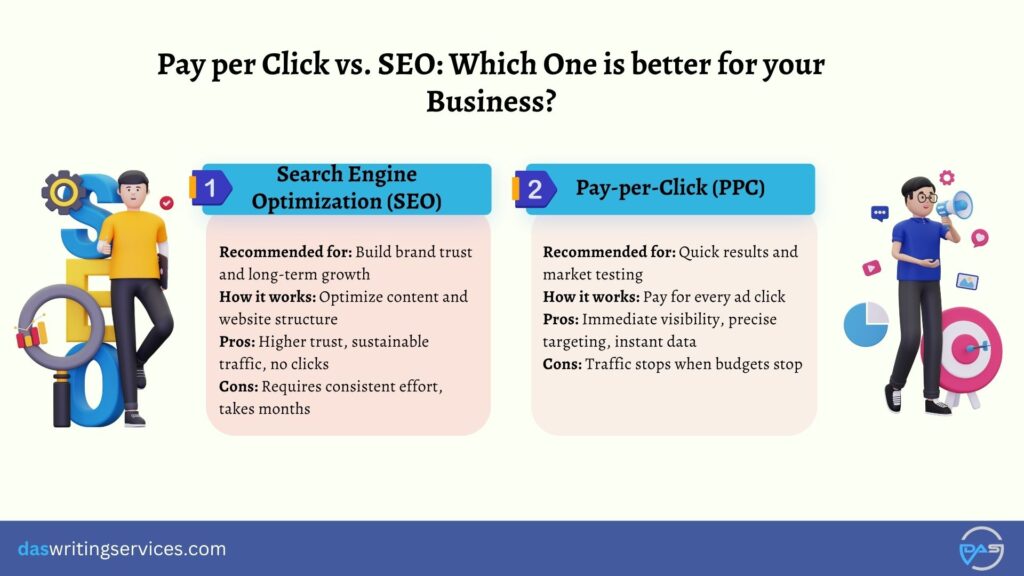
PPC brings traffic and quick leads for faster revenue. But SEO builds sustainable, high-ROI organic visibility. This trust factor supports long-term growth and accounts for more returning, loyal customers. Several businesses implement both strategies by utilising PPC for traction and investing the profits into SEO efforts.
But if you were to choose either one, here are the conditions for each scenario:
- Search Engine Optimization (SEO)
- Recommended for: Building trusted brand credibility; long-term compounding returns, lowering average Customer Acquisition Cost (CAC).
- How it works: Best SEO practices optimise your website’s pre-existing and new content/structure. They rank naturally towards the top of search engine results, without being dependent on the ‘sponsored’ tag.
- Pros: Higher trust from potential customers as organic listings are earned and not bought; sustainable traffic; no cost-per-click.
- Cons: Consistent effort needs to be put in. It usually takes up to several months to a year to organically build traction and see a profitable ROI.
- Pay-per-Click (PPC)
- Recommended for: Quick results (for example, a 30-day time span); for testing out performance and scope within new markets; limited-period seasonal promotions; gaining an edge within highly competitive spaces before SEO efforts take off.
- How it works: Pay a particular fee every time a user clicks on your advertisement on platforms like Google Ads.
- Pros: Immediate top-of-the-page visibility; more control over audience targeting; instant data about performance.
- Cons: You’re essentially ‘renting out’ visibility, which means traffic will stop the moment your budget is pulled back.
Conclusion
SEO is generally better if your goal is sustainable, long-term growth, as it helps in building permanent brand equity and improves user trust. In several scenarios, searchers even skip past the sponsored posts in favour of organically ranking content. SEO helps lower your overall customer acquisition cost to nothing over time.
While PPC does yield immediate traffic, you’re required to pay every single time a user clicks, with the visibility disappearing the moment the campaign ends. So, between pay per click vs. SEO, investing in the latter shall help you build authority and possibly set up a sustainable consumer base.
At Das Writing Services, seasoned, in-house SEO writers shall deliver quality and quantity, guaranteed to convert your visitors to customers! In the evolving content era of 2026, make every word your brand puts out truly resonate and rank.
Frequently Asked Questions
Which is more expensive between search engine optimization vs. pay per click?
Pay Per Click is more expensive, as it requires a continuous, long-term strategy to see any growth. You have to pay every single time a user clicks on the link. However, even though Search Engine Optimization requires a higher upfront investment and months of effort, the organic clicks cost nothing. This makes it significantly cheaper in the long term.
Is it worth investing in SEO writing in 2026?
Yes, SEO writing remains valuable in 2026 as it establishes long-term traffic sustainability for businesses. Its purpose has recently been shifting and evolving, so you’re no longer only writing for traditional search rankings. SEO also optimises for AI overviews and AEO.
Can Pay per Click ever replace SEO?
No, Pay-Per-Click cannot replace Search Engine Optimization. PPC may provide instant, targeted traffic, but it stops when you stop paying. But SEO builds long-term, sustainable authority which compounds in the long run. The two serve separate functions and can be incredibly effective when used as complementary strategies.

Subhodip Das is the founder and CEO of Das Writing Services Pvt. Ltd. He has an experience of 12 years in the field of Digital Marketing and specialises in Content Writing and Marketing Strategies. He has worked with well-established organisations and startups helping them achieve increased Search Engine Rank visibility. If you want to grow your business online, you can reach out to him here.


