
Get Your Website Content Audit

 Add as preferred on Google →
A newsletter is a publication sent regularly to a group of subscribers through email or in print. It helps businesses, creators, and organisations share useful information such as industry updates, tips, company news, product announcements, or personal insights.
According to Beehiiv, publishers sent 28 billion emails last year and reached 255 million unique readers.
For creators, newsletters help build a loyal community and give them ownership of their audience without relying on social media platforms. For example, a creator newsletter can share weekly insights, links, and personal updates to build a loyal audience.
For businesses, this means supporting customer retention, nurturing leads, and encouraging conversions by delivering valuable, relevant content rather than focusing solely on sales.
This blog covers everything you need to know about newsletters, including their purpose, benefits, types, key elements, content ideas, best practices, common mistakes to avoid, and more.
What Is the Purpose of a Newsletter?
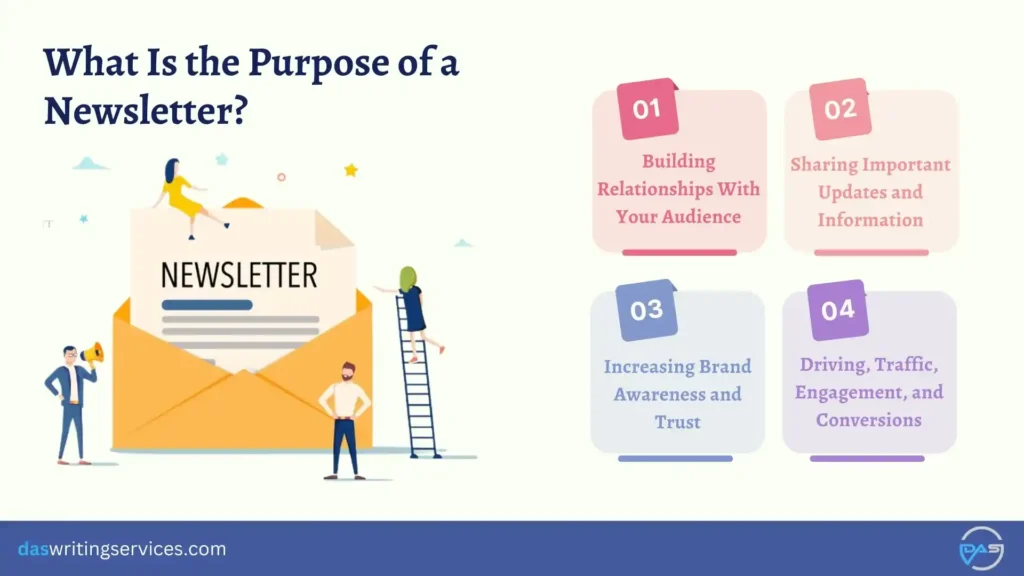
Do you know what is the purpose of a newsletter? A newsletter helps businesses and creators communicate regularly with their audience.
It is used to share valuable information, strengthen relationships, increase brand visibility, and encourage engagement through direct communication.
- Building Relationships With Your Audience
Newsletters help businesses stay connected with subscribers by consistently delivering useful and relevant content.
This ongoing communication builds trust, keeps the audience engaged, and creates stronger long-term relationships that can lead to greater customer loyalty and retention.
For example, a fitness brand can send weekly workout tips and check-in emails to keep subscribers engaged.
- Sharing Important Updates and Information
Businesses use newsletters to share product launches, company news, industry updates, events, special offers, and helpful resources.
Since subscribers choose to receive these emails, newsletters ensure important information reaches an interested audience directly.
For example, Loom uses its product update newsletter to keep customers informed about new features and improvements.
- Increasing Brand Awareness and Trust
Regular newsletters keep a brand visible in subscribers’ inboxes and reinforce recognition over time.
Sharing valuable insights and expertise helps establish credibility, build trust, and position the business as a reliable source of information within its industry.
According to Beehiiv, open rates exceeded 41% in 2025, showing that strong inbox engagement remains possible.
- Driving Engagement, Traffic, and Conversions
Newsletters encourage readers to visit websites, read blogs, explore products, or take specific actions through clear calls-to-action.
By delivering relevant content, they increase engagement, drive website traffic, generate leads, and support customer conversions. According to Designmodo, good email conversion rates often range between 2% and 3%.
At Das Writing Services, we craft engaging newsletters that inform, inspire, and convert. Let us help you connect with your audience through professionally written content tailored to your brand and business goals.
What is the Importance of Newsletters for Companies?
Newsletters are an effective communication and marketing tool that helps businesses stay connected with their audience.
They provide a direct channel for sharing updates, building trust, promoting products or services, and maintaining long-term engagement. Here are the key benefits:
- Direct Access to Your Audience
Newsletters give businesses direct access to subscribers who have chosen to receive their content.
Unlike social media platforms that rely on changing algorithms, newsletters reach audiences directly in their inboxes, making communication more reliable, personal, and effective.
- Creating Long-Term Customer Loyalty
Consistently providing helpful information, updates, and insights helps build trust with subscribers. Over time, this trust strengthens customer relationships, encourages repeat interactions, and increases loyalty, making readers more likely to engage with and support the brand.
- Supporting Marketing and Communication Goals
Newsletters help businesses promote products, share announcements, generate leads, and drive website traffic. They support broader marketing strategies by delivering targeted messages that improve brand awareness, engagement, and conversion opportunities.
- Maintaining Consistent Audience Engagement
Regular newsletters keep businesses visible and relevant to their audience. By sharing fresh content on a consistent schedule, organisations can maintain interest, encourage ongoing interaction, and keep subscribers informed about important developments and opportunities.
Need newsletters that your subscribers actually read? We create compelling, audience-focused newsletter content that drives engagement, builds trust, and keeps your customers coming back for more. Get started with DWS today.
What are the Different Types of Newsletters?
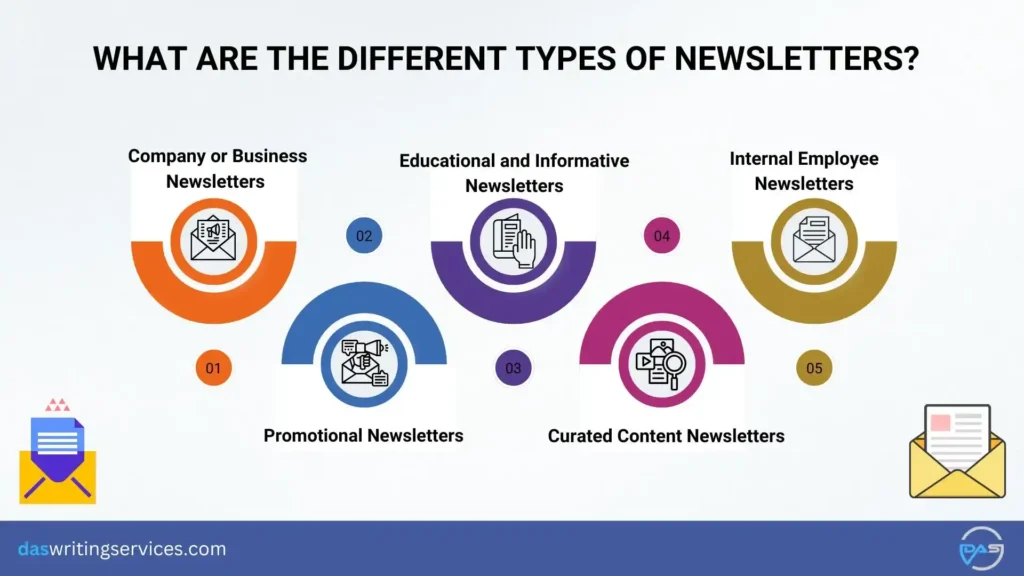
Newsletters vary based on their purpose and audience. Different types help businesses and organisations share information, engage subscribers, build relationships, and achieve communication goals effectively.
- Company or Business Newsletters
Company newsletters focus on sharing business-related updates with customers and subscribers.
These often include company news, product updates, achievements, upcoming events, and industry insights. Their main goal is to keep audiences informed while strengthening brand awareness and customer relationships.
For example, a software company may send feature updates, product news, and customer stories in one newsletter.
- Promotional Newsletters
Promotional newsletters are designed to support sales and marketing efforts. They highlight new products, special offers, discounts, seasonal campaigns, and exclusive deals.
When balanced with valuable content, promotional newsletters can encourage customer action without appearing overly sales-focused. For example, Graza uses multiple CTA buttons to guide readers toward recipes and product links.
- Educational and Informative Newsletters
These newsletters provide useful knowledge, expert advice, tips, guides, and industry updates.
Businesses often use them to demonstrate expertise and help subscribers solve problems or learn something new. For example, a newsletter can share how-to guides, expert tips, or industry lessons to educate subscribers.
- Curated Content Newsletters
Curated newsletters gather valuable content from multiple sources and present it in one place. They may include articles, reports, industry news, research findings, or trending topics.
Subscribers benefit from receiving relevant information without having to search for it themselves. For example, a weekly digest can round up articles, reports, and research from trusted sources in one email.
- Internal Employee Newsletters
Internal newsletters are distributed within an organisation to keep employees informed and aligned. They commonly feature company announcements, policy updates, team achievements, workplace initiatives, and important reminders.
These newsletters help improve communication, engagement, and collaboration across teams. For example, HR can share policy updates, team achievements, and reminders in a monthly internal email.
From product launches and promotions to company updates and festive greetings, DWS delivers impactful newsletter content designed to strengthen customer relationships and elevate your brand presence. Contact us today.
What are the Things to Include in a Newsletter?
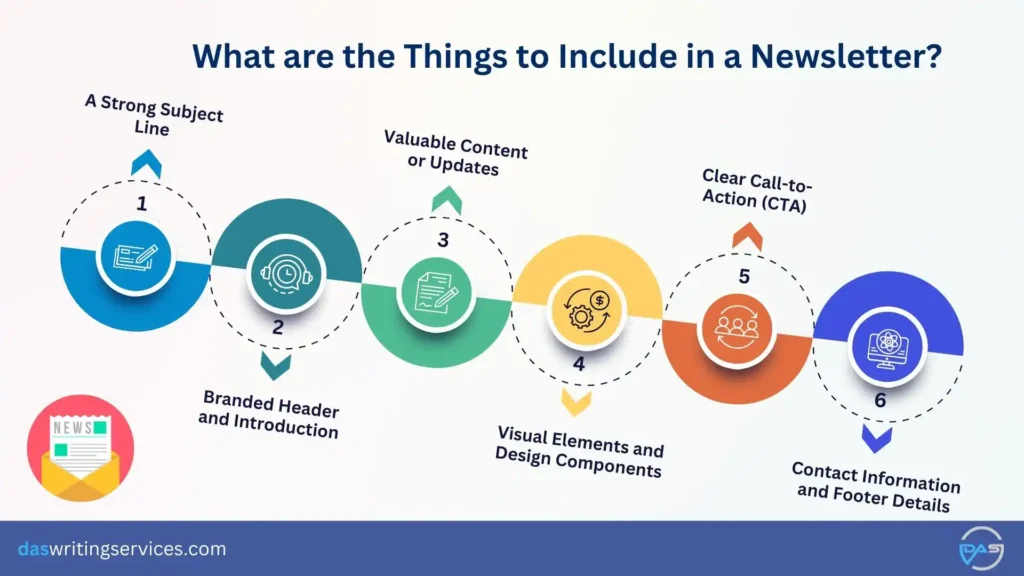
Do you know what to include in a newsletter? A successful newsletter combines useful content with a clear structure that makes it easy to read and engage with.
From the subject line to the footer, every element should provide value, reinforce branding, and guide readers toward meaningful actions.
- A Strong Subject Line
The subject line is the first thing subscribers see and often determines whether they open the email.
It should be clear, concise, and relevant while highlighting the value readers will receive. Strong subject lines create interest and encourage higher open rates.
- Branded Header and Introduction
A newsletter should begin with a recognisable header that includes the company logo, newsletter name, or brand elements.
A brief introduction helps set expectations, welcomes readers, and provides context for the content that follows while reinforcing brand identity.
- Valuable Content or Updates
The main section of a newsletter should deliver information that readers find useful and relevant. For example, a newsletter can include industry news, practical tips, and a brief expert takeaway in one issue.
This may include company news, product updates, industry insights, educational articles, expert tips, event announcements, or curated resources.
High-quality content is the primary reason people subscribe and continue engaging with a newsletter.
Focusing on value rather than constant promotion helps build trust and maintain long-term subscriber interest.
- Visual Elements and Design Components
Images, graphics, and other visual elements make newsletters more engaging and easier to read.
Effective design breaks up large sections of text, improves readability, and supports key messages. A clean, mobile-friendly layout also ensures a better experience across different devices.
- Clear Call-to-Action (CTA)
Every newsletter should include a clear call-to-action that tells readers what to do next.
Whether it is visiting a website, reading a blog post, registering for an event, or exploring a product, a focused CTA helps drive engagement and achieve newsletter goals.
- Contact Information and Footer Details
The footer provides essential information such as contact details, company information, social media links, and an unsubscribe option.
Including these elements improves transparency, supports compliance requirements, and gives subscribers convenient ways to interact with the organisation.
For example, a footer should include contact details, social links, and a clear unsubscribe option.
What to Write in a Newsletter: Content Ideas That Engage Readers
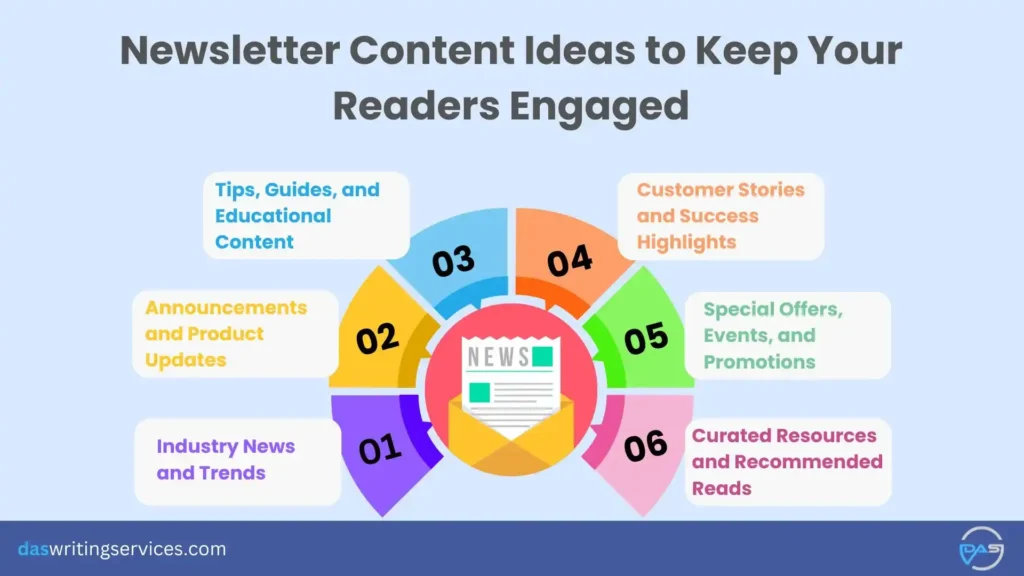
Creating engaging newsletter content requires understanding audience interests. Effective newsletters provide valuable information, education, inspiration, or updates while supporting business objectives.
- Industry News and Trends
Sharing industry news and emerging trends helps subscribers stay informed about important developments in their field.
Providing expert insights or commentary on these updates can also position your business as a trusted source of knowledge and thought leadership. For example, a fintech newsletter can summarise market shifts, regulations, and new tools each week.
- Company Announcements and Product Updates
Newsletters are an effective channel for sharing company milestones, new product launches, feature updates, service improvements, and upcoming initiatives.
Keeping subscribers informed about business developments helps strengthen transparency and maintain customer interest.
- Tips, Guides, and Educational Content
Educational content delivers direct value to readers by helping them solve problems or learn new skills.
Practical tips, how-to guides, expert advice, and best practices can increase engagement while demonstrating your expertise and building credibility. According to Designmodo, welcome emails can reach open rates as high as 83.63%.
- Customer Stories and Success Highlights
Featuring customer testimonials, case studies, or success stories helps showcase real-world results and experiences.
These stories build trust, provide social proof, and demonstrate how your products or services have helped others achieve their goals.
- Special Offers, Events, and Promotions
Newsletters can highlight exclusive discounts, limited-time offers, upcoming webinars, workshops, product launches, or special events.
Sharing these opportunities keeps subscribers engaged and encourages them to take action while feeling valued as part of your audience. For example, a retail brand can announce seasonal discounts and event invites in one promotional issue.
- Curated Resources and Recommended Reads
Curated newsletters bring together useful articles, reports, research, videos, podcasts, and other resources from trusted sources.
By saving readers time and delivering relevant content in one place, curated resources add value and keep subscribers returning for future updates. For example, a weekly newsletter can share top articles, podcasts, and reports from the past seven days.
At Das Writing Services, we combine creativity, strategy, and industry expertise to produce newsletters that generate results. Partner with us to transform your updates into powerful marketing communications.
What are the Tips to Make a Good Newsletter?
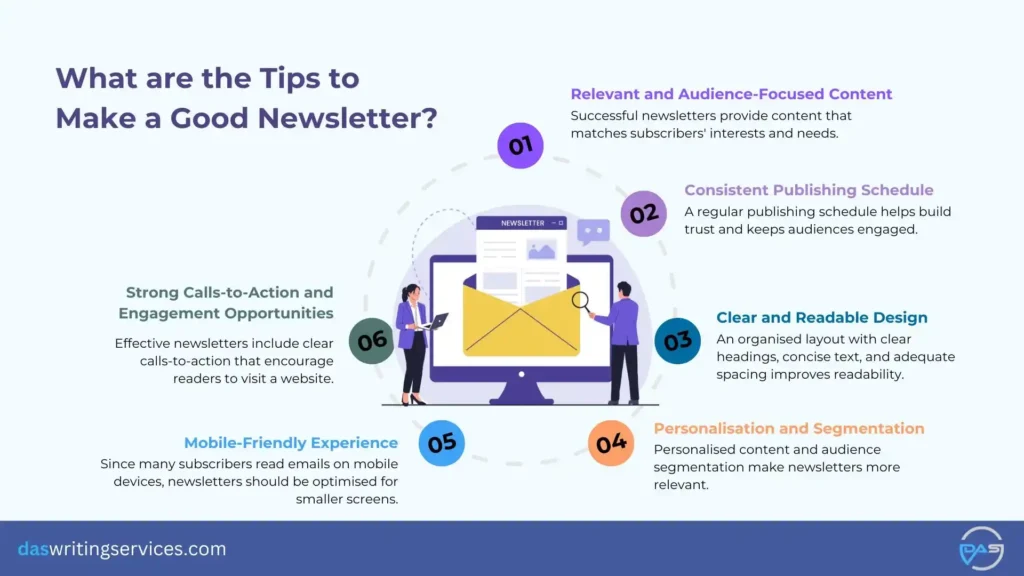
Exploring what makes a good newsletter? A good newsletter provides relevant, valuable content, maintains consistency, and engages readers effectively.
Combining clear design, audience-focused messaging, and strong communication goals helps build trust, strengthen relationships, and encourage subscriber loyalty.
- Relevant and Audience-Focused Content
Successful newsletters provide content that matches subscribers’ interests and needs. Relevant updates, insights, and resources encourage readers to stay engaged and view the newsletter as a valuable source of information.
- Consistent Publishing Schedule
A regular publishing schedule helps build trust and keeps audiences engaged. Whether sent weekly, biweekly, or monthly, consistency ensures subscribers know what to expect and helps maintain brand visibility.
- Clear and Readable Design
An organised layout with clear headings, concise text, and adequate spacing improves readability. A clean design helps readers quickly find important information and enhances the overall user experience.
- Personalisation and Segmentation
Personalised content and audience segmentation make newsletters more relevant. Tailoring messages based on subscriber interests, behaviours, or preferences can increase engagement, open rates, and overall effectiveness.
- Mobile-Friendly Experience
Since many subscribers read emails on mobile devices, newsletters should be optimised for smaller screens. Responsive designs, readable fonts, and easy navigation contribute to a better reading experience.
- Strong Calls-to-Action and Engagement Opportunities
Effective newsletters include clear calls-to-action that encourage readers to visit a website, read additional content, register for events, or explore products and services. These actions help drive engagement and support business goals.
What are the Common Newsletter Mistakes Everyone Must Avoid?
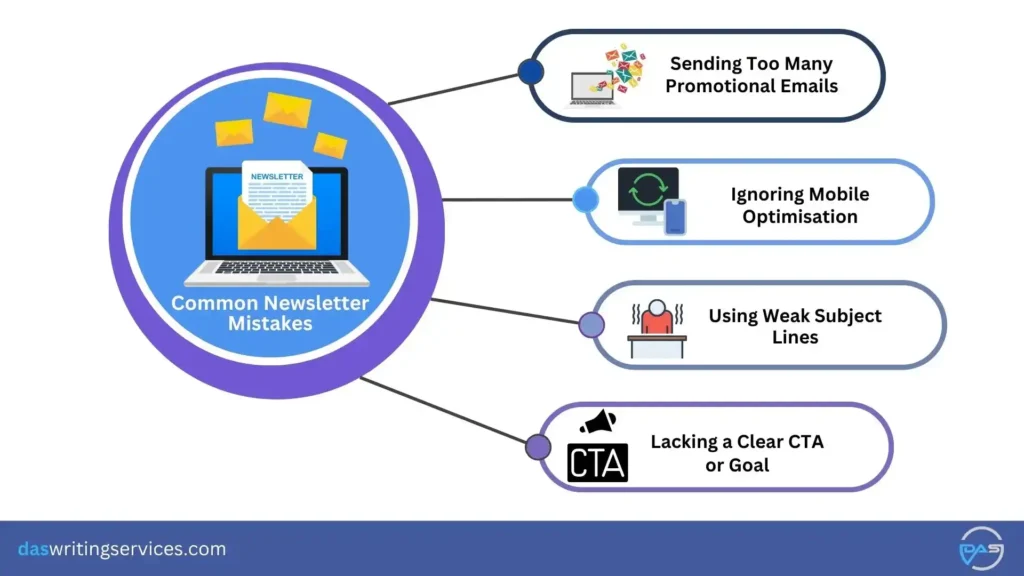
Common newsletter mistakes often reduce engagement and effectiveness, especially when strategy, design, and content are not aligned with reader expectations.
- Sending Too Many Promotional Emails
Overly promotional newsletters can feel repetitive and pushy, reducing trust. A better approach is balancing value-driven content like insights or updates with occasional promotions to maintain engagement. According to Designmodo, healthy unsubscribe rates average around 0.17% for well-maintained lists.
- Ignoring Mobile Optimisation
With most emails opened on mobile devices, poor formatting can harm readability and engagement. A responsive, clean layout ensures content is easy to read across all screen sizes. For example, dense text and small buttons can hurt readability on phones.
- Using Weak Subject Lines
Subject lines decide whether your email gets opened or ignored. Generic or unclear wording reduces curiosity, while concise, value-focused subject lines improve open rates and attract attention. For example, “Update” is weak, while “5 newsletter ideas to boost clicks” is clearer and stronger.
- Lacking a Clear CTA or Goal
Without a clear call-to-action or objective, newsletters lose direction. A focused CTA helps guide readers toward the next step, whether it’s reading more, signing up, or exploring a product. According to Designmodo, good conversion rates usually fall between 2% and 3%.
Whether you need a one-time newsletter or ongoing content support, we create professional, well-structured newsletters that align with your brand voice and marketing objectives. Reach out to DWS now.
How to Measure the Success of Your Newsletter?
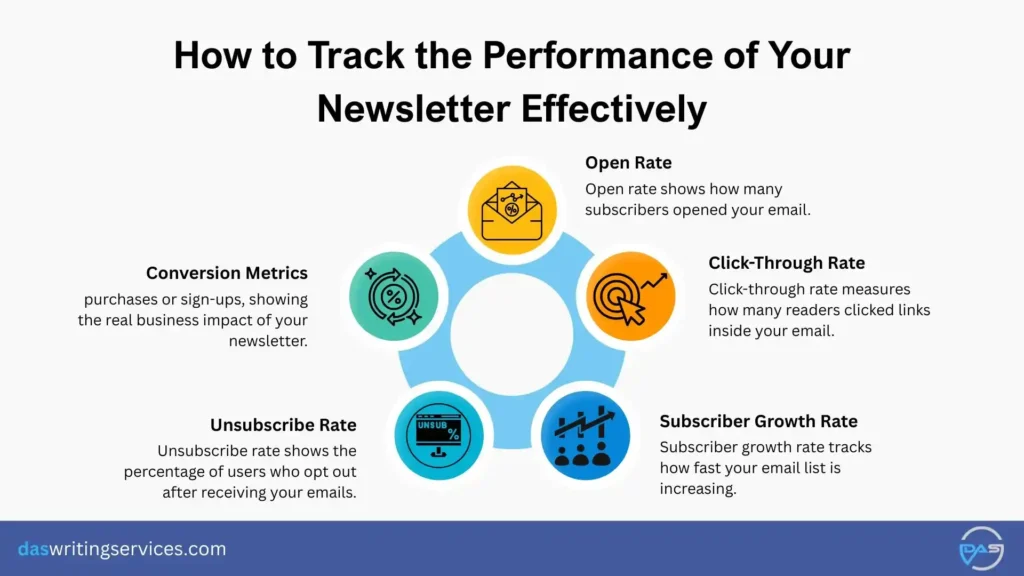
Measuring newsletter success involves tracking key performance metrics like opens, clicks, growth, and conversions.
These insights help evaluate engagement, improve content strategy, and ensure your newsletter consistently delivers value to subscribers.
- Open Rate
Open rate shows how many subscribers opened your email. It reflects subject line effectiveness and overall audience interest in your newsletter content. According to Beehiiv, open rates can exceed 41% for strong newsletter audiences.
- Click-Through Rate
Click-through rate measures how many readers clicked links inside your email. It indicates how engaging and action-driven your newsletter content is. According to Litmus, the average email CTR is around 2.3%.
- Subscriber Growth Rate
Subscriber growth rate tracks how fast your email list is increasing. It helps measure the effectiveness of your sign-up strategies and audience reach. For example, a lead magnet can help grow subscribers from search, blog traffic, or social media.
- Unsubscribe Rate
Unsubscribe rate shows the percentage of users who opt out after receiving your emails. A lower rate indicates better content relevance and audience satisfaction. According to Designmodo, a healthy unsubscribe rate averages around 0.17%.
- Conversion Metrics
Conversion metrics track how many subscribers complete a desired action, such as purchases or sign-ups, showing the real business impact of your newsletter. For example, a newsletter conversion may be a purchase, signup, download, or event registration.
Conclusion
In summary, this blog regarding what is a newsletter? A newsletter is a regularly sent email that helps businesses and creators share updates, insights, and valuable content directly with subscribers.
It builds trust, engagement, and long-term audience relationships while providing a direct communication channel that is not dependent on algorithms.
For businesses, newsletters support brand awareness, lead nurturing, and customer retention by delivering consistent and relevant information.
For creators, they help build loyal communities and maintain direct ownership of their audience across platforms.
Metrics like open rates, click-through rates, and conversions help evaluate success and improve results over time.
Overall, newsletters are a strategic tool that strengthens communication, increases engagement, and drives sustainable growth through meaningful subscriber relationships.
Looking for newsletter content that stands out in crowded inboxes? We help businesses communicate effectively with concise, engaging, and action-driven newsletters. Connect with Das Writing Services and grow your audience today.
Frequently Asked Questions
- What are 5 elements of an effective newsletter?
An effective newsletter includes clear readability, valuable storytelling, audience-focused content, strong calls-to-action, and an attractive, user-friendly design. Together, these elements improve engagement, encourage interaction, and keep subscribers interested in future communications.
- What’s the best way to start a newsletter?
Start by choosing reliable email marketing software, creating subscription forms, building an email list, designing a professional template, and writing valuable content. Always preview and test your newsletter before sending it.
- What is the easiest program to create a newsletter?
Substack is often considered the easiest newsletter platform because it requires minimal setup and focuses on writing. Beehiiv offers simple growth tools, while Mailchimp is ideal for businesses needing templates and automation.
- What content works best in newsletters?
The most effective newsletter content includes educational articles, company updates, industry insights, behind-the-scenes stories, exclusive offers, event announcements, and interactive elements. Valuable and relevant content keeps readers engaged and encourages long-term subscriptions.
- Should my newsletter be mobile-friendly?
The most effective newsletter content includes educational articles, company updates, industry insights, behind-the-scenes stories, exclusive offers, event announcements, and interactive elements. Valuable and relevant content keeps readers engaged and encourages long-term subscriptions.

Subhodip Das is the founder and CEO of Das Writing Services Pvt. Ltd. He has an experience of 12 years in the field of Digital Marketing and specialises in Content Writing and Marketing Strategies. He has worked with well-established organisations and startups helping them achieve increased Search Engine Rank visibility. If you want to grow your business online, you can reach out to him here.


