
Get Your Website Content Audit

 Add as preferred on Google →
Have you ever wondered why specific advertisements instantly capture your attention? The secret often lies in neuromarketing.
This innovative approach combines neuroscience with marketing strategies to analyse consumer behaviour at a subconscious level.
Instead of relying on traditional surveys, brands study brain activity to uncover genuine emotional responses. Read on as we explore what is neuromarketing and how they actively shape successful digital marketing campaigns.
Understanding Neuromarketing: What You Need to Know
If you are familiar with marketing research, then you probably have heard of this term. But what is neuromarketing exactly? According to the Journal of Informatics Education and Research, it is a field of study which combines neurology, psychology and marketing strategies to understand consumer reactions.
While traditional marketing research focuses on what people say they like, neuromarketing delves deeper into emotions and memory. It studies them to uncover how a certain advertisement affects a consumer’s brain.
A common and simple example of this in action would be influencers using the same colours as a brand while promoting it. So if a brand has red and yellow, the person promoting it also wears those colours, which creates a visual connection for the consumers.
What are the Different Tools for Neuromarketing?
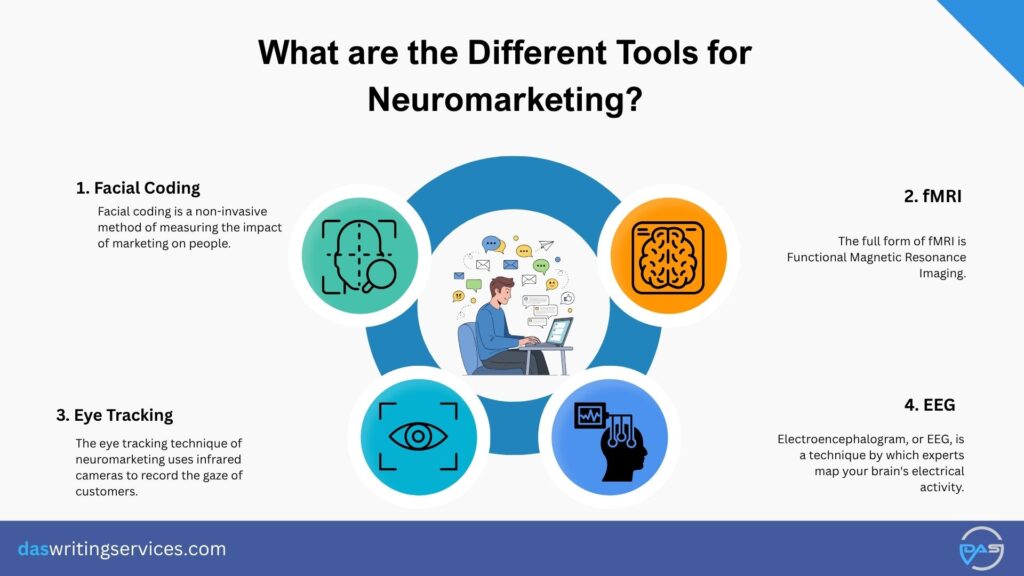
Here are the different techniques that companies usually use while implementing neuromarketing:
- Facial Coding
Facial coding is a non-invasive method of measuring the impact of marketing on people. The technique, known as the Facial Action Coding System (FACS), uses software to identify subconscious facial muscle movements.
- Eye Tracking
The eye tracking technique of neuromarketing uses infrared cameras to record the gaze of customers. This measures pupil movement and visual fixation in real-time. It helps brands understand what elements the consumers are first attracted to.
- fMRI
The full form of fMRI is Functional Magnetic Resonance Imaging. When thinking about what is neuromarketing, many people think of this. This technique measures deep brain activity by tracking hemodynamic response (changes in blood oxygen) to ads, branding and pricing.
- EEG
Electroencephalogram, or EEG, is a technique by which experts map your brain’s electrical activity. For this, you have to wear a headband or helmet with several sensors attached to it. Compared to others, it is comparatively cheaper.
What is the Role of Neuromarketing in Digital Marketing?
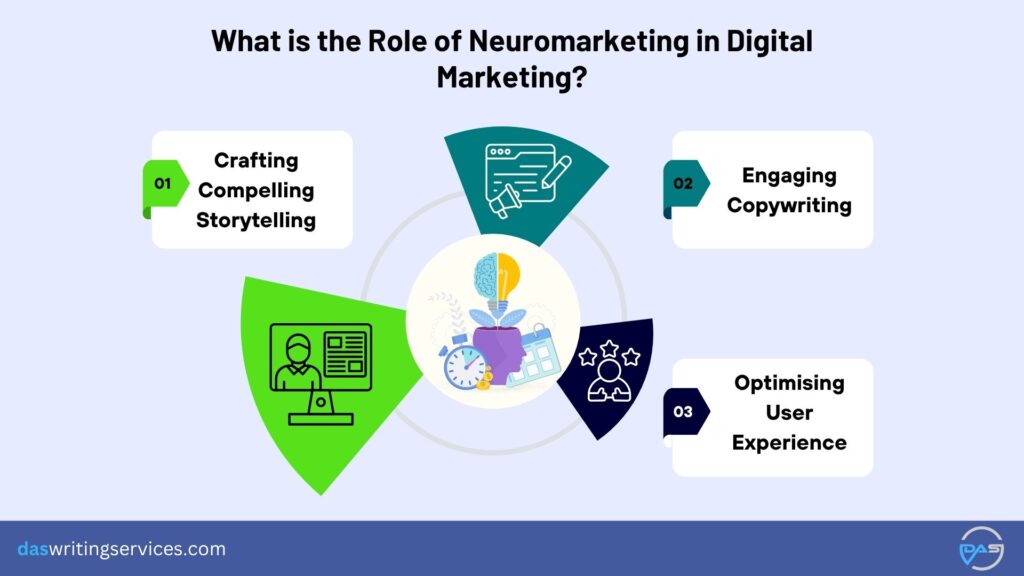
Now that we understand what is neuromarketing, let us understand how this technique applies to the growing world of digital marketing.
- Crafting Compelling Storytelling
Marketers can track the brains of their consumers using fMRI and EEG to understand which visual aesthetic triggers peak attention and positive emotional response. By utilising neuromarketing, you can stimulate the release of oxytocin in the brain through classic storytelling.
- Engaging Copywriting
Copywriting and content writing play a vital role in how people perceive a brand. However, there may be cases where consumers are not able to connect with your brand. However, when you leverage neuromarketing, you can understand which type of framing generates a positive response from your audience and accordingly modify your strategy.
- Optimising User Experience
Did you know McDonald’s uses eye-tracking technology at their self-service kiosks to understand where consumers look first? This helps to optimise their user experience. Similarly, you can also employ these techniques to see what is working in your digital marketing strategy.
Don’t guess what your content strategy should be. Contact Das Writing Services and get the content your brand deserves from professionals today!
What are the Drawbacks of Neuromarketing?
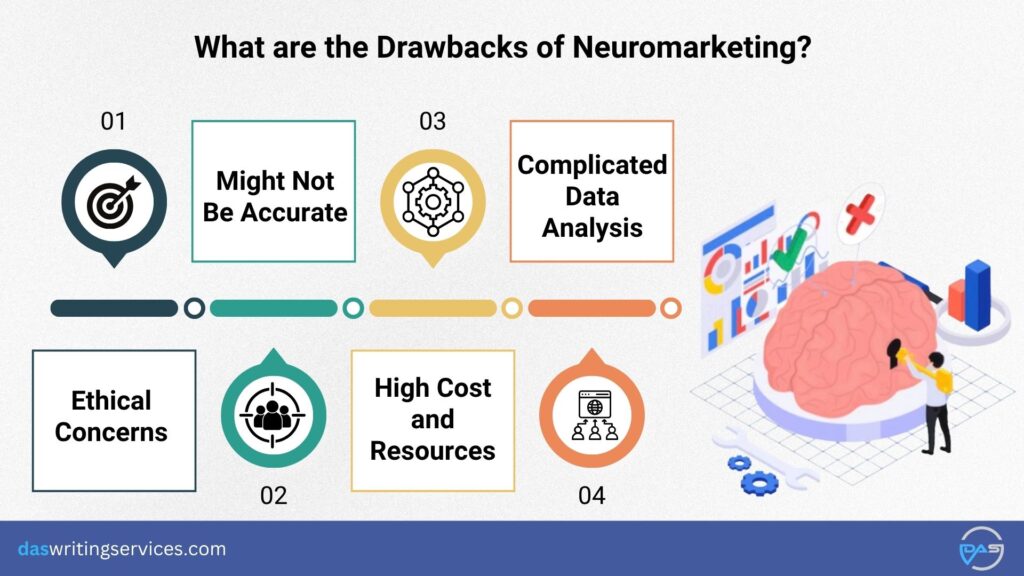
We have discussed neuromarketing and what it is, but many people ask, ‘Are there any drawbacks of using neuromarketing?’ As a matter of fact, yes, there are.
- Ethical Concerns
The primary question around the field of neuromarketing is ethical: Is neuromarketing a form of manipulating consumers? The field leverages the subconscious data of people’s minds and uses it to create targeted advertisements. This raises concerns about influencing consumer decisions, which consumers may not be fully aware of.
- Might Not Be Accurate
When thinking about what is neuromarketing, one of the most obvious drawbacks which comes to mind is its accuracy. Real-world scenarios are different from curated lab results. This is because consumer decisions are not only influenced by brand voice. There are several other factors which the field does not take into consideration.
- High Cost and Resources
Although neuromarketing may be the new hot topic in the industry, it is relatively expensive to employ. Techniques such as EEG, eye tracking, and biometrics require special equipment and a controlled research environment. Plus, it takes time to set up and therefore remains very expensive for small to medium organisations.
- Complicated Data Analysis
Interpreting neurological and psychological data requires speciality. Therefore, you need someone who can interpret the complicated and technical datasets. Not only that, after interpretation, you need someone who can translate those insights into decisions that you can include in your digital marketing strategy.
Final Thoughts
Neuromarketing offers an unprecedented glimpse into the consumer mind. By understanding subconscious triggers, brands can craft highly effective digital marketing campaigns.
However, businesses must balance these powerful insights with ethical considerations and budget constraints. As technology advances, these neurological tools will undoubtedly become more accessible to everyone.
If you are looking for professional content that delivers results, then Das Writing Services Private Limited is the right choice for you. Contact us today!
Frequently Asked Questions
- Who invented neuromarketing?
The term neuromarketing was first coined in 2002 by Dutch marketing professor Ale Smidts. However, the field later developed into a commercial industry due to the work of several pioneers.
- What are some examples of neuromarketing?
One of the most prominent examples of neuromarketing is Frito-Lay’s packaging redesign. They used the EEG method and found that shiny bags with pictures of chips created a negative impression in the minds of the consumers. However, designs with matte bags with pictures of potatoes generated a positive reaction.
- Which brands use neuromarketing?
Several brands use neuromarketing in modern times. Examples include Coca-Cola, McDonald’s, Spotify and Google itself.

Subhodip Das is the founder and CEO of Das Writing Services Pvt. Ltd. He has an experience of 12 years in the field of Digital Marketing and specialises in Content Writing and Marketing Strategies. He has worked with well-established organisations and startups helping them achieve increased Search Engine Rank visibility. If you want to grow your business online, you can reach out to him here.


