Mobile marketing is a specific and hyper targeted marketing strategy used to engage and convert mobile i.e. smartphone users. This marketing strategy utilises a variety of channels such as SMS, mobile applications, email, social media sites, push notifications and mobile-optimised browsers to reach its audience.
As per global trends, more than 2/3rds of users are connected with the internet via smartphones. India, being a mobile first economy, is at the forefrontofinnovative mobile marketing strategies.
Let us explore how it works, what are the dominant strategies and how as an emerging brand, you too can leverage it to better engage your audiences. Let’s get started
How Does Mobile Marketing Work?
Mobile marketing uses a series of techniques which begins with optimizing page load speed and making a website UI & UX mobile friendly to better engage target audience. With better targeting of ads, customers get an improved experience than traditional marketing, while companies get to reach a specific audience. Moreover, mobile marketing is usually more affordable than TV or newspaper marketing.
When it comes to ads, mobile marketing offers greater personalization with features like –
- Location based targeting
- Interest and preference based targeting
- Real-time campaign performance tracking
- Efficient automation to nurture qualified leads
- Enhanced analytics and tracking
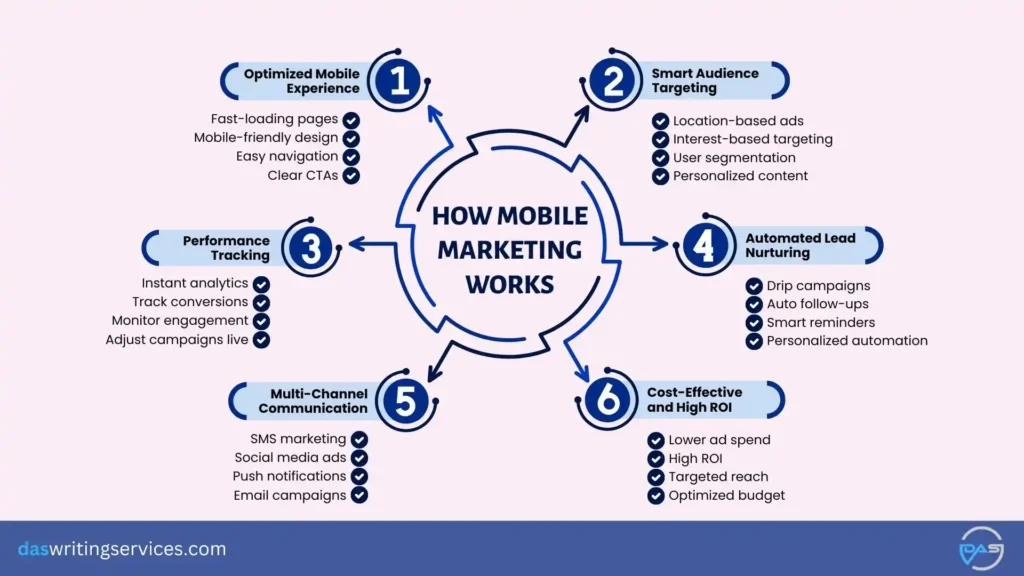
The precision strategies of mobile marketing allow marketers to plan the buyer journey and guide the user through different stages of the marketing funnel. What makes mobile marketing ingenious is, the multiple channels and forms of communication allow effective and prompt conversions.

Top 6 Types of Mobile Marketing to Use in 2025
There are a number of digital marketing channels through which you can carry out your mobile marketing campaigns. The following are the types of mobile marketing based on the channels used:
1. Push Notification Marketing
Push notifications can be used as part of a mobile advertising campaign to communicate with customers in a simple and effective way. On average, 49-95% android users opt for push notifications, making it an inexcusable tool for mobile marketing.
A push notification marketing strategy is considered to be more effective than traditional email marketing, as users are more likely to open notifications.
2. SMS Marketing
Once a marketer obtains the phone numbers of users, they can create a broadcast network with advertisements. SMS ads typically contain a link or ad for the user to click on, which initiates a conversation between the user and the company. Marketers can use applications with SMS-enabled APIs to compose messages and create campaigns.
Since 98% of SMS communications are opened and read, SMS marketing is a powerful tool for businesses as it allows them to reach their customers more effectively.
3. App-Based Marketing
With the growth in mobile app usage, more marketing agencies are utilising app-based mobile marketing to increase their client’s visibility. There are several ways to carry out app marketing, including banner apps, in-screen advertisements and notifications. The aim of this form of advertisement is to increase the appeal of the business’s app, promote subscription and in-app purchases and enhance the brand’s image.
4. In-App Mobile Marketing
This involves the use of banners, overlays or inbox messaging to promote your brand. There are two main ways to carry out in-app or in-game marketing. First is the promotion of your brand in an app/game you own, where you will want to engage users and improve user experience.
In addition, you can promote your brand by partnering with a top-rated app or game or sponsoring an app/game developer. There are many creative ways through which brands can promote their products or services organically, including clever product placements, interactive ads and in-game/in-app rewards.

5. Location-Based Marketing
This type of mobile marketing utilises location-based services (LBS) to send custom advertisements to users based on their current location. In 2025, only 28.6% marketers are using location based communications, leaving much opportunity for new marketers to capitalize on this.
Marketers can use location-based marketing to gather relevant data and create targeted marketing campaigns. Other ways to use LBS are to automatically detect the nearest stores and provide useful information such as weather forecasts, traffic updates and roadside assistance.
6. QR Code Marketing
Nowadays, many businesses are using QR codes to market to customers. QR codes allow marketers to bridge physical and online mediums, as QR codes can be printed on posters, brochures, storefronts and more. They work well in directing more people to specific landing pages and promotional material.
Why is Mobile Marketing So Important?
Due to the growth of smartphone adoption, more people like to access the internet via mobile devices. According to a statistics by the World Advertisement Research Centre, almost three-quarters of the world, i.e., 72.6% of people will connect to the internet via smartphones only by 2025. This makes it necessary for businesses to be able to reach customers via mobile devices, even for businesses that sell through physical channels.
Mobile marketing also provides a number of unique advantages, including a wide reach, accurate targeting and increasing affordability. As a new generation that sees the world mainly through the internet grows up, having a good mobile marketing strategy will become more important than ever.
Pros and Cons of Mobile Marketing
As with any other form of marketing, there are some advantages and disadvantages of relying on mobile marketing. Here are the pros:
Pros
- Mobile marketing is a more tailored form of marketing that allows businesses to get closer to their customers.
- It’s easier for marketers to use mobile marketing as they don’t need high-level technology or expertise to get started.
- Ad campaigns can be customised to fit any budget. Moreover, mobile ads are usually more inexpensive compared to print and TV ads.
- Mobile marketing has far better reach today than any other form of advertisement.
- As this form of marketing works in real time, it’s easier to measure the success of your campaign.
- Location-based targeting allows advertisers to create verypersonalised advertisements.
Cons
- There’s little room for errors with mobile marketing as users have smaller attention spans, and there’s high competition.
- Privacy issues regarding how user data is collected and poor handling of data could result in legal and regulatory actions being taken against advertisers.
- When mobile advertisements feel invasive to users, they could develop negative connotations for the brand.
- Poorly made advertisements can go viral, which can impact a brand’s image.
Examples of Successful Mobile Marketing Campaigns
Here are some examples of mobile marketing campaigns in India for inspiration and actionable insights:
1. Swiggy’s Voice of Hunger
Summary: India’s leading food delivery platform, Swiggy, launched the “Voice of Hunger” ad campaign on Instagram in 2019. Under this campaign, users were invited to record their “hunger pangs” with creativity using Instagram’s new voice note feature. Users were incentivised with a year’s worth of food vouchers on the platform.
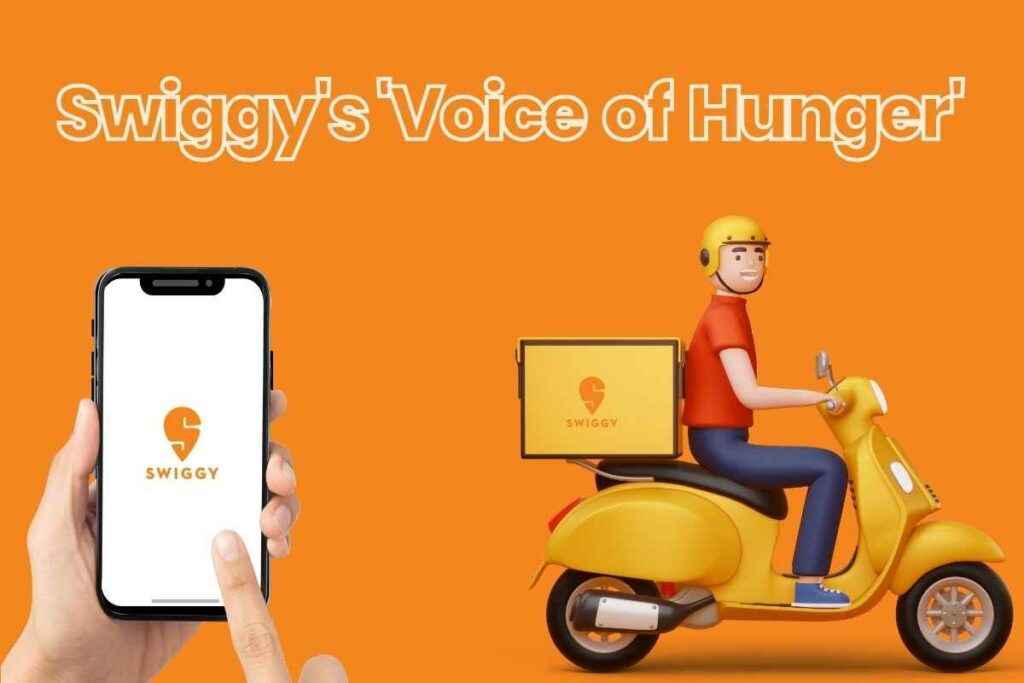
Results: The marketing campaign was a resounding success, as it recorded around 10,000 entries in just the first 12 hours. It resonated with foodies on the internet, recording a 40% increase in Swiggy’s Instagram followers.
2. Zerodha’s Varsity Content Strategy
Summary: India’s leading stock brokerage, Zerodha, wanted to dominate the search results for investment-related queries in India to build a large audience. It then set up Varsity, a content hub with thousands of interlinked pages, creating a detailed guide for various topics and subtopics. Its in-depth collection of pages was entirely free and open-access.
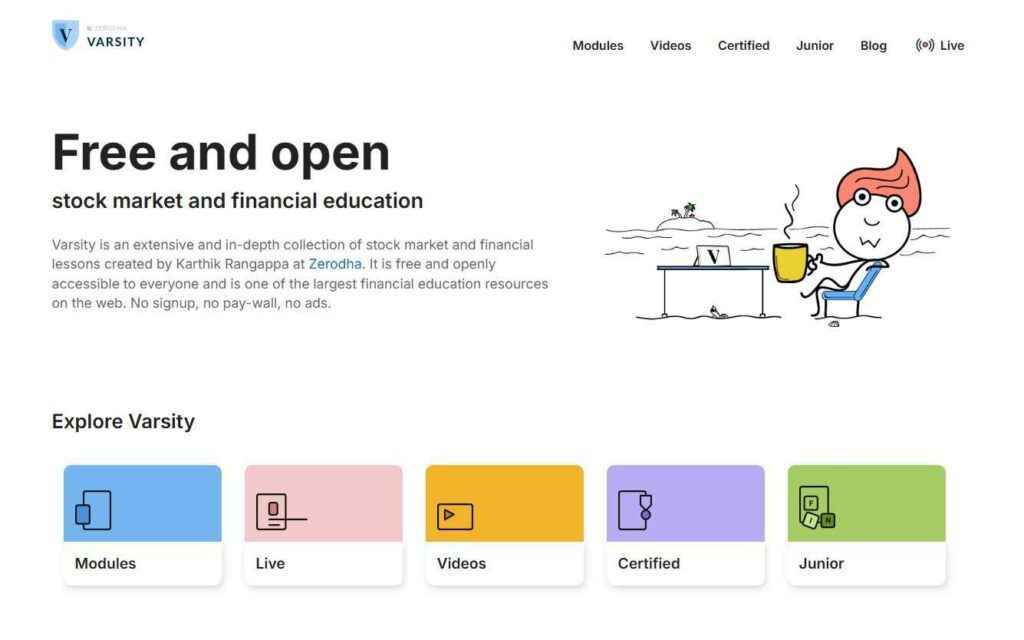
Results: Zerodha managed to build an organic traffic of 2.24 lakh monthly visitors with an impressive number of banklinks (over 72,000). It made the discount broker a thought leader in financial literacy.
3. Spotify India’s There’s a Playlist for That
Summary: In 2019, Leo Burnett India created a ‘hypercontextual’ marketing campaign for the music streaming giant that utilised everything from traditional billboards to mobile marketing. Its aim was to advertise that Spotify had created 3 billion playlists to suit any mood of every Indian.

Results: At the end of the campaign, it saw 72,000 social media shares despite the marketing taking place mostly offline. Spotify India also established its presence in the Indian market as a leading streaming service platform.
4. British Airways’ Fuelled by Love
Summary: In 2016, British Airways featured a real-life inspired story where a cabin crew member of the company arrived at Hyderabad from the UK for the first time. It recreated several in-flight scenes as well as some home scenes set in Hyderabad. The film aimed to tap into the emotional psyche of Indian customers to nurture good relationships.

Results: Not only was the company’s special travel offer massively popular, but the feature film also won the National Film Award in India.
5. CRED’s Not Everyone Gets It
Summary: This campaign by the fintech startup CRED created an air of exclusivity, indicating that its benefits were not available to everyone. The ad showed famous 90s Bollywood celebrities taking part in extensive theatrics as a part of their audition. Then, the video cuts to CRED’s executive team, who rejects the audition and gave a much simpler idea: “Download CRED”.

Results: Like some high-end fashion, CRED’s marketing campaign established the startup as a desirable premium service. Moreover, the ad campaign won the prestigious Blue Elephant Award in 2022.
7 Best Tips to Run a Mobile Marketing Campaign
1. Make Short, High-Quality Ads
As mobile phones are personal devices, people don’t spend a lot of time looking at an advertisement. Hence, a good ad that appears on mobile must be short and simple and provide either high-value or humour to keep the user engaged.
2. Create Responsive Pages
Whether you are making a webpage, application or email for marketing on mobile devices, the page must fit well on a small screen. Incorporate designs and techniques that allow viewers to easily load the page.
3. Get a Real Feel
Get a real feel for the mobile marketing you have created to ensure it’s effective. Immerse yourself by sending ads to your own devices. Sign in to the mobile application, use the location services and try to check out ads to get the feel.
4. Find the Right Audience
Develop target buyer personas and ideal client profiles to understand the components of your marketing strategy. You need to know which social media channels are used by your target audience, their operating system (Android or iOS) and their behaviour.
5. Fulfil Searcher’s Local Intent
Many searchers have local intent, such as finding nearby restaurants, shops or bars. If you are using location-based systems for advertisements, ensure to offer something useful with your advertisements. For example, you could provide important information, special offers and more with your ad.
6. Offer Rewards to Get Permissions
To enable mobile ads, you will need two key permissions- for tracking location and allowing push notifications. As most people are cautious about providing these permissions, you will need to build trust and provide something useful to get them. For example, you can provide a one-time offer for signing up or a useful service (location-based music playlist).
7. Ensure Easy Redirects
If people have to go through many steps to get to what they want (information, offers or checkout), they will likely give up. This is why you need to ensure to navigate customers seamlessly . Take steps like designing an easily noticeable button or link and checking the rendering of the site/page to make sure that users don’t click away.
Takeaway
As mobile marketing has become essential for businesses, marketers need to know how to reach their online audience in a more effective manner. As a part of their overall digital marketing strategy, they must create a mobile-friendly site and keep a growing presence on all their social media channels. Furthermore, mobile advertisements need to be concise, compelling, and engaging.
With so many requirements, you may find it hard to create content for your business’s mobile marketing campaigns. In such a situation, you may want to take the help of a reputable content writing agency to complete the work needed for all your marketing channels. Skilled content writers understand how to create high-quality content while optimising it for SEO and mobile-friendliness.
Frequently Asked Questions
1. What are mobile marketing tools?
Some of the popular mobile marketing tools include:
- Salesforce CRM–Helps manage customer relationships
- Klaviyo – Allows advanced segmentation of audience
- EZ Texting – Allows versatile SMS marketing
- Mobile Text Alerts – Automates SMS marketing
2. How to start mobile marketing?
You can start mobile marketing by defining your market goals and audience. Then, you need to optimize the website and landing pages for mobile devices. Depending on your audience and goals, you can then decide which channels are most appropriate for your marketing campaign.
3. Is digital marketing same as mobile marketing?
Mobile marketing is a sub-category of digital marketing. Mobile marketing is indeed a type of digital marketing where all strategies are customized to engage and cater to mobile-first users.

Ritish Dutta is a seasoned Content Developer with over 7 years of experience in the industry. Currently, at Das Writing Services, he writes SEO-optimized content that caters to our diverse clientele. Ritish utilizes his critical insights and experience to talk about digital marketing, SEO content writing, content strategy, and AI.
Leave a comment
All comments
Isabela Sawyer
Your blog post was really enjoyable to read, and I appreciate the effort you put into creating such great content. Keep up the great work!
Haven J. Haynes
Your blog is always a highlight of my day