Nowadays, around 65% of people are visual learners. They rely on images to understand and remember information. Research also indicates that approximately 90% of the data processed by the brain is visual. The brain processes visuals up to 60,000 times faster than text.
Information paired with relevant images achieves a 65% retention rate after 3 days. Text or voice alone retains only about 10%. This makes visuals critical for clarity, trust, and recall.
Marketers recognise this shift that visuals now play a central role in content performance, engagement, and conversion. So which visual formats matter most today? Below are the 7 essential types of visual content you need for 2026.
1. Data-Driven Visual Content
People prefer to share visual content up to 40x more on social media compared to text-only formats. This type of content is also a “well-kept secret” by which you can be perceived as an industry expert in your domain. Data-driven content also helps to drive home the point quicker than purely text-based content.
In 2025, blogs with visual content earn more inbound links than text-only posts, especially with infographics and data visuals.
Studies show that content with high-quality visuals can generate up to 178% more links. Visual data makes information easier to understand and more shareable. As a result, other websites are more likely to reference and link to it.
All the more reason to choose data-driven visual content.
2. Relevant Images Make Long Blogs Interesting
Reading long articles is harder than ever. The average digital attention span is now close to 8 seconds. Without visuals, long-form content risks losing readers quickly.
Research from HubSpot and the Content Marketing Institute shows that articles with relevant images and videos see up to 102% higher engagement than text-only content.
In 2026, modern readers will prefer to scan headings, bullets, and visuals to understand value fast. Strong images act as visual pause points. They stop the eye and pull the reader back into the content.
To support your content, use high-quality visuals from platforms like Unsplash, Shutterstock, and Flickr. Always ensure you have the right usage permissions.
3. Infographic Visual Content
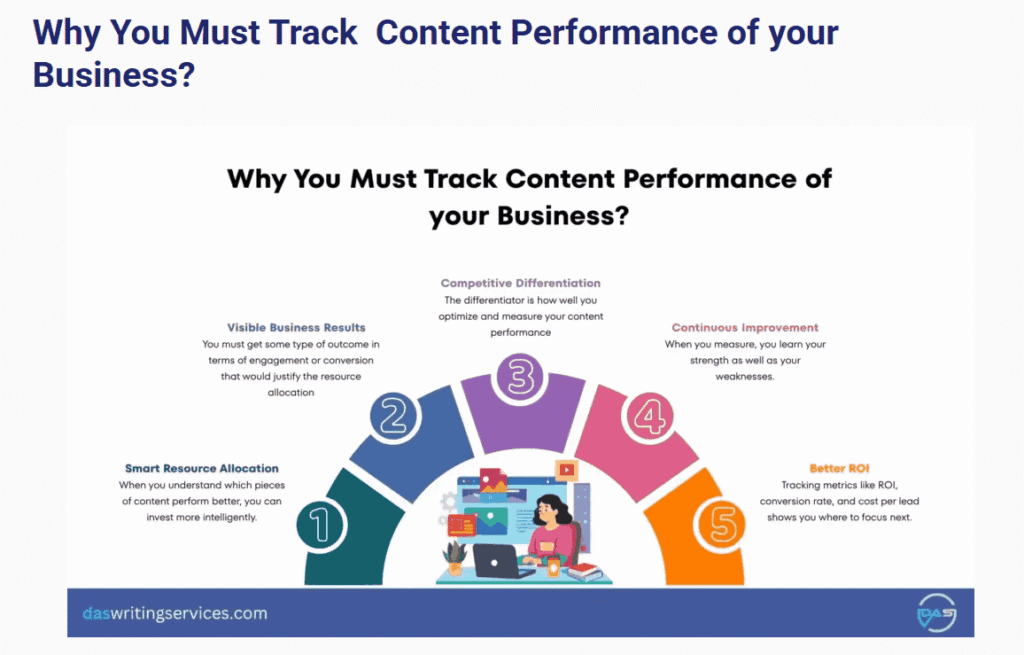
Infographics have a simple way of making any complicated subject simple. It delivers snackable, bite-sized data in a way that can be easily consumed and understood.
Once you have created an infographic, you can promote it on Pinterest, SlideShare, LinkedIn, via other influencers, and social media.
In 2026, infographics will remain highly relevant. Around 65% of B2B marketers actively use infographics. Let’s explore B2B content marketing strategies.
When preparing an infographic, you can focus on the layout of the content, colours, text and fonts. Remember, the role the infographic plays is that of an appetiser. If it fails to bring readers to the blog or article, it hasn’t done its job!
Studies also show that infographics can increase website traffic by around 12%. So it should be a culmination of the whole article.
At Das Writing Services, our team always suggest that clients keep infographics before posting. We also create infographics to keep readers engaged and reduce bounce rates. Call now!
4. Use Quotes From Industry Experts
You can use quotes from industry experts to help your audience understand that the “Authority” believes this. It can create a sense of credibility about the article or blog that is hosting the quote.
Interestingly, LinkedIn posts with images including quote graphics get up to 98% more comments.
Also, if you can use an influencer with his or her quote, it will tend to add weight and gravitas to the article you are writing.
Something inspirational, full of industry insight or a witty take on a grim situation, and you have found a piece of visual content that can help increase the shares, likes and help it reach that “viral” status that you want.
The same visual can work as a blog insert, a LinkedIn post, a Reel cover, or part of a short video series.
5. Videos
A study by EyeView found that adding a video to a landing page can boost conversions by up to 80% and even go up to 86%.
You can use introduction videos, how-to videos, animated explanation videos, and demonstrations. Lastly, short customer testimonials are also beneficial to boost brand image.
In 2025, 89% of consumers want brands to publish more video content, and viewers remember up to 95% of a message when you share it through videos.
Some use videos as an alternative to reading the blog. They supplement the blog content by providing a video that explains what the blog is about. This creates engagement and an option for those who don’t want to read!
6. Screenshots
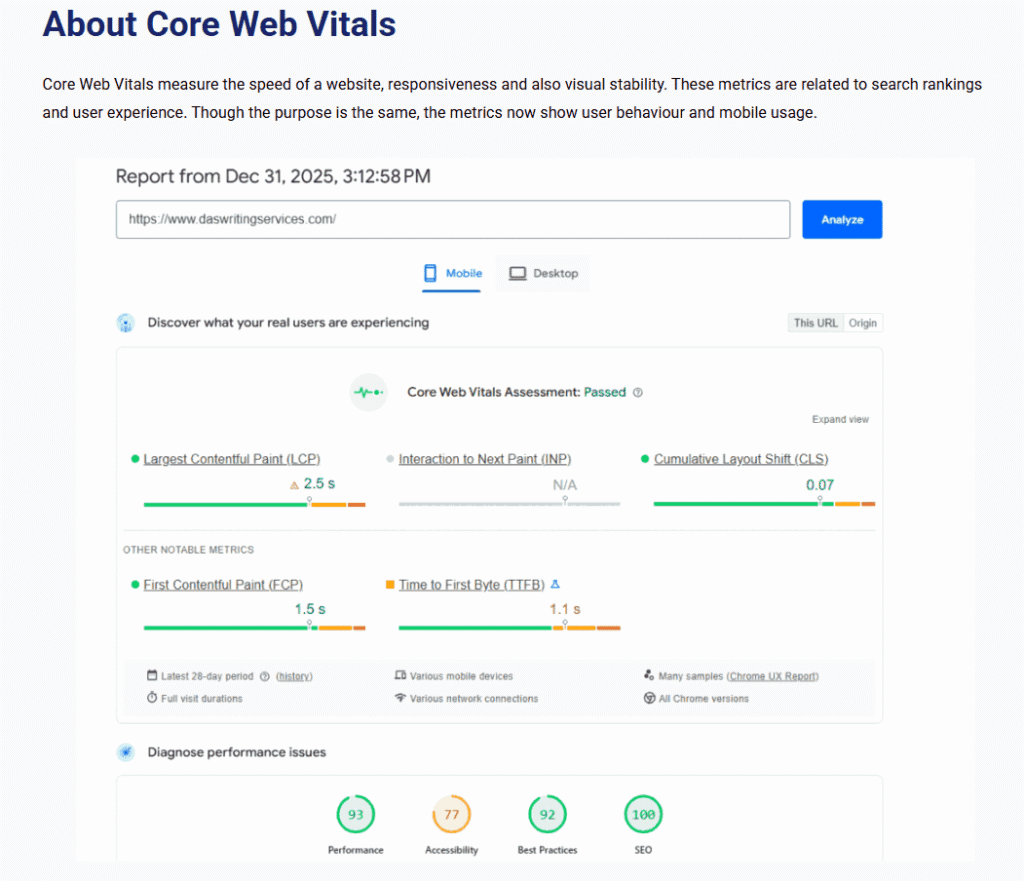
Screenshots make content more believable, especially in the case of how-to articles. Step-by-step guides that show you screenshots of how to apply for college or how to create your own websites are an absolute winner.
These visual guides help to make processes clear for users. You can usually use screenshots to show examples of how things work.
For example, if you were writing a blog on setting up your own Wix site, a screenshot of every step of the process might help users visualise what to expect in the process.
7. Memes
Some might think memes are irrelevant and something that is shared by the youth only. However, memes have a great way of being humorous yet putting across the point. You can use memes, especially when aiming to strike a chord with the reader, to increase shares and likes.
In 2026, meme-based content will drive up to 60% higher organic engagement than standard graphics. You can also use this type of visual content to promote blogs on social media.
To conclude, you need visual content to create engagement with the reader. Apart from educating and enlightening them, visual content can also help to create the much-needed “light moment” in a blog or article that makes reading palatable. Use this essential visual content and jazz up your content marketing strategy!
Looking for content that converts your audience into customers? Contact our team at Das Writing Services, where our in-house team deliver you well-researched and optimised content. Get a free trial just by sharing your requirements.

Subhodip Das is the founder and CEO of Das Writing Services Pvt. Ltd. He has an experience of 12 years in the field of Digital Marketing and specialises in Content Writing and Marketing Strategies. He has worked with well-established organisations and startups helping them achieve increased Search Engine Rank visibility. If you want to grow your business online, you can reach out to him here.
Leave a comment
All comments
Biżuteria męska
This post was packed with useful advice. Thanks for always delivering!