
Get Free Content Sample

 Add as preferred on Google →
Content alignment plays an important role when crafting a blog, as it ensures that your content aligns with the reader’s search intent, meets their expectations, and offers the information they are looking for. As you add blog content to your website that is relevant and clearly structured, visitors are more likely to stay on your website.
Even if you are explaining a complex concept through your blog, maintaining a logical flow within it makes understanding easier. Hence, readers are less likely to lose interest and leave your page.
Addressing readers’ queries and needs through an authoritative blog helps build trust among readers, lower bounce rate, increases dwell time and encourages them to explore more of your website.
What Does Content Alignment Mean in Blog Writing?
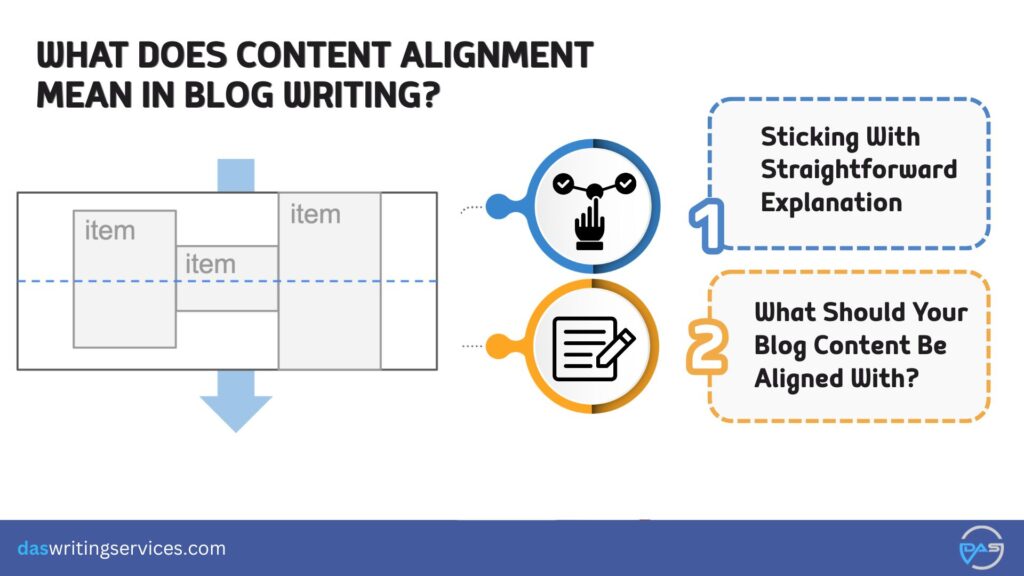
An efficient alignment in your blog content means that your content delivers the correct information in the expected order. If every section of your blog serves a clear purpose, readers find it easier to navigate and stay engaged till the end. Keeping explanations simple, maintaining relevance, matching expectations, and more help with alignment:
- Sticking With Straightforward Explanation
As of 2026, the attention span of readers on the internet is shrinking and is around 47 seconds. It means that your blog has much less time to capture the attention of a reader and keep them engaged. Thus, when a user lands on your page, they ask themselves, ‘Can I find the answer I am seeking here quickly?’ If the answer is yes, they stay; otherwise, they leave.
Here, the concept of content alignment comes in as properly aligned content matches what readers are looking for while presenting information in a clear way. It ensures that every section of your blog content adds value and contributes to the main topic and answers the user’s query without unnecessary details.
For example, suppose someone searches for ‘how to improve blog readability’. If your blog content immediately answers the query, provides actionable tips and maintains clear headings, readers are likely to stay.
On the contrary, if your blog starts with a history of blogging or explains unrelated SEO topics, readers may disengage. Hence, content alignment ensures it (your blog) answers a reader’s query, supports the main topic, and contributes to a smooth reading experience.
- What Should Your Blog Content Be Aligned With?
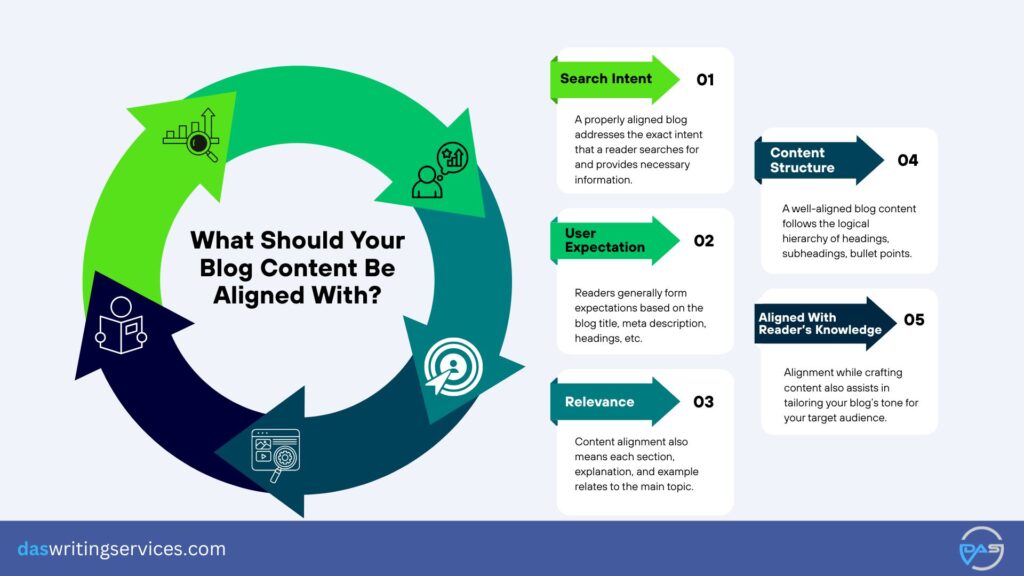
To maintain blog content alignment with efficiency and engage readers, you must think beyond incorporating keywords in your topic. Content alignment in blog writing means involving the following aspects:
- Search Intent
A properly aligned blog addresses the exact intent that a reader searches for and provides necessary information. Suppose someone searches for ‘how to write SEO-friendly content’. An aligned blog produces practical steps and not a background of SEO.
- User Expectation
Readers generally form expectations based on the blog title, meta description, headings, etc. Aligned content can match expectations if it promises a detailed guide, it contains comprehensive information, actionable tips, etc.
- Relevance
Content alignment also means each section, explanation, and example relates to the main topic. Alignment helps avoid unrelated information just to increase the size of the content, as it hinders reader experience and increases bounce rate.
- Content Structure
A well-aligned blog content follows the logical hierarchy of headings, subheadings, bullet points, shorter paragraphs and transitions. These help the reader to easily navigate a blog post, locate information and follow your ideas from beginning to end.
- Aligned With Reader’s Knowledge
Alignment while crafting content also assists in tailoring your blog’s tone for your target audience. For instance, a beginner may need a simple explanation with a step-by-step guide, while experienced readers often prefer in-depth insights, data, and advanced strategies.
At Das Writing Services, we create content that reflects each client’s unique brand voice. We help businesses build credibility while maintaining consistency across all their content.
Why is Content Alignment Important for Reader Retention?
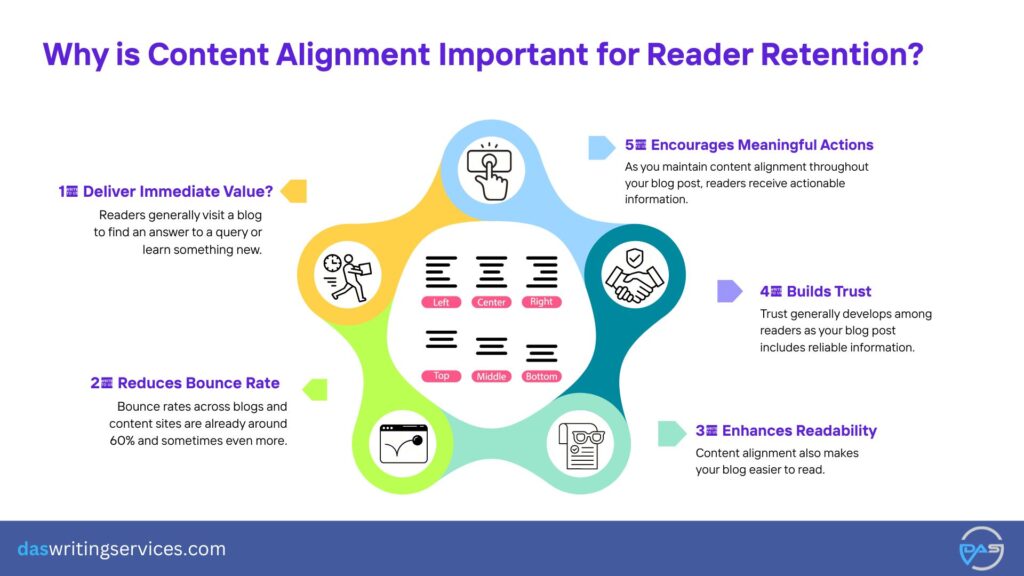
Content alignment is important as it does more than just improve the quality of your blog post. It helps to deliver immediate value to your readers, improves readability, and builds trust, which ultimately results in a lower bounce rate and increased page views:
- Deliver Immediate Value
Readers generally visit a blog to find an answer to a query or learn something new. Suppose a reader searches for ‘10 ways to reduce website bounce rate’. If your article starts with ‘Tip number 1’ and explains a few techniques within the opening few paragraphs, that reader is most likely to stay engaged, compared to actionable tips appearing later in the article.
As your content continues delivering useful information early and answers to a user’s or reader’s query, it helps create a positive impression. Top Content Writers in India focus on delivering immediate value within the first few lines of a blog post, combining expert knowledge with practical insights.
- Reduces Bounce Rate
Bounce rates across blogs and content sites are already around 60% and sometimes even more. Here is where the importance of content alignment lies. As you align content as per readers’ intent and needs, they are less likely to leave your site after visiting a single page.
As you keep readers engaged from the introduction to the conclusion, aligned content lowers the chances of readers abandoning your post midway. Also, maintaining flow between headers and well-placed internal links increases the reading experience and guides readers to related resources.
- Enhances Readability
Content alignment also makes your blog easier to read. This is because such blog content helps present information that readers or visitors can process without much effort. Along with this comes the importance of using shorter paragraphs, descriptive headings, easy-to-understand language, well-placed examples, etc.
These help break down complex ideas into digestible sections. Thus, readers are able to quickly scan your blog post, locate information they want and continue reading without being overwhelmed. The idea here is the easier your content is to consume, the higher the chances of engagement are.
- Builds Trust
Trust generally develops among readers as your blog post includes reliable information. Not only readers but search engines like Google prioritise blogs that answer queries with honesty and support claims with credible sources. Thus, as you align content with reliability and avoid clickbait or exaggerated promises, trust within readers builds up naturally.
Thus, when your blog content fulfils the intent as your title states and delivers genuine value throughout, readers may consider your website as a dependable source of information. Such credibility is important as readers may return to your site whenever they require reliable information for related topics.
- Encourages Meaningful Actions
As you maintain content alignment throughout your blog post, readers receive actionable information. They feel more confident about taking the next step. Instead of leaving your site with unanswered questions, they get clarity about what to do next. These actions may be downloading resources, requesting a quote, or subscribing to your newsletter.
Thus, alignment plays an important role in removing uncertainty while reinforcing the message you want to convey in your post. Alignment helps naturally guide readers towards meaningful actions while enhancing overall user experience.
This especially applies to businesses that post regular blog content to improve visibility and overall authority. Content Marketing Agencies in India help to strategise blog content for such businesses, which helps convert visitors into customers.
How to Infuse Content Alignment Into Your Blog?
After understanding the meaning and role or importance of alignment, you may wonder how to ensure content alignment in my blogs? For this, refer to the following section and note the actionables that you must follow while you craft content for your website and see potential results:
- Scan the SERP Before Outlining
Open your browser in ‘incognito’ mode and search for your target keyword. On the SERP (the page you see after searching for a query on search engines), look for the first 10 organic results that appear. Understand the format they follow and their common promises in their titles. Your article must align with trends on the SERP and then diverge on angle.
- Define the Purpose of Your Content
While outlining, you must also determine what the reader can learn or achieve after reading your post. For this, lay down your objective briefly. For example, suppose your topic is ‘how to improve website loading speed?’ Here, your objective should focus on helping website owners identify the key causes of slow loading time and fixing them with practical solutions.
- Align Each H2 With Your Content Objective
While crafting your blog post, ensure that each of its H2 contributes to the actual objective of your blog topic. You must ensure that each section expands on your chosen topic, answers a relatable question or guides readers closer to its intended outcome. If you see a certain heading does not add much value or diverts from its intent, remove or revise it.
Reviewing your outline by refining H2 of your blog content helps increase the chances of retaining readers. You can eliminate filler content this way and create a topic-focused, engaging and scannable content which helps drive results.
- Write the Primary Answer First
If you are creating a question-based blog, begin by drafting a concise answer of 40–50 words. Ensure that your answer accurately addresses those queries. This approach establishes the message of your blog and ensures your introduction delivers on the promise made in the title. After this, expand your topic with explanations and insights.
- Verify and Cite Information as You Write
Back up each statistic, research findings and other factual claims with credible sources as you draft your blog content, instead of citing them later. Such an approach helps maintain accuracy and lowers the risks of incorrect attributions. Also, fact-checking becomes much easier while editing.
- End With an Actionable Conclusion
Instead of summarising the article, end with takeaways which help reinforce the core message of your blog content. Follow it with clear next steps which readers may apply, like implementing a strategy or exploring a related topic. Conclusions that offer direction leave readers with a stronger impression and make your content more practical and memorable.
Final Words
Content alignment is about incorporating the right information into your blog topic that caters to your intended audience. As you approach crafting your next blog, review every heading, optimise paragraphs, and include examples to ensure that its content supports its main objective. Such a simple final check can improve engagement and reader retention.
At Das Writing Services, we craft reader-focused, SEO-friendly content that balances search visibility with genuine value. We tailor every piece of content to reflect your brand’s unique voice while keeping your audience engaged and informed.
Frequently Asked Questions
- How do I know if my content aligns with search intent?
Compare your content with the top-ranking pages for your target keyword. If your article answers the same core questions, matches the expected format, and provides valuable information without unnecessary details, it is more likely to align with search intent and satisfy reader expectations effectively.
- Can content alignment improve content marketing results?
Yes. Well-aligned content keeps readers engaged, improves time on page, strengthens trust, and encourages meaningful actions. These improvements increase the effectiveness of your content marketing strategy by attracting qualified visitors. It helps them progress naturally towards your desired business or marketing objectives.
- Is content alignment important for existing blog posts?
Yes, updating older blogs to match current search intent, refresh outdated information, improve relevance, and remove unnecessary sections helps maintain their performance. Regular content alignment ensures your articles remain valuable to readers. This approach continues to support your long-term SEO and content marketing goals.
- Does alignment of content in blogs help improve conversions?
Content that answers reader questions clearly builds confidence and reduces confusion. Visitors are more likely to take the next step when they find relevant information at the right time. This could include signing up, downloading a resource, requesting a quote, or making a purchase with greater confidence and commitment today.
- How can I measure whether alignment in blog content is working?
Monitor metrics such as average engagement time, scroll depth, bounce rate, pages per session, and conversions. These metrics reveal how readers interact with your content. Regularly review performance data to identify gaps, improve relevance, and strengthen overall reader engagement and content effectiveness over time consistently for success.
- Should every blog follow the same alignment strategy?
No. Content alignment should vary based on your audience, search intent, industry, and business goals. The core principles remain the same, but the structure, depth, and messaging should match each blog’s purpose and reader expectations. Tailor every article to its topic, audience, and intended outcome for better engagement consistently.

Subhodip Das is the founder and CEO of Das Writing Services Pvt. Ltd. He has an experience of 12 years in the field of Digital Marketing and specialises in Content Writing and Marketing Strategies. He has worked with well-established organisations and startups helping them achieve increased Search Engine Rank visibility. If you want to grow your business online, you can reach out to him here.


