Among the several types of marketing, choosing the right channel saves you from wastage of valuable time and funds. When you are entrusted with promoting a business or a product, identifying where you can attract audiences is equally important as deciding the right message for your campaign.
For instance, email marketing can be an effective strategy for a b2b venture. However, similar types of marketing strategy won’t be feasible for a consumer facing company that directly caters to the youth between the age group of 16-25. For such a demography, other digital marketing channels may be better suitable.
In this blog, let us discuss some popular types of marketing strategies you can plan using the following examples.
Do not have the time? Worry not! Reach out our consultants below to get custom marketing plan for you

What are the Types of Marketing Strategies?
In the present day, marketing strategies are broadly divided based on their method of engaging with the audience, inbound marketing and outbound marketing. While inbound marketing uses various online marketing campaigns to draw users to the website or landing page, an outbound marketing campaign strategically positions itself to the target audience. Click the link below to know more about the differences between inbound and outbound marketing.
Also Read: Inbound vs Outbound Marketing: Decoding the Best Fit for Your Business
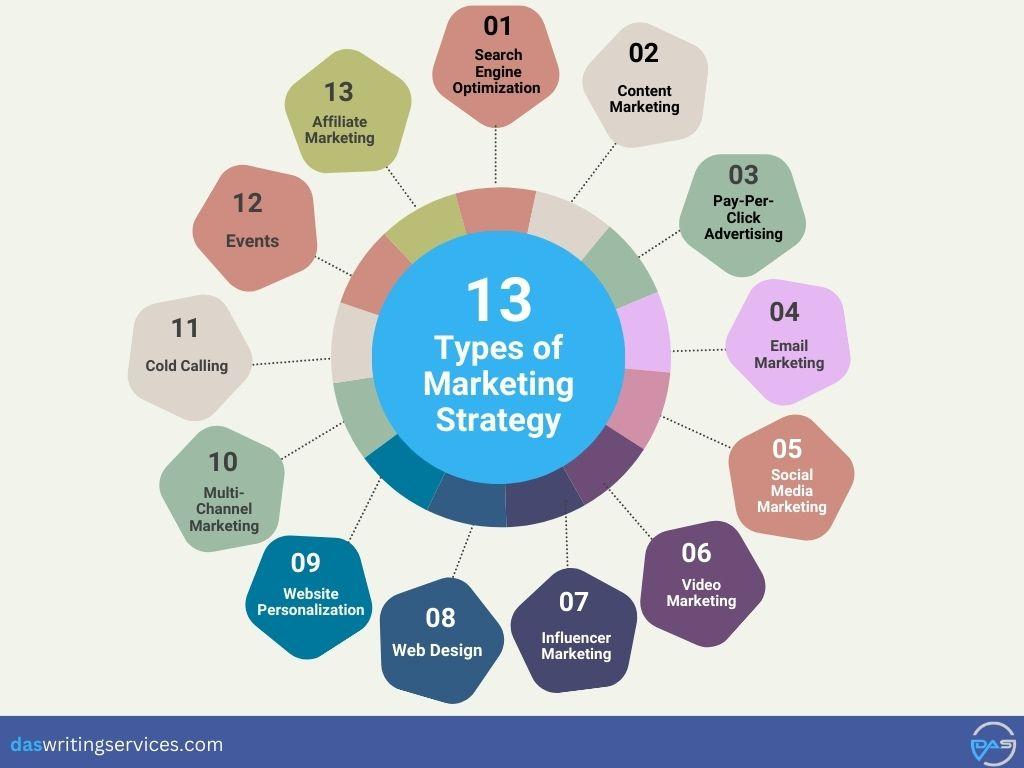
13 Different Types of Marketing Strategy with Examples
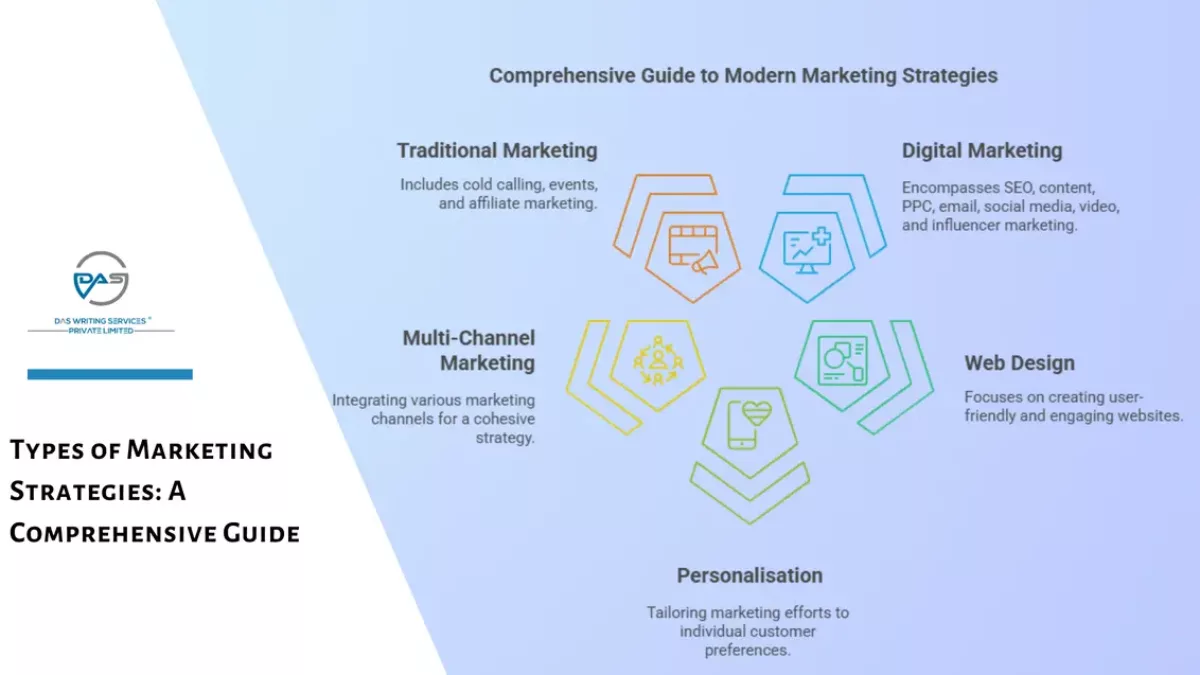
The success of a marketing strategy often depends on selecting a marketing channel tailored to your business goals and audience preferences. Below are some of the most effective and popular types of marketing strategies, ranging from cutting-edge digital techniques to tried and tested traditional methods that stood the test of time:
1. Search Engine Optimisation (SEO)
SEO is the practice of optimising your website to rank higher on search engine results pages (SERPs). It involves a mix of on-page SEO (like keyword optimisation, meta tags, and content creation) and off-page SEO (like backlinks and social signals).
For example, a local bakery could optimise its website for keywords such as “fresh bread in [city name]” and use Google My Business to attract local customers searching online.
SEO, along with Search Engine Marketing is a long-term strategy, focusing on building organic traffic by enhancing visibility on platforms like Google and Bing.
2. Content Marketing
Content marketing strategies revolve around creating and distributing valuable, relevant, and consistent content to attract and engage a clearly defined audience. There are various forms of content, including blogs, whitepapers, infographics, podcasts, and videos.
Also Read: What are the Benefits of Content Marketing?
For instance, a SaaS company might produce a series of blog posts, whitepapers, and webinars to establish thought leadership in their industry, thereby building trust and educating potential customers over time.
Effective content marketing campaign is often aligned with SEO and social media strategies to maximise reach. Hiring a top content marketing agency in India can help you gain the maximum returns on your marketing efforts.
3. Pay-Per-Click (PPC) Advertising
PPC is a model of internet marketing where advertisers pay a fee each time their ad is clicked. Google Ads is the most well-known platform, but PPC campaigns can also run on social media channels like Facebook, Instagram, and LinkedIn.
For example, an e-commerce store could run PPC ads targeting the keyword “affordable running shoes,” ensuring that their ad appears at the top of search results, driving immediate traffic to their product pages. PPC is particularly effective for short-term campaigns aimed at promoting specific events, products and services.
4. Email Marketing
Email marketing remains one of the most effective tools for nurturing leads and maintaining customer relationships. It involves sending targeted emails to prospects and customers, which can include newsletters, promotional offers, product updates, and personalised recommendations.
For instance, a travel agency sends segmented emails to customers based on their travel preferences, such as exclusive vacation deals or tips for specific destinations. Automation tools make it easy to tailor email content to customer behaviour, increasing the likelihood of conversions.
5. Social Media Marketing
These types of marketing strategies leverage platforms like Facebook, Instagram, LinkedIn, Twitter, and TikTok to engage with customers and build brand awareness. Brands can create organic content, run paid ad campaigns, and engage directly with their audience through comments, messages, and polls.
For example, a fashion brand uses Instagram to post visually appealing photos and reels showcasing their latest collection. All these while running targeted ads to boost visibility. Each platform has its strengths; for instance, LinkedIn is more suited for B2B marketing, while Instagram and TikTok are ideal for visual storytelling.
6. Video Marketing
This strategy involves creating and sharing videos to promote products or services, enhance engagement, and educate potential customers. Video content can range from product demos and how-to’s to testimonials and behind-the-scenes footage.
For example, a fitness brand might create workout tutorials on YouTube or short, engaging clips on TikTok to showcase its products in action. With the increasing consumption of video content, this strategy helps brands connect with audiences in a more personal and engaging way.
7. Influencer Marketing
Influencer marketing is a collaboration between brands and individuals with a significant following (influencers) who can promote the brand to their audience. Influencers can range from celebrities to niche bloggers and social media personalities.
For instance, a cosmetics brand could partner with beauty influencers who review and showcase their products on Instagram or YouTube, tapping into their loyal follower base. This strategy is particularly effective for brands looking to build trust quickly and reach specific demographics through authentic endorsements.
8. Web Design

Considered among the most important types of different marketing strategies, a well-designed website is the foundation of any online marketing strategy. Good web design ensures a seamless user experience, easy navigation, fast load times, and a visually appealing interface.
For example, a consultancy firm could use an elegant, professional website design to highlight its services, client testimonials, and case studies, guiding visitors smoothly from initial contact to conversion.
Responsive design, intuitive layouts, and clear calls-to-action (CTAs) are essential components that can significantly influence user engagement and conversion rates.
9. Website Personalisation
Website personalisation involves tailoring the content and experience on your site to individual users based on their preferences, behaviour, and past interactions.
For example, an e-commerce platform like Amazon shows personalised product recommendations based on previous purchases, browsing history, and preferences, thereby enhancing the user experience and increasing the likelihood of a sale.
Advanced personalisation techniques use data analytics and AI to deliver targeted experiences, helping brands build deeper customer relationships.
10. Multi-Channel Marketing
Multi-channel marketing is the practice of interacting with customers across various channels, both online and offline, to create a marketing campaign that is cohesive and consistent brand experience. Channels can include email, social media, SMS, websites, and physical stores.
For instance, a retail brand might use social media to engage customers, email to send personalised offers, and in-store promotions to drive sales. The key is to create a marketing plan, offering a seamless experience across all touchpoints, and ensuring that the customer journey remains fluid and consistent, regardless of the platform.
11. Cold Calling
Cold calling involves reaching out to potential customers directly via phone without prior interaction or engagement. While often seen as a traditional method, cold calling remains effective, particularly in B2B sectors where direct outreach to decision-makers is critical.
For example, a real estate agency uses cold calling to connect with business owners looking for commercial properties. Success in cold calling depends heavily on thorough research, a strong value proposition, and effective communication skills.
12. Events
Event marketing involves participating in or hosting events like trade shows, webinars, workshops, and product launches. Events provide a platform to showcase your products, network with industry professionals, and generate leads.
For instance, a tech start-up hosts a product launch event to demonstrate its software solution to potential investors and customers. Events can be in-person or virtual, with virtual events gaining popularity due to their cost-effectiveness and global reach.
13. Affiliate Marketing
Affiliate marketing is a performance-driven approach in which businesses compensate affiliates (partners) for attracting traffic or generating sales through their marketing endeavours. Affiliates leverage their channels, including blogs, social media, and websites, to endorse products and receive a commission for each sale they facilitate.
For example, an online course provider partners with influencers and content creators who promote their courses in exchange for a commission on sales. Affiliate marketing is cost-effective because businesses only pay for actual results, making it a low-risk strategy for driving growth.
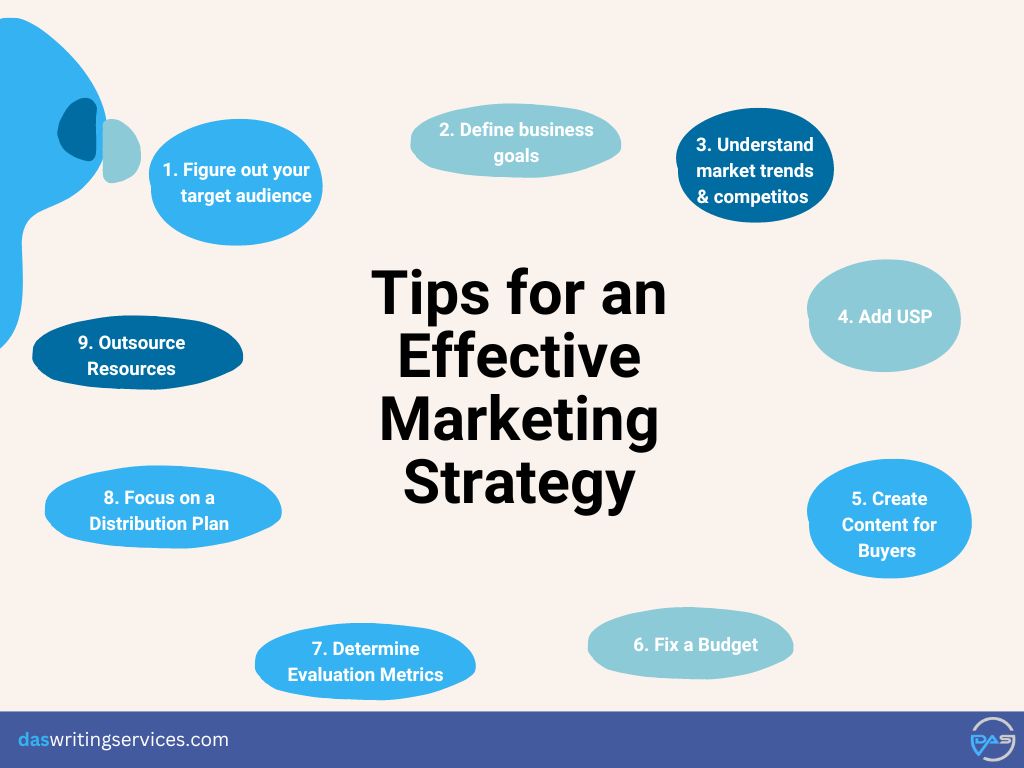
9 Tips to Formulate an Effective Marketing Strategy
Creating an effective marketing plan involves more than just choosing the right types of marketing strategies. It requires a deep understanding of your audience, clear business objectives, and an ability to adapt to market changes.
The following tips highlight essential steps that ensure your strategy is comprehensive, results-driven, and aligned with your business goals:
1. Figure Out Who are Interested in your Business
Understanding your target audience is the cornerstone of any successful marketing strategy. Conducting market research, analysing customer data, and creating detailed buyer personas help in identifying your audience’s needs, preferences, and pain points.
For instance, a new age skincare brand has its target audience between 25-40 year old women who prioritise natural ingredients. This insight would shape everything from product development to messaging and selecting the appropriate marketing channels.
2. Define What you Want Out of the Marketing Campaign
Your marketing strategy should be guided by clear, measurable goals that align with your broader business objectives. Whether you aim to increase brand awareness, drive sales, expand market share, or enter a new market, setting SMART (Specific, Measurable, Achievable, Relevant, and time-bound) goals helps in tracking progress and optimising efforts.
For example, an e-commerce business might set a goal to increase online sales by 20% within the next quarter by launching targeted ad campaigns and optimising the checkout process.
3. Review Market Trends and Your Competitors Strategy
Keeping an eye on market trends and competitor activities provides valuable insights that can inform different types of marketing strategies. Tools like SWOT analysis (Strengths, Weaknesses, Opportunities, and Threats) help identify areas where you can differentiate your brand.
For example, if a competitor is focusing on low-cost offerings, your brand might decide to position itself as a premium alternative with superior quality or customer service.
4. Highlight Your Unique Selling Proposition (USP)
Your USP is what sets you apart in the market. It could be anything from product features, customer service, pricing, or brand values. Clearly defining and communicating your USP helps your brand stand out in a crowded market.
For instance, an artisanal coffee shop emphasises its ethically sourced beans and community-driven approach as its USP, appealing to customers who value sustainability and social responsibility.
5. Create Content for Buyers at Different Stages of Their Journey
The buyer’s journey typically consists of three stages: awareness, consideration, and decision. Your content strategy should address the needs of buyers at each stage. For example, during the awareness stage, educational blog posts and infographics help attract attention.
Also Read: What is Content Marketing Funnel & How to Create One?
In the consideration stage, detailed guides, case studies, and comparison articles help buyers evaluate their options. At the decision stage, product demos, customer testimonials, and free trials encourage conversions.
6. Fix a Budget
A well-planned marketing budget ensures that resources are allocated efficiently across different channels and campaigns. Your budget should account for costs related to content creation, advertising, tools, software, and outsourcing.
For example, a startup might allocate 40% of its budget to digital advertising, 30% to content marketing, and the rest to tools and analytics, allowing it to balance reach and engagement while optimising the use of limited resources.
Setting a clear budget also helps in tracking ROI (Return on Investment) and adjusting expenditures according to the performance of different campaigns.
7. Determine Evaluation Metrics
Tracking the success of your different types of marketing strategies requires defining and monitoring key performance indicators (KPIs). Common metrics include conversion rates, customer acquisition costs (CAC), lifetime value (LTV), and ROI.
For instance, an online retailer might track the conversion rate from a specific ad campaign to determine its effectiveness. Regularly reviewing these metrics allows businesses to identify what’s working, what needs improvement, and where to pivot resources for maximum impact.
8. Focus on a Distribution Plan
Even the most valuable content can go unnoticed without a solid distribution plan. Determine which platforms and channels are most effective for reaching your audience.
For example, if your target audience is predominantly young professionals, LinkedIn and email newsletters might be your primary distribution channels.
In contrast, if you are targeting Gen Z, platforms like TikTok and Instagram would be more effective. A well-defined distribution plan ensures that your content reaches the right audience at the right time.
9. Outsource Resources
Outsourcing certain aspects of your marketing strategy can be a cost-effective way to access specialised expertise. Whether it’s graphic design, content writing, SEO management, or paid advertising, working with freelancers or agencies allows you to maintain quality while focusing on your core business functions.
For instance, a small business typically outsources PPC campaign management to a digital marketing agency to ensure optimal performance of digital marketing strategy without diverting in-house resources.
Takeaway
Choosing the right among the different types of marketing strategies is essential for any business looking to achieve growth, build brand equity, and maintain a competitive edge. The modern marketing landscape offers a wide array of strategies, ranging from digital approaches like SEO, content marketing, and social media to traditional methods like cold calling and event marketing.
Understanding the unique strengths of each strategy and how they align with your business objectives enables you to develop a comprehensive marketing plan.
By continuously refining your approach, staying updated on market trends, and remaining agile in your strategy, your business can drive sustainable growth, build lasting customer relationships, and succeed in a rapidly evolving market.
Frequently Asked Questions on Marketing Strategies
1. Which marketing strategy is the most effective for small businesses?
For small businesses, content marketing and social media marketing are usually effective because they are cost-efficient and can quickly build brand awareness. SEO is another valuable long-term strategy as it helps drive organic traffic to your website. Choosing a mix of these strategies based on your target audience and budget often yields the best results.
2. How do I decide which marketing strategy is best for my business?
The best marketing strategy depends on your business goals, target audience, industry, and budget. Start by identifying your primary objectives (e.g., brand awareness, lead generation, and sales) and understanding where your target audience spends their time.
Conduct competitor research, analyse market trends, and test different approaches to find the strategies that resonate most with your audience.
3. What is the difference between inbound and outbound marketing?
Inbound marketing focuses on creating valuable content to attract customers (e.g., blogs, SEO). Outbound marketing involves pushing your message out to potential customers (e.g., TV ads, cold calling).
4. How can I measure the effectiveness of my marketing strategy?
The success of a marketing strategy can be measured using key performance indicators (KPIs) like ROI, conversion rates, customer acquisition cost (CAC), and customer lifetime value (CLV). Tracking metrics like website traffic, social media engagement, and lead generation also provides insights into what’s working and where adjustments are needed.
5. Are there any low-cost marketing strategies for startups?
Yes, including social media marketing, content marketing, email marketing, networking, and guerrilla marketing tactics. Leveraging user-generated content and encouraging word-of-mouth can also be cost-effective.

Leave a comment