Social media has become one of the most powerful forces shaping how people communicate, discover information, and make decisions. According to Socialbee, more than 5.22 billion people worldwide actively use social media, spending an average of 2 hours and 41 minutes daily across platforms.
What started as a way to connect friends has evolved into a global ecosystem influencing culture, commerce, education, and governance. Understanding the advantages of social media enables individuals and organisations to utilise it with clarity and purpose.
Why Social Media Matters Today?
Social media matters today because it has fundamentally changed how information flows. The way people consume, share, and respond to content has shifted from controlled pipelines to open, real-time conversations.
- News no longer travels only through traditional publishers or media houses.
- Trends do not originate from a single authority; they emerge from communities.
- Conversations unfold instantly, shaped by collective participation.
In 2025, nearly 34% of internet users rely on social platforms as their primary source of news updates, while over 80% of Indian consumers discover new brands or products through social feeds.
Another reason social media holds such importance is accessibility. Anyone with a smartphone can participate, publish, and be heard.
- Individuals no longer need large platforms or budgets to share ideas.
- Content creation is open to students, educators, founders, and creators.
- Entry barriers across industries such as media, education, and entrepreneurship have dropped significantly.
For businesses and creators, social platforms now function as discovery engines. Algorithms surface content based on relevance and engagement, not brand size.
This shift explains why small brands and individual creators often outperform larger players in engagement metrics, despite having fewer resources.
What are the Key Benefits of Social Media Across All Industries?
The advantages of social media include instant global communication, cost-effective marketing, and stronger customer engagement across industries.
It helps in learning, hiring, and community building. It also enables brand visibility, personal branding, lead generation, and trust through real-time interaction.
Social media directly influences growth, reputation, and revenue in today’s digital economy. These are the key benefits of using social media:
1. Instant Global Communication
One of the most visible advantages of social media is the ability to communicate instantly across borders. Messages that once took days now travel in seconds.
According to OnlySocial, over 87% of businesses report that social media has boosted their bottom line. Governments, healthcare, and educational institutions rely on social media channels for rapid information dissemination during emergencies.
For example, during natural disasters or public health emergencies, government agencies and hospitals use social media platforms to share evacuation updates, helpline numbers, and safety advisories in real time.
2. Cost-Effective Marketing and Brand Visibility
Social media has redefined marketing economics. Traditional advertising required large budgets and long lead times. Social platforms allow brands to reach targeted audiences at a fraction of the cost.
Recent industry data shows that more than 72% global ad spend is now digital, which reflects the strategic shift from traditional advertising to social media advertising. Even organic content, when optimised well, continues to generate long-term visibility.
D2C brands launching in India can use Instagram Reels and influencer collaborations to reach niche audiences without investing heavily in television or print ads. Many such brands achieve nationwide visibility by relying solely on targeted social media ads.
3. Stronger Customer Engagement and Relationships
Social media is not a one-way broadcast channel. It thrives on interaction. Brands that actively engage with comments, messages, and feedback see higher customer retention rates. Responding publicly also signals transparency and accountability.
This advantage of social network interaction builds emotional connection. Customers feel heard, not marketed to. Over time, this trust translates into brand loyalty and advocacy.
For service-based industries, social platforms now double as customer support desks. Fast responses often matter more than polished campaigns.
4. Enhanced Learning and Knowledge Sharing
Social media has become an informal learning ecosystem. Professionals, educators, and institutions share insights, tutorials, and thought leadership daily.
Recent surveys indicate that 20% of professionals use social platforms for skill development and industry learning. Short-form educational content has seen especially strong growth.
This benefit of social network platforms supports continuous learning at scale. Knowledge is no longer locked behind formal institutions or paywalls.
In industries such as finance and technology, professionals now rely on LinkedIn posts and short video explainers to understand regulatory changes, new tools, or emerging trends.
5. Improved Hiring and Talent Discovery
Recruitment has also shifted dramatically. Employers now evaluate candidates beyond resumes, while professionals build personal brands through consistent content.
In 2025, nearly 73% of recruiters review candidates’ social profiles before making hiring decisions. This trend reflects the importance of communication skills, credibility, and cultural fit.
From an employer’s perspective, social media reduces hiring friction. From a candidate’s perspective, it offers visibility beyond traditional applications. This advantage of social media supports transparency and alignment on both sides.
6. Access to Real-Time Market Insights
Another major advantage of social media is data. Every interaction provides signals about audience preferences, sentiment, and their behaviour.
In 2025, over 62% of marketers rely on social listening tools to track brand perception and emerging trends. This data helps organisations refine products, messaging, and positioning without expensive research.
Food delivery platforms frequently track social conversations around delivery delays, pricing, or packaging. When negative sentiment spikes, operational teams can adjust logistics or messaging instantly. It prevents small issues from turning into brand-wide criticism.
7. Community Building and Social Belonging
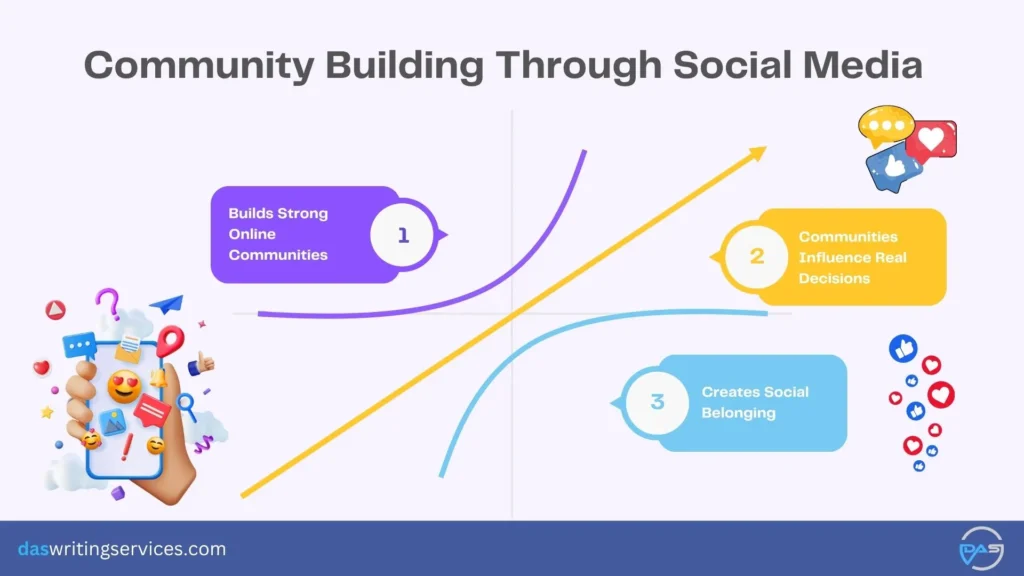
One often underestimated advantage of social media is its role in building communities. People gather around shared interests, values, and goals.
Online communities now influence purchasing decisions, political movements, and cultural trends. In fact, community-led brands see engagement rates nearly double compared to brand-only communication models.
The benefits of social media here are psychological as much as strategic. People seek belonging, validation, and shared identity.
8. Democratisation of Influence
Social media has decentralised influence. Authority no longer depends solely on institutional backing.
Creators, educators, and independent professionals build credibility through consistency and expertise. Over 66% of users say that they are more likely to remember a brand that an influencer suggests than a traditional brand advertisement.
This benefit of social network platforms reshapes leadership and trust. Influence is earned through value, not titles. For businesses, collaborating with creators now outperforms traditional endorsements in engagement metrics.
9. Faster Crisis Communication and Reputation Management
When handled correctly, social media becomes a powerful crisis management tool. Organisations that respond within the first hour of a public issue see up to 30% lower reputational damage, based on recent crisis response studies. Silence often escalates issues faster than mistakes.
This advantage of social media lies in immediacy and transparency. Real-time updates reduce misinformation and restore trust.
10. Support for Business Growth and Revenue
At its core, social media supports measurable business outcomes. Data shows that 82% of consumers now turn to social media to research products before buying.
This makes the advantages of social media for business impossible to ignore. It influences awareness, consideration, and conversion in one connected journey.
For brands looking to align strategy, content quality matters more than volume. This is where working with experienced content teams becomes valuable. Content marketing agencies like Das Writing Services often help businesses structure content that aligns with platform behaviour, audience psychology, and long-term brand goals without sounding promotional.
11. Attract Top-of-Funnel Leads
One of the most valuable advantages of social media is its ability to introduce brands to entirely new audiences. Many users who encounter your content are not ready to buy immediately, but social platforms allow them to explore your brand in a low-commitment, frictionless way.
Social media also plays a critical role in lead generation through platform-native ad formats. Businesses can collect emails, inquiries, or sign-ups without pushing users through complex funnels.
12. Platform for Personal Branding
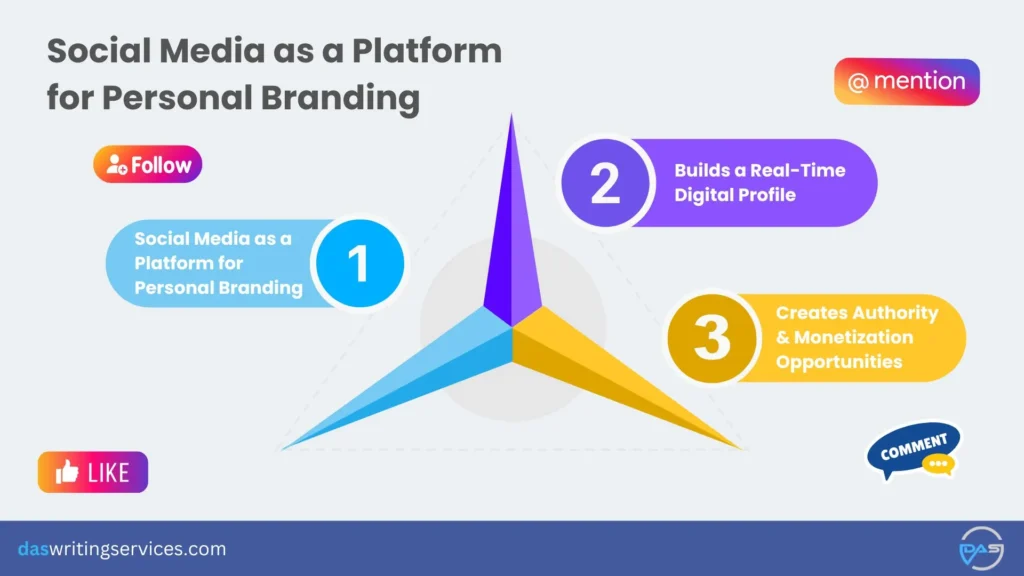
Another major advantage of social media lies in personal brand building. Platforms such as LinkedIn, Instagram, and X (formerly Twitter) enable professionals to showcase expertise, achievements, services, and perspectives at scale.
Unlike traditional resumes or portfolios, social profiles evolve in real time and allow direct engagement with audiences.
This shift has fueled the rise of creators, consultants, and founders who build authority through consistent thought leadership. Influencers use these platforms to share insights, establish credibility, and monetise their audiences through collaborations and products.
13. Provides Entertainment and Cultural Engagement
Social media is not just about connection or business; it is also a major source of entertainment and cultural engagement for billions worldwide. People are not just scrolling to stay informed or shop; they are watching, laughing, and discovering new forms of media every day.
In fact, data shows that people around the world now spend a significant amount of time on social media daily, with platforms such as TikTok leading at nearly 59 minutes per user each day.
YouTube follows closely, with users spending about 54 minutes daily on entertainment content. These platforms have shifted how audiences consume digital media.
14. Retarget Missed Customers and Recover Lost Revenue
Not every customer converts on their first visit. One of the strongest advantages of social media for business is its ability to re-engage users who showed intent but did not complete a purchase.
Cart abandonment remains a major challenge in e-commerce, with nearly 70% of online shopping carts left behind.
Social media retargeting gives brands a second chance. Research shows that 3 out of 4 shoppers notice retargeted ads.
This advantage of social network advertising turns missed opportunities into recoverable revenue while keeping the brand top of mind.
15. Build Partnerships, Collaborations, and Trust
Social media also makes collaboration easier. Brands can connect with businesses operating in similar or complementary spaces, forming partnerships that extend reach and credibility. Influencer collaborations further amplify this effect by blending trust with targeted exposure.
Customer reviews and user-generated content further reinforce trust. When people publicly share experiences, brands gain credibility that traditional advertising cannot replicate. This advantage of social media strengthens both visibility and long-term reputation.
Final Takeaway
The advantages of social media extend far beyond visibility or entertainment. They influence how people learn, connect, trust, and decide. Across industries, social platforms now support communication, growth, insight, and resilience.
When used thoughtfully, they become strategic assets rather than distractions. For organisations that want to move beyond random posting and build long-term influence, having the right content plan is essential.
This is where experienced partners such as Das Writing Services help brands translate social presence into trust, engagement, and measurable growth. Contact our company now!
Frequently Asked Questions
Social media algorithms prioritise content based on relevance, engagement, and user behaviour. Most platforms analyse signals such as watch time, saves, comments, and interaction history to personalise feeds.
The benefits of social networking sites include instant communication, access to information, professional networking, learning opportunities, and community building. They allow individuals and organisations to connect directly, share ideas, and collaborate across geographies,
Social media plays a major role in shaping public opinion by amplifying narratives through shares and discussions. Viral content often influences cultural conversations faster than traditional media.
Yes. Brands that consistently share valuable, transparent, and audience-focused content build credibility over time. Public interactions, reviews, and community engagement on social platforms strongly influence how trustworthy a brand appears.
The advantages of social media for business include brand discovery, customer engagement, lead generation, retargeting, and trust-building. Social platforms influence every stage of the buyer journey, from awareness to post-purchase loyalty.

Subhodip Das is the founder and CEO of Das Writing Services Pvt. Ltd. He has an experience of 12 years in the field of Digital Marketing and specialises in Content Writing and Marketing Strategies. He has worked with well-established organisations and startups helping them achieve increased Search Engine Rank visibility. If you want to grow your business online, you can reach out to him here.
Leave a comment