Google introduced a major page experience update in June 2021. The goal was to make Core Web Vitals a key ranking factor for user experience.
This update changed how SEO works. Since then, Google has continued to refine its approach through 2024 and 2025.
Core Web Vitals now apply across all mobile browsers. Mobile-first indexing became the default for all indexed websites on July 5, 2024. In March 2024, Google replaced First Input Delay (FID) with Interaction to Next Paint (INP).
INP gives a clearer view of real user interactions. Google also added metrics like Engagement Reliability to better measure page quality.
Experts say these updates can affect click-through rates and rankings. Understanding Core Web Vitals is now essential for long-term search visibility. Let’s take a deep dive into Google’s Core Web Vitals.
About Core Web Vitals
Core Web Vitals measure the speed of a website, responsiveness and also visual stability. These metrics are related to search rankings and user experience. Though the purpose is the same, the metrics now show user behaviour and mobile usage.
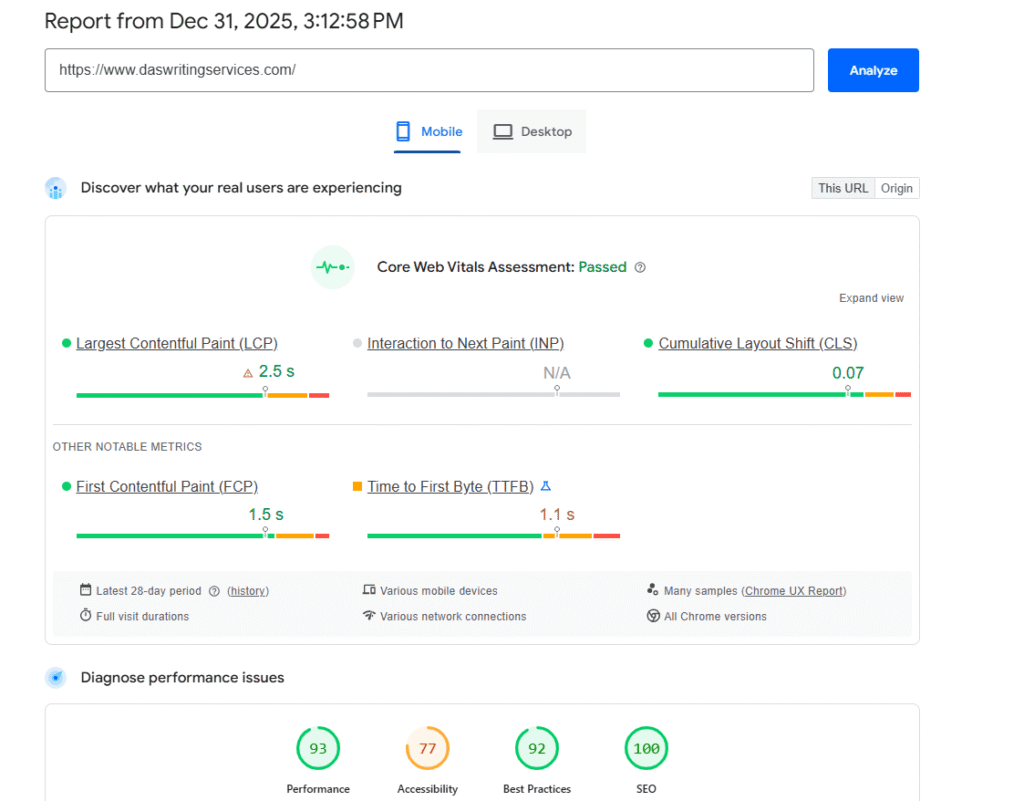
- Largest Contentful Paint (LCP)
It measures loading speed and tracks how long the largest visible text or image takes to load. For a good experience, LCP should be within 2.5 seconds. Google now focuses more on real user data. This means performance on real devices and networks matters most. If there is a slow loading, it will increase page abandonment on mobile devices.
- Interaction to Next Paint (INP)
This metric measures how fast a page responds to every user action. For example, clicks, taps, and keyboard input. It also considers interactions across the full page session. A good INP score is 200 milliseconds or less. Slow responses can make pages feel unresponsive and directly impact user satisfaction.
- Cumulative Layout Shift (CLS)
It measures visual stability and keeps a track on the unexpected movement (if any) of elements during page load. These shifts can cause accidental clicks and poor usability. A CLS score of 0.1 or lower is considered good.
Common causes include images without fixed sizes, late-loading ads, and font changes. To receive any ranking benefit, all three metrics of your website must meet the good threshold.
From July 5, 2024, mobile-first indexing applies to all websites. Google now evaluates Core Web Vitals mainly on mobile performance.
These metrics are not a primary ranking factor. However, they improve other factors such as engagement, reduce bounce rates, and improve SEO performance.
Connect with Das Writing Services today to create SEO ready content that aligns with Core Web Vitals 2026 with GEO optimisation. Contact our team now!
Other page experience signals
Along with Core Web Vitals, other page experience signals also affect SERP rankings. Some of the key metrics include:
- Mobile Friendliness
Based on the latest report published by Statista, mobile devices excluding tablets generated 62.54% of global website traffic. Mobile usage has remained close to 50% or higher consistently since 2017.
Therefore, your websites must work well on mobile screens. Google prefers responsive designs that fit all screen sizes. Pages should not require zooming or horizontal scrolling.
- HTTPS or SSL encryption
SSL encryption is still an important ranking factor in 2026. HTTPS ensures secure data transfer between users and websites. Google gives preference to secure websites. Sites without HTTPS should install an SSL certificate for better trust.
- Interstitials
Pop-ups, banners, and paywalls can harm user experience. Google penalises full-screen overlays, autoplay videos with sound, and large sticky ads. Pop-ups that block content also cause ranking issues. Interstitials should appear only when required and must close easily.
- Safe browsing
User safety remains critical for page experience. Google scans websites for malware and phishing threats. Unsafe websites may lose search visibility. Regular security checks help protect rankings and user trust.

How Will the New Google Update Impact Your Website?
The Core Web Vitals update now has a clearer impact on rankings. In 2024 and 2025, it worked as a ranking factor and as a tiebreaker when pages have similar content and authority.
Strong backlinks and domain authority still help large brands for higher rankings on SERP. However, poor Core Web Vitals can limit their performance. Smaller websites with better speed and relevance can rank higher for specific searches.
Ad-heavy websites, news portals, and e-commerce sites face the highest risk. Banners, pop-ups, and third-party scripts often slow pages and cause layout shifts. These issues affect LCP, INP, and CLS.
In short, Google rewards websites that load fast, respond quickly, and stay visually stable. The update encourages a faster and more user-focused web.
Das Writing Services delivers content that supports fast loading, clear structure, and helpful content. Speak with our experts now to get high-quality content at an affordable price.
What are the Tools to Check the Core Web Vitals of Your Website?
According to Google, pages that meet Core Web Vitals thresholds see up to 24% lower bounce rates compared to poorly performing pages. The following tools can help you measure Core Web Vitals using reliable data sources.
- Google Search Console
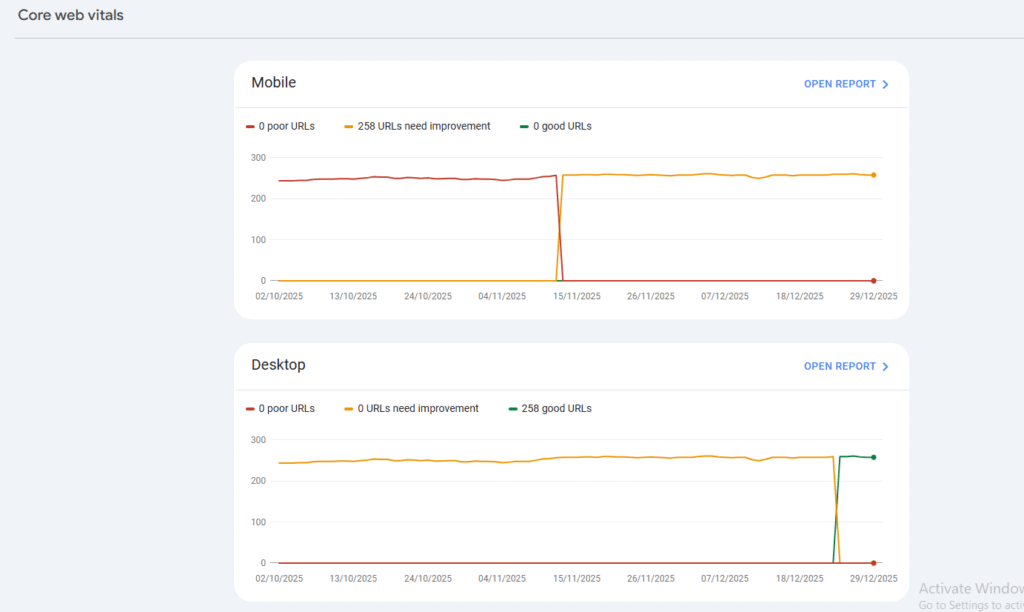
Google Search Console is the most widely used free tool for Core Web Vitals tracking. It uses real user data collected over a 28-day rolling period.
You can find different reports for mobile and desktop. Search Console marks URLs as Great, Needs Improvement, or Poor.
According to Google reports, more than 70% of ranking decisions related to page experience rely on field data.
- Lighthouse and Chrome DevTools
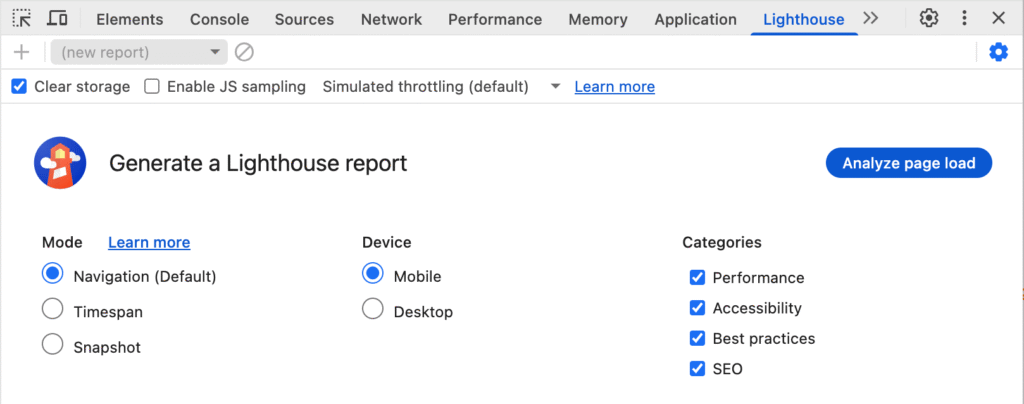
These tools provide lab-based testing during development. Developers use them to simulate mobile devices and slower networks.
Google states that Lighthouse audits help identify issues that account for over 90% of common performance bottlenecks, such as render-blocking resources and heavy JavaScript.
- Web Vitals Chrome Extension
This extension shows real-time Core Web Vitals for individual pages. It reports LCP, INP, and CLS instantly. Google recommends it for quick checks, as it reflects the same thresholds used in ranking evaluations.
- PageSpeed Insights and Chrome User Experience Report
PageSpeed Insights combines lab data with real user field data from Chrome users. The Chrome User Experience Report is based on data from millions of real-world visits across devices and network conditions. Google confirms that CrUX data represents how users actually experience pages at scale, making it critical for long-term optimisation decisions.
Tips to Help You Prepare for Google Updates in 2026 and Beyond
To ensure a higher ranking of your web pages on SERPs, you must stay updated with Google algorithm changes. These are some tips you can follow in 2026 and even after that to keep up to date with:
- Check Your Page Experience
- Start by reviewing your Core Web Vitals performance, with a focus on mobile pages.
- Use Google Search Console to check Core Web Vitals reports for mobile and desktop.
- Identify pages marked as Poor or Needs Improvement.
- Review real user data in PageSpeed Insights and Chrome User Experience Report. This helps you understand how users experience your site on real devices and networks.
- Use Lighthouse and Chrome DevTools to run lab tests. Test pages on slower connections to reflect real-world conditions.
- Ensure your site uses HTTPS, passes safe browsing checks, and avoids intrusive pop-ups.
- Always Focus On Quality
High-quality and authoritative content still drives rankings. No doubt, Google will continue to reward pages that include original, useful, and relevant information.
Quality content helps your rankings in tough competition when rankings are close and supports better engagement across devices.
Partner with Das Writing Services today for data-driven SEO content that improves rankings and user trust. Request a free content sample now!
- Take Industry-Based Preparations
Websites from different industries may face different challenges. For example, e-commerce sites should optimise images, reduce heavy scripts, and stabilise layouts on product and checkout pages.
On the other hand, news and media sites should limit third-party ads and delay scripts that affect loading and stability. SaaS and interactive platforms should prioritise fast response times and smooth interactions.
- Monitor and Improve Continuously
Check Core Web Vitals weekly to keep track on the performance. Review trends monthly using the available data. Run full audits quarterly to measure ranking and traffic impact. Continuous optimisation is now essential to stay competitive.
The Bottom Line
In 2026, Core Web Vitals will not just be a minor ranking signal. It will be a core requirement for search visibility and user retention. Google now keeps a strong focus on real user experience rather than theoretical performance.
The 2024 and 2025 updates show this shift clearly. The business impact is now measurable. Many e-commerce websites report conversion rate gains of 15% to 20%. Bounce rates often drop by more than 24% after optimisation.
Websites that treat Core Web Vitals as a business priority perform better in both rankings and engagement. Faster, stable, and responsive pages build trust and satisfaction.
Audit your key pages, focus on real user data, and act on improvements. Ranking gains often appear within 28 days of sustained performance changes.

Subhodip Das is the founder and CEO of Das Writing Services Pvt. Ltd. He has an experience of 12 years in the field of Digital Marketing and specialises in Content Writing and Marketing Strategies. He has worked with well-established organisations and startups helping them achieve increased Search Engine Rank visibility. If you want to grow your business online, you can reach out to him here.


Leave a comment
All comments
Roland Tomas Aydin Griffith
It's clear that you truly care about your readers and want to make a positive impact on their lives Thank you for all that you do
Devin Q. B. Malone
Keep up the amazing work! Can't wait to see what you have in store for us next.
Ryan L. Cunningham
Your posts are so well-written and eloquent It's impossible not to be moved by your words Keep using your voice to spread positivity
Christina Arely Sloan Sims
This post is jam-packed with valuable information and I appreciate how well-organized and easy to follow it is Great job!
Arghish Das
This is a great article on Core Web Vitals! It's really helpful. I'm wondering how this update will affect smaller businesses that don't have a huge budget. Are there any affordable ways to improve website performance? Thanks for sharing this information!