
Get Free Content Sample

 Add as preferred on Google →
The future of digital marketing is to shape around AI, automation and precision data-driven decision making. While AI and Machine Learning is saving resources by automating repetitive tasks in marketing, personalization and immersive experiences are the emerging trends in digital marketing that is expected to dictate the future for digital marketers.
With more than 5.5 billion internet users worldwide the importance of digital marketing is only going to go up in the coming days. For businesses and marketers, this is a golden opportunity to double down investments on latest marketing technologies and data analysis to drive better customer engagement and help in the growth journey.
Look out for the latest trends in digital marketing industry to create attractive and impactful campaigns.
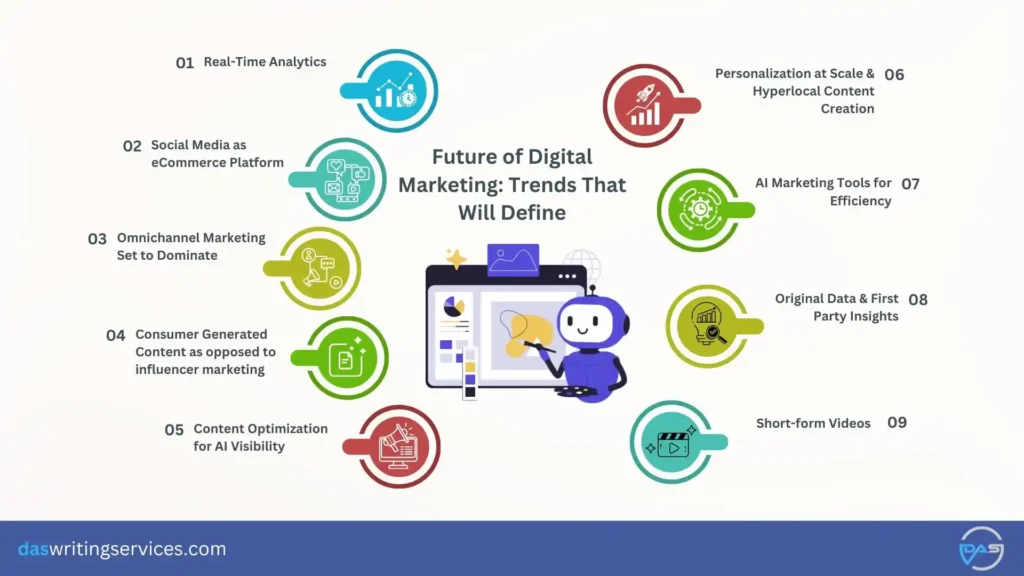
Future of Digital Marketing: Trends That Will Define 2026
Right now video content is having its moment with 89% of digital marketers using videos to engage prospective consumers. But if we have learnt anything about marketing campaigns, it is that not a single strategy is evergreen and newer trends are always lurking around the corner to better engage users.
So, check out these digital marketing strategies that will underline the future:
1. Real-Time Analytics
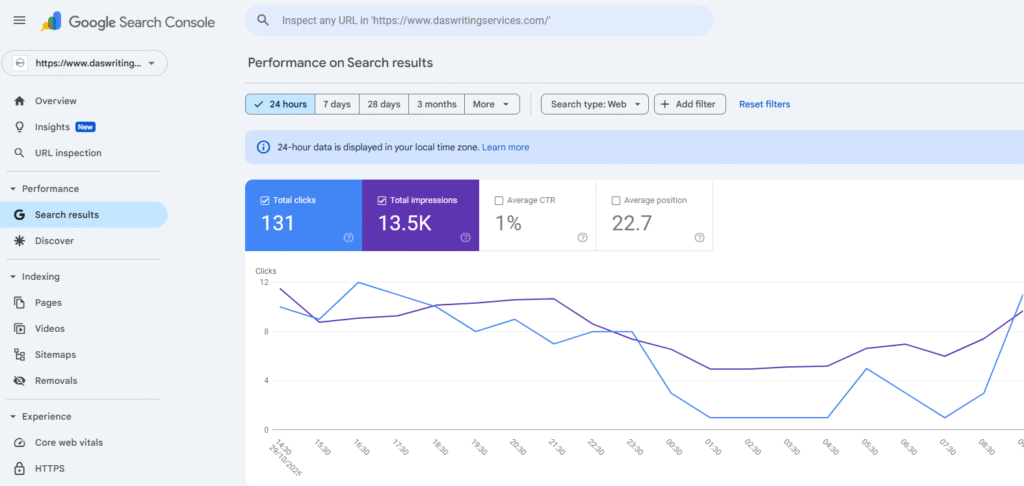
With artificial intelligence simplifying campaign management, tracking monthly or even weekly performance is not enough. In channels like social media performances can be increasingly time sensitive. Platforms like Instagram tend to drive engagement in the morning and early afternoon. So, if you ad campaign wants to target wider groups, these can be the best time.
Tweaking your campaigns as per the user behaviour and their navigation patterns will give you competitive edge to plan an effective consumer journey and drive conversions.
2. Social Media as eCommerce Platform
Social media platforms are no longer only about sharing memes and reels but ad campaigns as well. Majority of the young working population hangs around in social media in their free time. Making it the go-to place to nurture leads or even to close a sale.
Know More: Difference Between Content Marketing and Social Media Marketing
Thanks to above average user engagement, ad campaigns on social media tend to perform well for users across different stages of the buyer journey.
3. Omnichannel Marketing Set to Dominate
Your target audiences are not only on Google OR social media OR WhatsApp – rather they are present across all these channels. And when you too are present across multiple channels instead of one, it creates familiarity. To create a memorable brand, businesses are targeting all channels simultaneously to deliver a cohesive experience.
In fact, businesses that target 5+ channels for marketing notice a direct increase in customer retention by 89 per cent. Comparatively, businesses that uses only one channel tends to receive an average 33 per cent user engagement.
Know More: How to Use Holistic Marketing for your Brand
4. Consumer Generated Content as opposed to influencer marketing
Encouraging consumers to create video content is a game changer across so many levels. First it is affordable and requires little to no payouts to create each content. Secondly social sharing tends to be higher with organic content, creating a compounding impact on engagement.
While influencer marketing is still creating brand awareness for businesses, the channel is becoming increasingly saturated with thousands of influencers and increased CPA (cost per acquisition). Besides, many influencers attract a reputation of being biased which may affect the trustworthiness of your business negatively.
Know More: What are the Trust Signals?
5. Content Optimization for AI Visibility
The percentage of AI searches are increasing day by day. And with Google’s AI Mode and AI Overview, direct answer focused search queries are at an all-time high. Reason why businesses are trying to secure citations and mentions with a content marketing campaign.
AI searches also tend to attract high search intent users. Making it a desirable channel to create awareness. Also getting listed by AI algorithms tend to work well for the brand’s credibility. Putting one ahead of the competitors.
6. Personalization at Scale & Hyperlocal Content Creation
Everybody is creating content these days and to stand out, it has to resonate with the target audience and create a brand reputation. Creating just information is not good enough if it is not tailored for the pain points of the target audience.
Especially if you are creating content to encourage conversion, personalization is a must. The future of digital marketing depends on how well a campaign caters to the users’ challenges and confusions.

7. AI Marketing Tools for Efficiency
Semrush Enterprise AIO, Yoast SEO AI+ and ChatGPT are easily the most helpful AI tools that you can use to manage your marketing efforts in 2025. ChatGPT can make your research process more efficient by helping with content planning and content calendar creation.
Semrush Enterprise AIO is a must for businesses looking for ways to rank on AI overview. It helps your business prepare for the future of digital marketing by tracking visibility and citations of AI search.
8. Original Data & First Party Insights
As AI searches become the go-to option for information, the information sources are concentrating, to a point where only the original information creators are rewarded with citations.
To dominate the future of marketing, create original information and publish your own statistics. It communicates thought leadership and that is exactly what you need to stand out in the crowd.
9. Short-form Videos
Reels, Tik-Tok or Shorts –short format content continues to rule user engagement. Typically a YouTube Short video can have a surge of views within 72hours of publishing. With increased viral potential than long-format videos, short videos are a perfect marketing tool to increase brand awareness and drive quick visibility.
How to Prepare for the Digital Marketing Future?
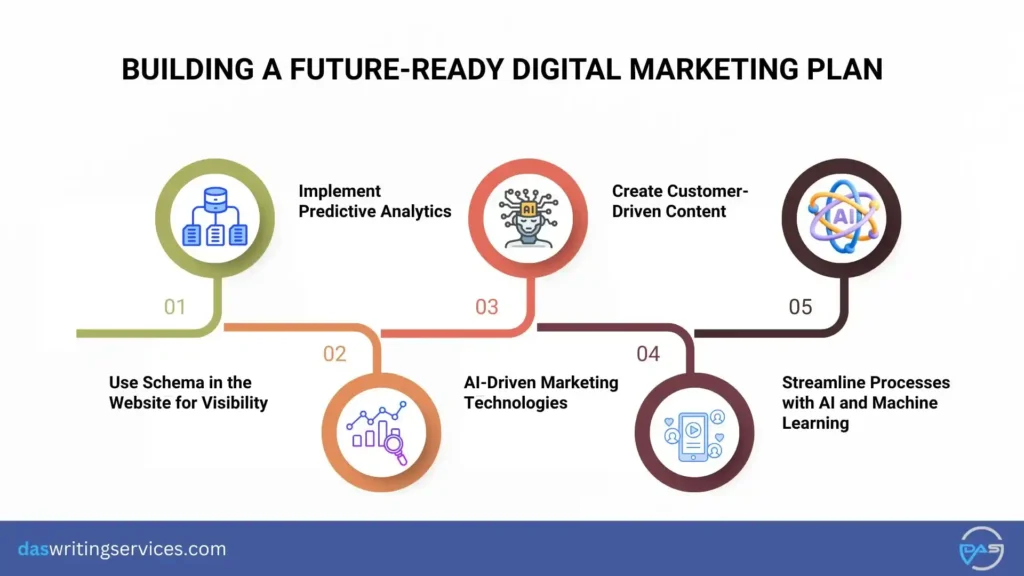
Although the future of digital marketing promises unprecedented growth in terms of marketing automation and AI, established SEO and optimization practices will continue to serve as the bedrock for the AI-driven future. If you are already following best practices, then proceed to implement the following strategies across your website to be future ready
1. Use Schema in the Website for Visibility
Securing citations in the AI Overviews is one of the most popular goal right now. And it all starts with making your pages more machine-readable. While optimizing your content marketing for AI Overview (add link) use structured data markups to label pages as per their category. Choosing the right set of schema is vital to get visibility for particular queries.
For instance you should be using content based schema like article, product, event, local business to serve intended purposes.
2. Implement Predictive Analytics
With AI being incorporated in much of the workflow, incorporating predictive analytics will help you forecast future events based on historical data. By training a model on first party data, marketers can get deeper insights into the processes and trigger automated campaigns.
3. AI-Driven Marketing Technologies
As of now, AI focused marketing includes AI-powered chatbots an automated push notifications. However in the future the process should be more streamlined to map the customer journey to deliver a more streamlined progression from awareness to conversion.
4. Create Customer-Driven Content
Having a comprehensive understanding of what the users are looking for is non-negotiable to create impact with your content. Writing just around keywords is no longer enough to pass it as a customer-focused content.
Marketing leaders like Semrush and Neil Patel emphasizes on this point repeatedly. Difficult to understand topics, complicated guides, verbose paragraphs – all these are exactly opposite of what the customer wants.
To make sure you are ready for the future of marketing, make sure to use a natural language to write content. Focus on conversationality and understandability over anything else. Remember, most of your audience don’t want to read a research thesis.
5. Streamline Processes with AI and Machine Learning
Whether you are going for search engine optimization or running an email marketing campaign, doing it from scratch can be a tedious as well as a repetitive task. In the future, digital marketing processes are mostly likely to be automated.
So, it is a good opportunity to optimize workflow for machine learning and automation. Much of mobile marketing has already been automated to create AI-powered toolkits that automate marketing communications based on specific events.
Takeaway
Based on the trends, it is pretty evident that personalized experiences will pretty much shape the future of digital marketing campaigns around the world. First responders are already focusing on strategies like AI visibility and automated campaigns to elevate the user experience across multiple touchpoints. Essentially, curating a seamless experience across the channels is surely going to help define the future of marketing.
Frequently Asked Questions
1. What is the golden rule of digital marketing?
One of the cardinal rule of digital marketing is, “treat others as you would like to treated”. As in, do not make false promises in your ads and write generic keyword stuffed fluff in the name of blogs. Be empathetic towards the needs and preferences of your audience to make a solid campaign.
2. Is AI replacing digital marketing?
AI is not replacing digital marketing as much as it is complementing it. Using AI is helping digital marketers automate workflow and implement predictive analytics to track real time performance for better decision making.

Ritish Dutta is a seasoned Content Developer with over 7 years of experience in the industry. Currently, at Das Writing Services, he writes SEO-optimized content that caters to our diverse clientele. Ritish utilizes his critical insights and experience to talk about digital marketing, SEO content writing, content strategy, and AI.


All Comments
Bryson Bullock
Hi! I just finished reading your blog post, and I must say, it was excellent. Your ability to explain complicated concepts in a simple and engaging way is truly remarkable. Thank you for providing such valuable content. I can’t wait to read more from you in the future.