
Get Free Content Sample

 Add as preferred on Google →
Google’s thin content penalty came into action after the Panda update in 2011. This update was designed to target low-quality and repetitive pages that were of low or no value to the readers. So, sites with too many thin pages lost visibility across the whole website.
In fact, even after 15 years, Google still uses it as a part of their ranking system. Thus, it is important to familiarise yourself with the concept of Experience, Expertise, Authoritativeness, and Trustworthiness (E-E-A-T) for quality and trustworthy content.
What Is Thin Content?
Thin content is any webpage that provides little or no value to users. It may be a very short page or a long page with vague ideas, copied information, or repeated content. Google also considers low-quality affiliate pages, doorway pages, and keyword-stuffed pages as thin content. These pages focus more on ranking on the SERP than helping users with answers.
Thus, visitors often leave the page quickly because of incomplete information. It can also create keyword cannibalisation when several pages target the same topic. This makes it difficult for Google to decide which page should rank. As a result, your pages lose visibility.
What Are the Types of Thin Content?
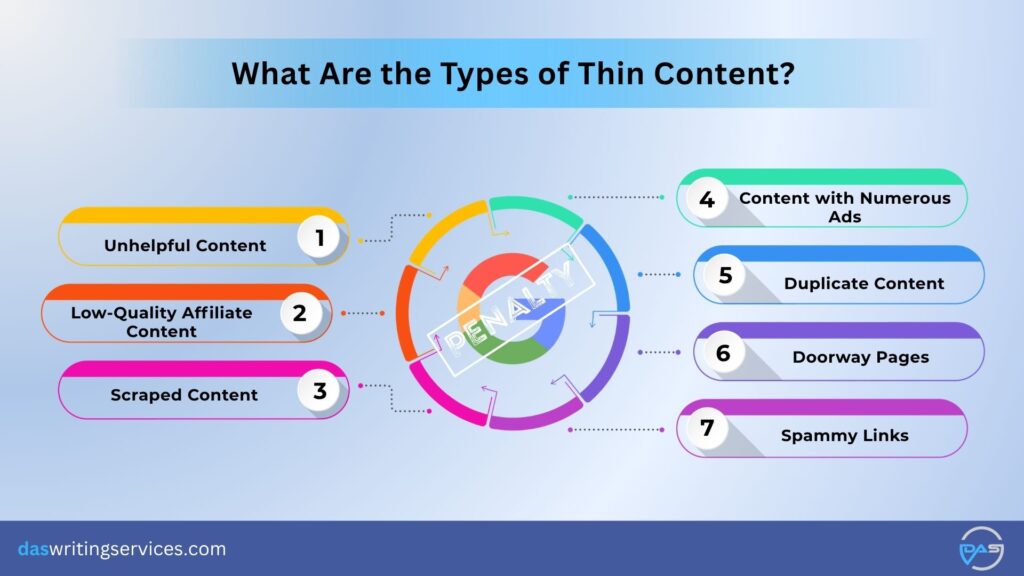
Various content, beginning with poorly written content can be referred to as thin content by Google. Content with spelling mistakes, grammatical errors, or confusing sentences creates a poor reading experience. It also loses the trust of readers, which affects its search rankings.
A few other examples of thin content are as follows:
- Unhelpful Content
This type of content does not answer users’ questions or solve their problems. It often contains very little information, repeated ideas, or copied details. Google prefers content that is useful, original, and written to help readers understand a topic clearly.
- Low-Quality Affiliate Content
Affiliate content becomes thin when it only promotes products without adding useful information. Simply copying product details from another website does not help readers. Google prefers honest reviews, personal insights, and original content that adds real value.
- Scraped Content
Content copied from another website without permission or proper credit is called scraped content. Even small changes do not make it original. Google can detect copied content and lower its rankings because it offers nothing new to users.
- Content with Numerous Ads
Too many advertisements make a webpage difficult to read and use. They distract visitors from the main content and can slow down the page. Google values websites that offer a clean and comfortable experience for users.
- Duplicate Content
Duplicate content appears when the same or very similar information exists on different pages. This can confuse Google about which page should rank. Original content helps search engines understand your website and improves search visibility.
Is duplicate content affecting your website? Das Writing Services Pvt. Ltd. creates original, SEO-friendly content that improves search visibility, builds website trust, attracts more organic traffic, and helps your business grow online.
- Doorway Pages
Doorway pages are created only to attract search traffic and send visitors to another page also does not escape Google’s thin content penalty. They contain repeated keywords with very little useful information. Google considers such pages low quality and reduces their rankings.
- Spammy Links
Pages filled with spammy or unrelated links provide a poor user experience. These links often exist only to influence search rankings. Google prefers links that are useful, trustworthy, and relevant to the content on the page.
How to Identify Content That May Face Google’s Thin Content Penalty?
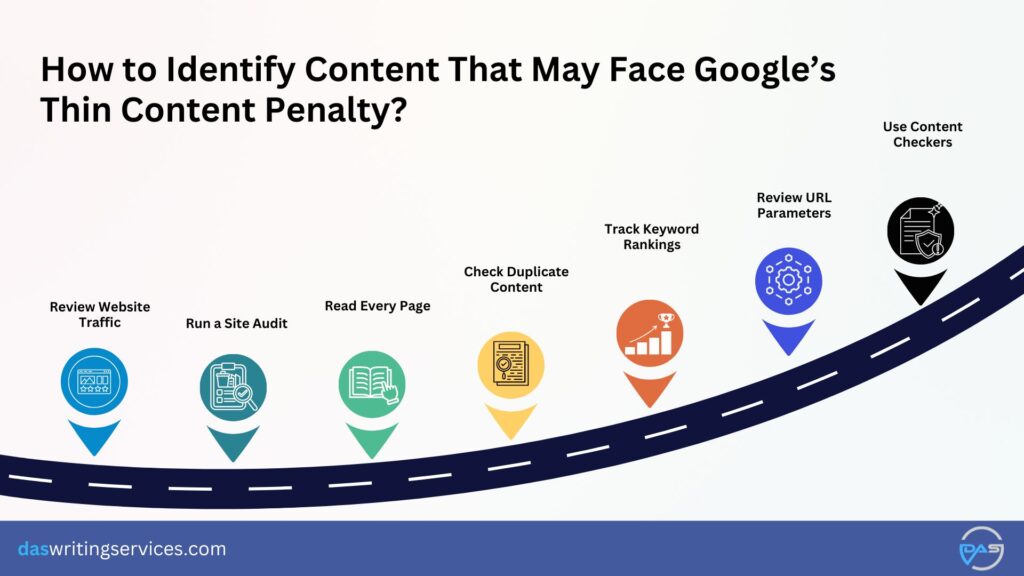
Google Search Console helps you find pages that may face Google’s thin content penalty. Check for pages with very low traffic or manual penalties. Also review pages that Google has not indexed, as they may need better or more useful content.
However, this is not enough, other ways to identify thin content are as follows:
- Review Website Traffic
Use Google Analytics to check pages with very low organic traffic. If traffic keeps falling for a long time, the content needs improvement.
- Run a Site Audit
Use a site audit tool to find duplicate content, broken links, and other website problems. Fixing these issues improves your website’s overall quality.
- Read Every Page
Read your webpages carefully as if you are visiting them for the first time. If a page does not answer important questions or explain the topic clearly, it is thin content.
- Check Duplicate Content
Look for pages with the same or very similar content, titles, or meta descriptions. Duplicate pages can confuse Google and reduce your chances of getting better search rankings.
- Track Keyword Rankings
Track your target keywords regularly with a ranking tool. A sudden ranking drop shows thin content or keyword cannibalisation problems.
- Review URL Parameters
Some URL parameters can create duplicate versions of the same page. Check these URLs and manage them correctly so Google crawls and indexes only the main version.
- Use Content Checkers
Use plagiarism and website crawling tools to find copied or repetitive content. Update these pages with original and valuable information.
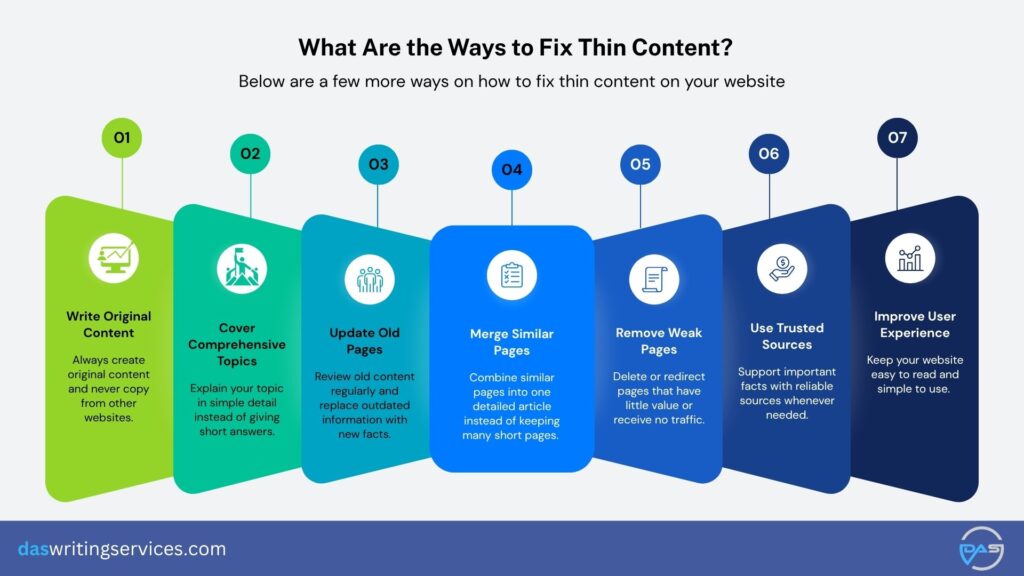
What Are the Ways to Fix Thin Content?
To solve the thin content issue of your website, start by adding useful web content that answers users’ questions clearly. Include examples, facts, images, or expert opinions. Detailed content gives readers better value and improves your website’s quality.
Below are a few more ways on how to fix thin content on your website.
- Write Original Content
Always create original content and never copy from other websites. Share your own ideas and explain topics with information that helps readers understand the subject better.
- Cover Comprehensive Topics
Explain your topic in simple detail instead of giving short answers. Cover important questions and examples, so readers do not need to visit another website.
- Update Old Pages
Review old content regularly and replace outdated information with new facts. Adding fresh details, images, and examples keeps your content useful for readers and search engines.
Get in touch with Das Writing Services Pvt. Ltd. Our team of experts can refresh your content with updated information and improve its quality. Our writers will align your content with the Google content guidelines for better search performance.
- Merge Similar Pages
Combine similar pages into one detailed article instead of keeping many short pages. This improves user experience and helps search engines understand your content more easily.
- Remove Weak Pages
Delete or redirect pages that have little value or receive no traffic. This keeps your website clean and helps search engines focus on your most useful content.
- Use Trusted Sources
Support important facts with reliable sources whenever needed. This improves trust, shows your content is accurate, and gives readers more confidence in the information you provide.
- Improve User Experience
Keep your website easy to read and simple to use. Ensure there are no unnecessary ads and the format is balanced to make the pages helpful and avoid Google’s thin content penalty.
Final Thoughts
Creating original and helpful content is the best way to refrain from Google’s thin content penalty. Focus on solving users’ problems instead of writing only for better search rankings and visibility. Apart from that, regularly update your content, remove weak pages, and improve user experience to maintain strong search performance over time.
Frequently Asked Questions
Can AI content get a Google penalty?
AI content is not always a problem, but it should provide real value to readers. The Google penalty for AI content may happen if the content is repetitive or lacks human insights.
How long will it take to recover from Google’s thin content penalty?
Recovering from a thin content penalty takes several months. Improving website quality by updating weak pages and combining similar content will help your website get better rankings.
Can expert review reduce thin content?
Yes, expert review can improve thin content by adding useful insights, real examples, accurate information and more. This helps create original, valuable content that better meets Google’s quality standards.

Subhodip Das is the founder and CEO of Das Writing Services Pvt. Ltd. He has an experience of 12 years in the field of Digital Marketing and specialises in Content Writing and Marketing Strategies. He has worked with well-established organisations and startups helping them achieve increased Search Engine Rank visibility. If you want to grow your business online, you can reach out to him here.


