

Get Your Website Content Audit

 Add as preferred on Google →
Keyword research starts with understanding what your audience is searching for and choosing the terms that match their intent. If you know how to do keyword research, you can create content that ranks, attracts qualified visitors, and drives meaningful conversions.
According to Omnibound, with Google processing more than 8.5 billion searches every day, and organic search contributing over 53% of website traffic, keyword research remains one of the most valuable SEO activities for businesses in 2026.
What is Keyword Research?
Keyword research is the process of finding and analysing the words and phrases people type into search engines when looking for information, products, or services. It helps businesses understand audience demand and create content that aligns with user intent.
In simple terms, keyword research bridges the gap between what your audience wants and the content you publish. Instead of guessing which topics might perform well, you rely on search data to identify opportunities that can generate consistent organic traffic.
For example, if you own a bakery, you may initially target a broad keyword such as ‘cakes.’ However, keyword research could reveal that more people are searching for ‘eggless birthday cakes near me’ or ‘custom wedding cakes.’ These specific terms are easier to rank for and often lead to better conversions.
Step-by-Step Guide on How to Do Keyword Research
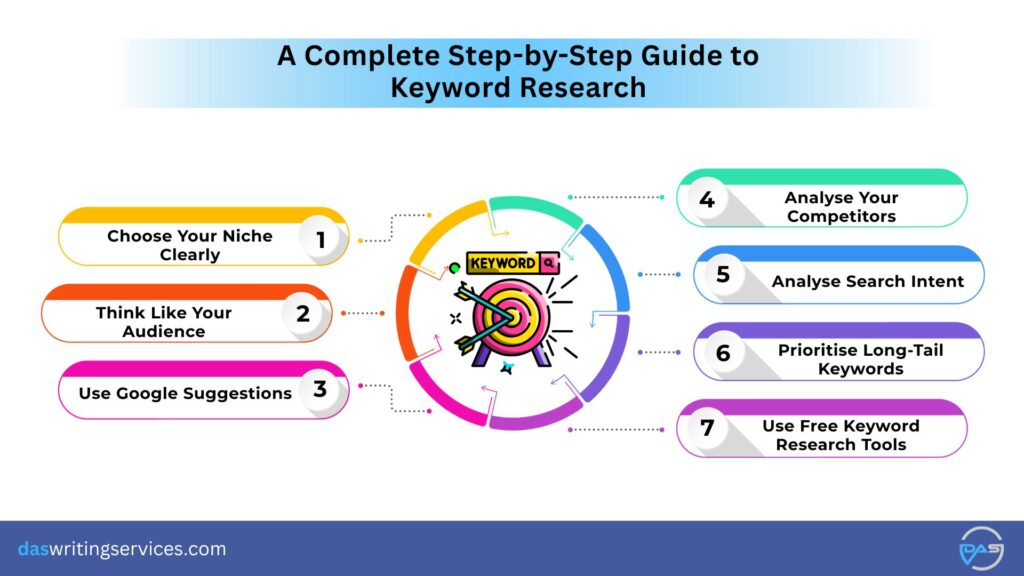
Learning how to do keyword research becomes much easier when you follow a structured process. Instead of collecting random keywords, these steps help you discover search terms that match your audience’s needs and business goals while improving your chances of ranking higher on search engines. Here is a detailed guide:
- Choose Your Niche Clearly
Start by defining your niche and identifying the topics that best represent your business, products, or services. A clear niche helps you focus your keyword research on relevant search terms instead of broad and unrelated topics. It also strengthens your website’s topical authority, which makes it easier for search engines to understand your expertise.
- Think Like Your Audience
The best keywords come from understanding how your audience searches online. Consider the questions they ask, the problems they want to solve, and the language they naturally use. This approach helps you discover valuable keyword opportunities while creating content that genuinely addresses user needs through effective content research.
- Use Google Suggestions
Google Search is one of the easiest places to discover keyword ideas. As you type a search query, autocomplete suggestions, the People Also Ask section, and Related Searches reveal real phrases users are searching for.
These insights help you identify popular topics and answer common questions, including how do you find keywords and how do you find keywords on a website.
- Analyse Your Competitors
Reviewing your competitors’ websites can uncover valuable keyword opportunities that you may have overlooked. Examine their blogs, landing pages, and resource sections to identify recurring topics, keyword usage, and content gaps. Studying successful competitors allows you to create more comprehensive and valuable content that stands out in search results.
- Analyse Search Intent
Understanding search intent is essential because every keyword reflects a user’s goal. Some users want information, while others are comparing products or looking to make a purchase. Creating content that matches these intentions improves user experience and increases your chances of ranking because Google prioritises pages that satisfy search intent.
- Prioritise Long-Tail Keywords
Long-tail keywords are longer, more specific search phrases that generally have lower competition and attract highly targeted visitors. They are ideal for new websites because they are easier to rank for and often generate higher conversion rates.
The best keyword research strategy for small business SEO is a great example of a long-tail keyword with clear user intent.
- Use Free Keyword Research Tools
After creating an initial keyword list, use free keyword research tools such as Google Keyword Planner, Ubersuggest, Google Trends, etc., to validate your ideas. These tools provide insights into search volume, competition, and keyword trends, which help you prioritise the terms most likely to generate traffic.
A well-planned keyword strategy can significantly improve your SEO performance, but finding the right opportunities requires expertise. At Das Writing Services, we combine in-depth keyword research, competitor analysis, and SEO-focused content creation to help businesses attract the right audience and achieve sustainable organic growth.
What are the Different Types of Keywords?
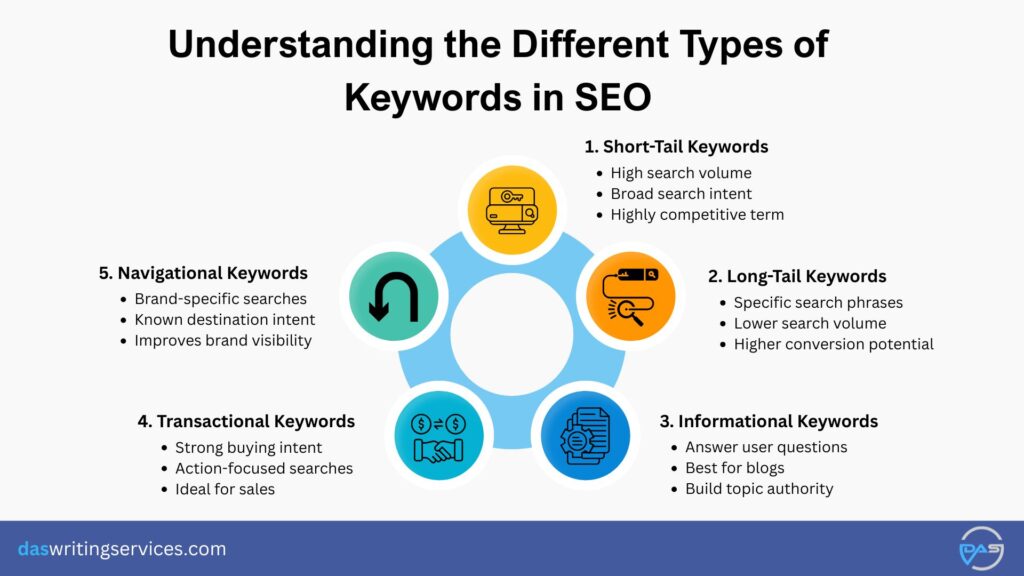
Every keyword serves a different purpose in SEO. Understanding the various types of keywords allows you to create content for every stage of the customer journey, from building awareness to driving conversions. A balanced keyword strategy should include all of the following keyword categories:
- Short-Tail Keywords
Short-tail keywords usually consist of one or two words and attract high search volumes. While they can drive significant traffic, they are also highly competitive and often have broad search intent. Businesses with strong website authority are generally more successful at ranking for these terms.
- Long-Tail Keywords
Long-tail keywords contain three or more words and target users searching for something specific. Although they typically have lower search volumes, they attract highly relevant audiences and often produce better conversion rates. How to do SEO keyword research for a new website is an example of a long-tail keyword that addresses a specific search need.
- Informational Keywords
Informational keywords are used when people want to learn or find answers to their questions. These keywords work well for blogs, guides, tutorials, and educational content because they help establish authority while attracting users during the awareness stage of their buying journey.
- Transactional Keywords
Transactional keywords indicate that users are ready to take action, such as making a purchase or requesting a service. These keywords usually have strong commercial intent and are commonly targeted through product pages, service pages, and landing pages designed to generate leads or sales.
- Navigational Keywords
Navigational keywords are searched by users who already know the website or brand they want to visit. These searches often include brand names or product names and help businesses improve branded visibility while making it easier for existing customers to find the right pages.
What are the Best Free Keyword Research Tools in 2026?
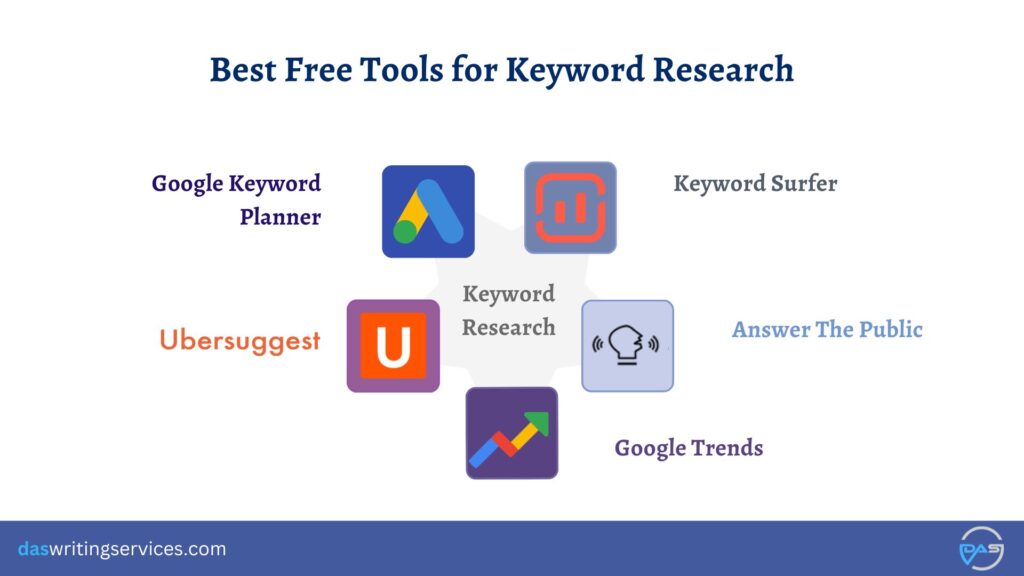
You do not need expensive tools to learn how to do keyword analysis for seo effectively. Several free tools provide reliable keyword ideas, search trends, and audience insights that help beginners and businesses build a solid SEO strategy. Here is a detailed understanding:
- Google Keyword Planner
Google Keyword Planner is one of the most reliable free keyword research tools because it uses Google’s own search data. It provides keyword suggestions, average monthly search volumes, competition levels, and seasonal trends.
- Ubersuggest
Ubersuggest helps users discover keyword ideas, analyse competition, and estimate keyword difficulty through a simple interface. Its free version is suitable for beginners who want to explore related keywords, identify ranking opportunities, and improve their content planning.
- Google Trends
Google Trends shows how search interest changes over time. It allows you to identify seasonal trends and emerging topics. It also helps compare multiple keywords and understand regional search behaviour, which makes it useful for planning timely and relevant content strategies.
- Answer The Public
Answer The Public collects real questions people ask online and groups them into useful keyword clusters. This makes it particularly valuable for creating FAQ sections, blog topics, and answer-focused content that aligns with conversational search behaviour and AI-powered search experiences.
- Keyword Surfer
Keyword Surfer is a free Chrome extension that displays keyword metrics directly within Google search results. It provides estimated search volumes, related keyword suggestions, and content insights. This tool allows marketers to perform quick keyword analysis without switching between multiple SEO tools.
What are the Common Keyword Research Mistakes You Need to Avoid?
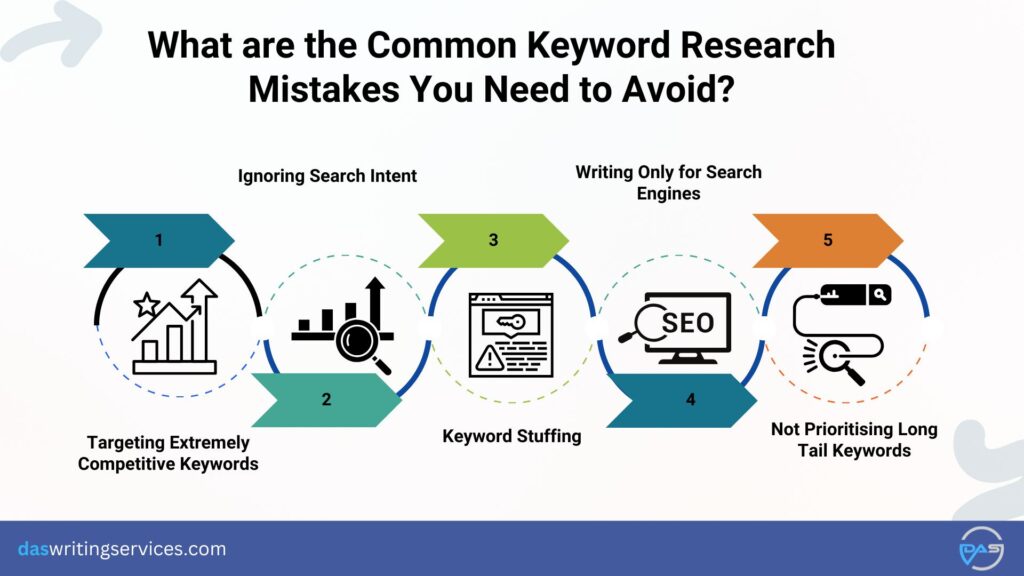
Even if you know how to do keyword research, certain mistakes can prevent your content from achieving strong search rankings. Here are some of the mistakes you should avoid for keyword research:
- Targeting Extremely Competitive Keywords
Many beginners focus only on high-volume keywords because they appear more attractive. However, these keywords are usually dominated by authoritative websites.
Instead, you need to look for keywords with a balance of search volume, relevance, and competition. Long-tail keywords often provide a better opportunity to rank faster while attracting highly qualified visitors.
- Ignoring Search Intent
A keyword alone does not guarantee rankings if your content does not satisfy what users are looking for.
For example, someone searching ‘best keyword research tools’ expects comparisons and recommendations, not a general definition of keyword research. Matching content with user intent improves engagement, reduces bounce rates, and increases your chances of ranking higher.
- Keyword Stuffing
Adding the same keyword repeatedly throughout a page no longer improves rankings. In fact, it can make your content difficult to read and may negatively impact user experience.
Instead of forcing keywords into every paragraph, place them naturally in the title, headings, introduction, meta tags, and body content where they fit contextually. Google’s algorithms have become increasingly sophisticated and now understand related phrases, synonyms, and semantic meaning.
- Writing Only for Search Engines
Content created solely to rank often feels repetitive, lacks originality, and fails to provide real value to readers. Google’s algorithm prioritises content written primarily for people rather than search engines.
You need to focus on answering users’ questions clearly, supporting your points with reliable data, and offering actionable insights. Well-written content naturally performs better over time because it satisfies both readers and search engines.
- Not Prioritising Long Tail Keywords
Many websites overlook long-tail keywords in favour of broader search terms. While broad keywords attract larger search volumes, long-tail keywords often drive more qualified traffic and better conversion rates.
Including specific search phrases throughout your content helps you reach users with clear intent while reducing competition. As AI-powered search and conversational queries continue to grow, long-tail keywords have become even more valuable for modern SEO strategies.
Final Thoughts
Learning how to do keyword research is one of the most valuable SEO skills you can develop. By understanding your audience, analysing search intent, using reliable keyword tools, and targeting the right mix of keyword types, you can create content that attracts qualified traffic and delivers long-term business results.
If you are looking to build an SEO strategy backed by thorough research, data-driven content planning, and high-quality writing, Das Writing Services can help. Our team creates content that is designed to rank, engage readers, and support long-term business growth.
Frequently Asked Questions
- What is the difference between short-tail and long-tail keywords?
Short-tail keywords are broad search terms with high search volume and strong competition. Long-tail keywords are more specific, usually contain three or more words, and often have lower competition with higher conversion potential because they target users with clearer search intent.
- How often should I perform keyword research?
You should review your keyword strategy on a quarterly basis. However, industries with rapidly changing trends may benefit from monthly keyword research to identify new search opportunities and maintain strong search visibility.
- Do I need paid tools for keyword research?
No. Beginners can perform effective keyword research using free tools such as Google Keyword Planner, Google Trends, Answer The Public, and Keyword Surfer. Paid tools become useful as your SEO strategy grows and requires deeper competitor analysis and advanced reporting.

Subhodip Das is the founder and CEO of Das Writing Services Pvt. Ltd. He has an experience of 12 years in the field of Digital Marketing and specialises in Content Writing and Marketing Strategies. He has worked with well-established organisations and startups helping them achieve increased Search Engine Rank visibility. If you want to grow your business online, you can reach out to him here.


