The writing process is typically divided into 4 steps: research, planning, writing, proofreading. If you are a professional writer, chances are you are following it intuitively.
Sure, writing is one of the most creative skills out there, everybody has their own ways of conceptualizing and then executing it. Yet, there is always a skeletal process that all writers return to again and again. It does not only make writing less chaotic but also produces better quality write ups.
So whether you are an academic writer, creative writer or content writer, read through this guide to understand the process of writing.
Why Must You Follow a Writing Process?
In any discipline, following a stepwise writing process helps you create a structured approach. This makes writing less stressful and creates better quality of work.
In an interview, Booker prize winning writer Salman Rushdie recounts his job as an ad copy writer, and acknowledges, that it taught him to be a disciplined writer. He says that his job at advertisement agency helped him treat writing as a job, not just an art form that relies on inspiration.
Only few days it happens when you sit in front of the keyboard and words flow out of your fingertips. But when you choose writing as a job, or part of your coursework, you have no choice but to write – especially when you are not feeling inspired at all.
Having your own process helps you overcome the looming stress of writing of feeling uninspired. It helps you break down the laborious process of writing into small actionable steps that eventually leads to a quality work.
So, we have described the stages of writing process below that you can adapt to make your writing process more straightforward and days more productive.

What is the Step by Step Process of Writing?
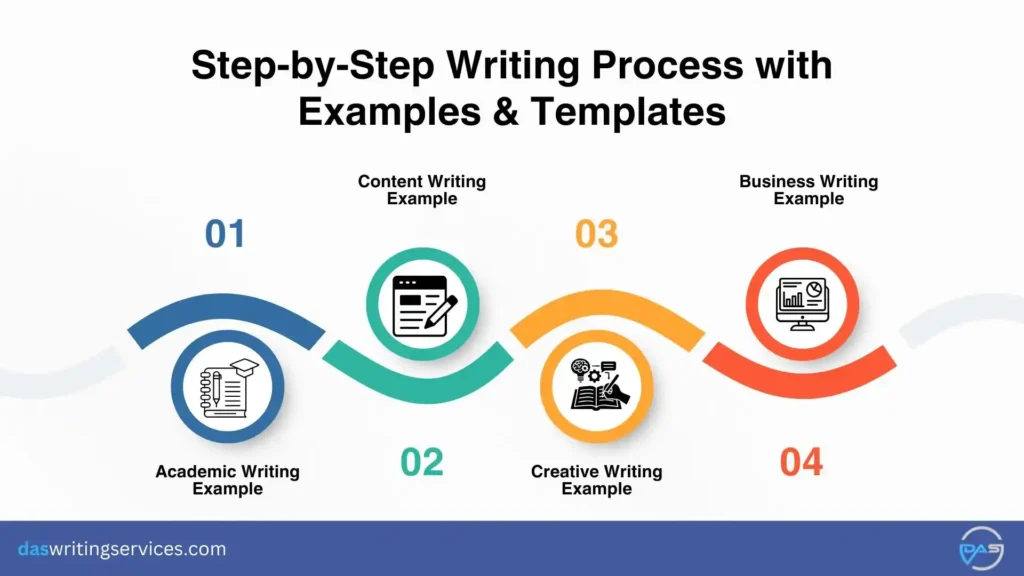
These stages of the writing process are universal across genres and forms of writing. Whether you’re drafting a blog, short story, or research paper, the underlying flow remains quite similar.
Step 1: Prewriting
It’s the stage where you gather thoughts, explore angles, and decide what your piece will actually be about. Think of it as laying the foundation of a building. The sturdier the base, the easier it is to construct everything else.
Brainstorming Ideas
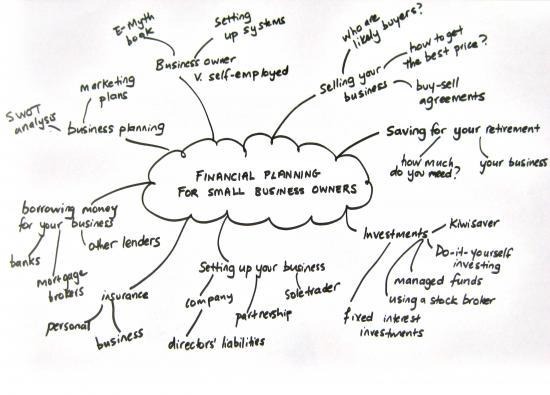
Brainstorming gives your ideas breathing room. You can jot down keywords, make mind maps, or simply freewrite everything that comes to mind without judging it.
For example, if you’re writing about “climate change,” brainstorming might lead you to subtopics like renewable energy, carbon footprint, or individual responsibility. You’re casting a wide net before narrowing down.
Researching and Gathering Information
This is where your vague ideas start taking shape. Whether it’s academic references, statistical data, or industry insights, this is the stage to collect published writings and primary and secondary reference material that makes your ideas more concrete and rich.
A pro tip: keep your references organized. Nothing derails the writing flow like losing a great source halfway through your draft.
Identifying Audience and Purpose
A blog post for professionals sounds very different from a classroom essay. Understanding who you’re writing for and why helps you decide the tone, structure, and complexity of your piece.
Know More: A Complete Guide for SEO Writing
Step 2: Planning & Outlining
Planning ahead is one of the effective ways to overcome writer’s block during drafting Once you’ve done the groundwork, it’s time to plan how you’ll bring it all together. This stage bridges your raw ideas with your actual draft.
Organizing Information & Outline Creation
Here, you’ll arrange your ideas logically as per the audience. Start with the big picture, your core argument or message, and then break it down into subtopics. Create a basic outline for your work. Here is what you will do:
- Plan the subheads or topics to cover
- Chalk out the points, ideas, references you will need for the subsections
- Determine narrative flow
Setting Writing Goals
Planning also means setting achievable targets. For example:
- 500 words before lunch.
- First draft in two days.
- Editing over the weekend.
Clear goals keep you accountable and prevent the writing from dragging on indefinitely.
Choosing Your Tone and Style
This is an often-overlooked step. Your tone depends on your purpose and audience. A research paper needs a formal tone. A lifestyle blog? More conversational. Locking this down early ensures your draft feels consistent.
Step 3: Drafting
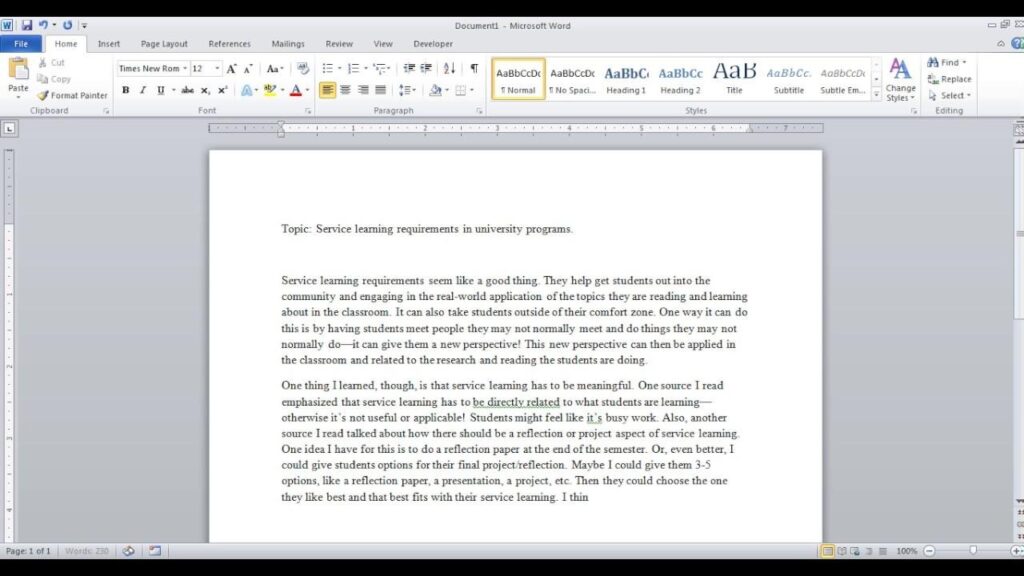
Drafting is the messy, exhilarating part. It’s where the plan and pointers turns into actual sentences. At this stage, perfection is your enemy. Your only job is to get the words out.
Writing the First Draft
Don’t overthink. Just write. Some writers prefer starting with the introduction, while others jump straight to the body and return to the beginning later. Brain dump your ideas in an empty document and you can revise it later.
Silencing the Inner Editor
A common mistake is trying to edit while you draft. That’s like stopping every two steps to tie your shoelaces—you’ll never reach the finish line. Keep moving even with typos, poor syntax, or grammar. You’ll fix things later.
Embracing Imperfection
A first draft is supposed to be rough. It’s clay waiting to be shaped. Remind yourself that no one else has to see this version.
Step 4: Revising
Writing is a recursive practice, which means you keep coming back to previous versions to make it better. The first draft is rarely good, but this where the difference happens. You will review the existing work, find holes in the argument or narrative and make the message clearer.
Structural Revisions
Start big. Look at the overall flow. Do your sections follow a logical sequence? Does your introduction set up what follows? Does your conclusion tie everything together?
Add revision checklist – infographic here
Clarity and Coherence
Here, you focus on transitions, tone, and whether your arguments build on each other smoothly. Reading aloud often helps identify awkward phrasing or jumps in logic.
Adding or Deleting Content
Revision isn’t just about fixing. Sometimes you’ll realize a paragraph is not reading well and rewrite it completely. Other times, you’ll find gaps and fill them in.
You may need to follow this step multiple times. For academic essays, and online content – this can be most challenging because many times you may to go back to the research stage to strengthen an argument or revise a statistics.
Do not fall for despair here, it may not seem like it but your work is actually getting better and better with each revision.
Step 5: Editing & Proofreading
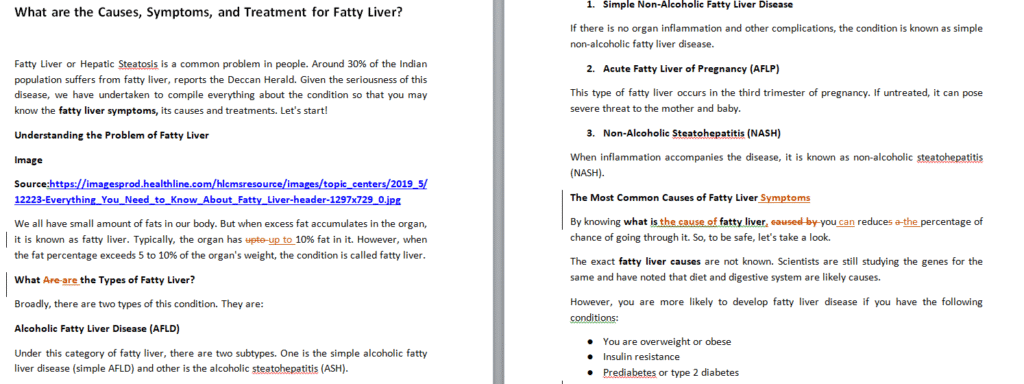
This stage is often confused with revision, but it’s different. Editing and proofreading deal with the micro-level details.
Grammar and Language Checks
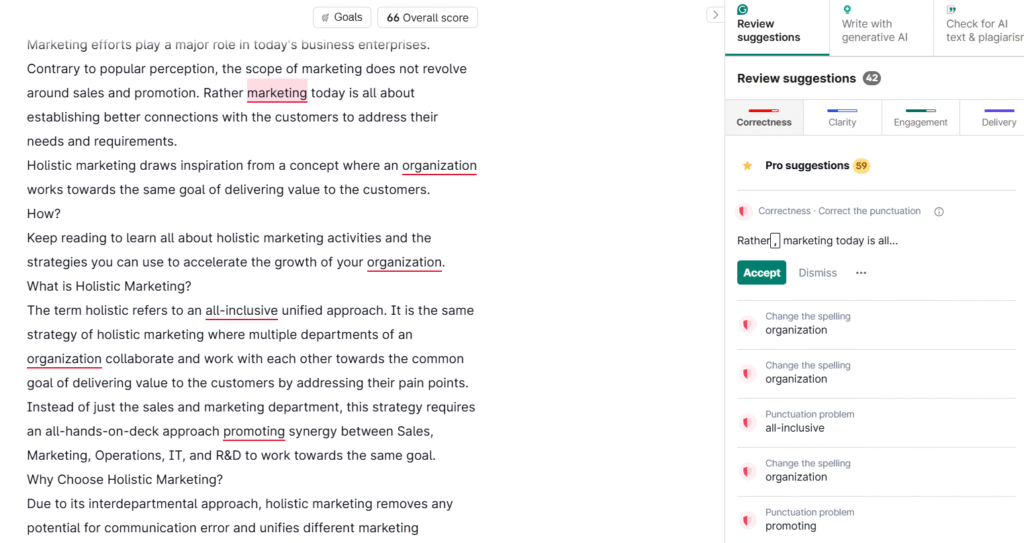
This is where you hunt for typos, grammatical errors, awkward phrases, and inconsistent punctuation. Tools like Grammarly can help, but your own eye is still your best friend.
Style Consistency
Check for formatting as per your target medium. For online publication, make sure your content is optimized for search engines. If you are writing an academic text following style guides like MLA or Harvard, go through the citations styles and format accordingly.
Proofreading Techniques
- Read your work backward sentence by sentence.
- Print it out. Errors hide less on paper.
- Take a break before proofreading—it helps you see the text with fresh eyes.
Step 6: Publishing & Sharing
The writing process doesn’t end when you type the last word. Publishing—whether it’s uploading a blog post, submitting an essay, or sending a proposal—is the final act of letting your work breathe in public.
Formatting for Readability
Make sure your work is easy to navigate. Use clear headings, short paragraphs, and consistent fonts. A clean format can make your writing more persuasive.
Platform Optimization
If you’re publishing online, think about SEO, meta descriptions, and visual elements. If it’s print, ensure proper citations and layout.
Know More: What is Content Syndication and How Should You Use It to Expand Reach?
Embracing Feedback
Publishing is also about learning. Feedback—whether from an editor, peer, or reader—helps you improve. Don’t fear it; use it.

Techniques & Tools to Make Writing Process Easier
Every writer has their tricks. Over time, you’ll develop your own. But here are a few tried and tested techniques that can make the journey smoother.
Prewriting Writing Techniques
- Freewriting: Write continuously for 10 minutes without stopping.
- Mind Mapping: Visualize how ideas connect.
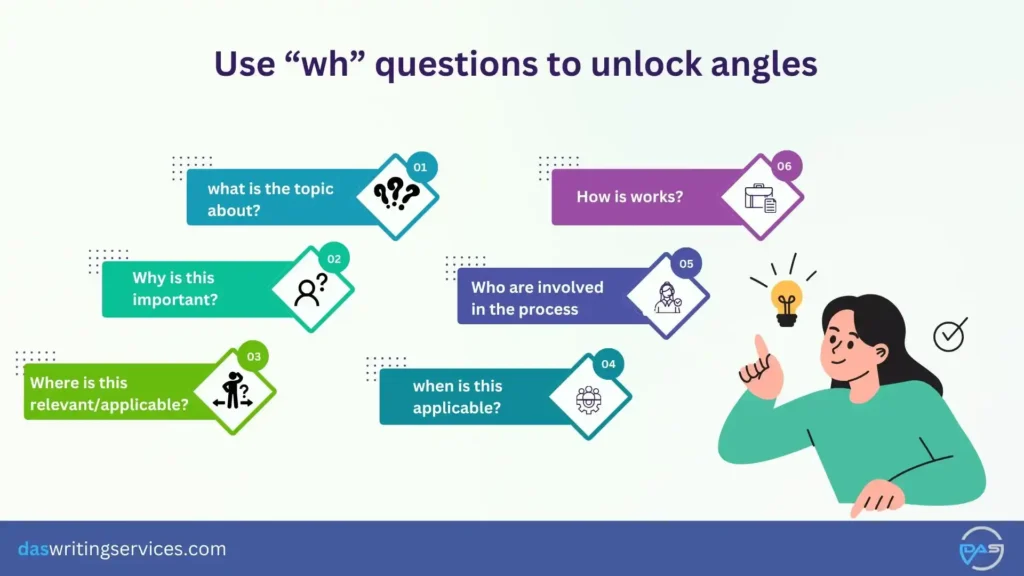
- Prompt Writing: Use “wh” questions to unlock angles.
Drafting Hacks
- Pomodoro Technique: 25-minute focused sprints.
- Section Writing: Write body paragraphs first, intro later.
- Zero Draft: Write a messy “thought dump” before the actual draft.
Revision Strategies
- Reverse Outlining: Create an outline from your draft to check flow.
- Highlight Method: Use colors to track structure and key points.
- Read Aloud: Your ears catch what your eyes miss.
Editing Tools
- Grammarly or ProWritingAid for grammar checks.
- Hemingway Editor for readability.
- Citation checker/SEO checker for alignment with industry standards.
Know More: Why Content Research is Vital to Create Effective Content?
Examples & Templates of Writing Process
In the examples below we are going further deeper to see how each of the typical writing steps looks like in practice.
1. Academic Writing Example: Research Paper on Climate Change
- Research: One begins by gathering peer-reviewed journals, government reports, credible climate studies and formulates the research question or thesis statement. They note key statistics like global temperature rise, CO2 levels, and impact reports.
- Planning: They create a structured outline: Introduction → Literature Review → Data Analysis → Discussion → Conclusion.
- Writing: Using a formal tone, they weave in citations and evidence to support their thesis on climate mitigation strategies.
- Proofreading: They fact-check citations, remove jargon, and refine transitions for clarity and flow.
Tip: Academic writing relies heavily on structured evidence, citations, and formal tone. The writing process ensures logical flow and credibility.
2. Content Writing Example: Blog on “10 Productivity Hacks for Remote Workers”
- Research: The writer explores trending LinkedIn posts, productivity apps, community posts and expert tips from credible blogs.
- Planning: Creating a clear flow of information: Hook → Problem statement → 10 Hacks with actionable steps → CTA.
- Writing: Using conversational tone, short sentences, and punchy transitions to keep readers engaged.
- Proofreading: Check for readability, grammar, and SEO optimization.
Tip: Content writing thrives on clarity, narrative flow, and engagement. Following the drafting strategies help bloggers create skimmable yet value-packed pieces.
3. Creative Writing Example: Short Story
- Research: The writer dives into character sketches, world-building notes, and plot outlines.
- Planning: They map out the story arc — Introduction → Conflict → Climax → Resolution.
- Writing: They focus on vivid imagery, emotional depth, and strong character voices.
- Proofreading: They refine pacing, tighten dialogue, and enhance sensory descriptions.
Tip: Creative writing inclines on imagination and emotion, but a process keeps the storytelling coherent and compelling.
4. Business Writing Example: Marketing Proposal
- Research: The writer analyzes market trends, past campaigns, and target audience data.
- Planning: They outline sections like Executive Summary → Objectives → Strategy → Timeline → ROI.
- Writing: They use persuasive language, structured bullet points, and brand-aligned tone.
- Proofreading: They ensure the proposal is crisp, jargon-free, and visually structured for quick scanning.
Tip: Business writing demands precision and persuasion. A structured writing process makes proposals more impactful.
Know More: 15 Content Writing Examples to Boost Your Marketing Game
Common Mistakes to Avoid in the Process of Writing
Even experienced writers stumble into these traps. Recognizing them early saves time and frustration.
- Skipping Prewriting
Diving straight into drafting without planning often leads to a messy structure and mid-draft panic. Prewriting may feel slow, but it actually speeds up the process in the long run.
- Editing While Drafting
Trying to fix every sentence as you write it is like running a marathon while tying your shoelaces every two minutes. Draft first, edit later.
- Ignoring Feedback
Your draft might feel precious, but feedback is what turns it into a strong final piece. Learn to separate yourself from the work.
Takeaway
The writing process is not a strict formula. It’s a flexible framework—a set of steps that help you turn abstract thoughts into tangible words. Once you make the process your own, writing becomes less intimidating and more deliberate.
You may skip a step sometimes. You may loop back and revise the outline halfway through drafting. That’s okay. In fact, that’s how most great writing happens.
So the next time you sit down to write, whether it’s a research paper, a blog post, or a novel, start with your process. The words will follow.

Ritish Dutta is a seasoned Content Developer with over 7 years of experience in the industry. Currently, at Das Writing Services, he writes SEO-optimized content that caters to our diverse clientele. Ritish utilizes his critical insights and experience to talk about digital marketing, SEO content writing, content strategy, and AI.


Leave a comment
All comments
Arghish Das
This is a really helpful article! I especially liked the tips on keyword research and writing catchy titles. How can we tell if our content is actually working?