
More than 80% of travellers rely on online travel blogs and personal travelogues for inspiration when planning their trips. It only highlights the growing influence of well-crafted travel narratives.
With the travel and tourism industry receiving more than 2/3rd of their revenue from online channels, travel blogs or travelogues are the silent engineers driving this shift.
But, writing a travelogue is not just a recount of places visited. To be effective, it must blend creativity with thorough factual information.
This guide will provide you with essential tips to craft memorable travel stories that resonate with your readers and leave a lasting impression. If you want to find out more about creating a travelogue, connect with our experts below.

What is a Travelogue Writing?
Travelogue writing is an account of your travels, capturing the essence of your experience that informs and encourages the readers. It is a dynamic blend of storytelling, personal reflection and helpful information for travellers.
Whether you are travelling to a bustling city or a remote village, a travelogue should engage the reader with visual descriptions and offer practical value – in terms of planning a trip, highlighting notable locations, their relevance, and other technical details they may need such as timing, prices and so on.
Also Read: Step by Step Guide to Writing a Travelogue
13 Tips for Writing an Excellent Travelogue
Crafting a travelogue that captivates your audience requires a blend of storytelling, attention to detail, and creativity. Here are 13 tips to guide you on your travelogue writing journey:
1. Do Your Research First
Before setting off, research your destination. Understand the history, culture, and must-see spots. This foundation will enrich your narrative and provide context for your observations.
Travelogue writing format research helps you provide accurate information and adds depth to your travelogue. It also allows you to share little-known facts or hidden gems that can intrigue and educate your readers.
Explore travel guides, local blogs, and historical accounts of the destination. Learn about cultural norms, popular attractions, and off-the-beaten-path locations. This preparation will enable you to craft a more informed and engaging narrative.
2. Keep a Journal
Document your journey in real time. Capture your thoughts, emotions, and reactions as they happen. These raw notes will be invaluable when you sit down to write your travelogue. Memories can fade quickly, and details can be forgotten.
Keeping a journal ensures that you do not lose those fleeting impressions, unique observations, or spontaneous thoughts that can add richness to your story.
Carry a small notebook or use a note-taking app on your phone. Jot down your experiences, sights, sounds, and interactions throughout the day. Include personal reflections and any interesting dialogues you overhear or partake in.
3. How to Introduce Your Story
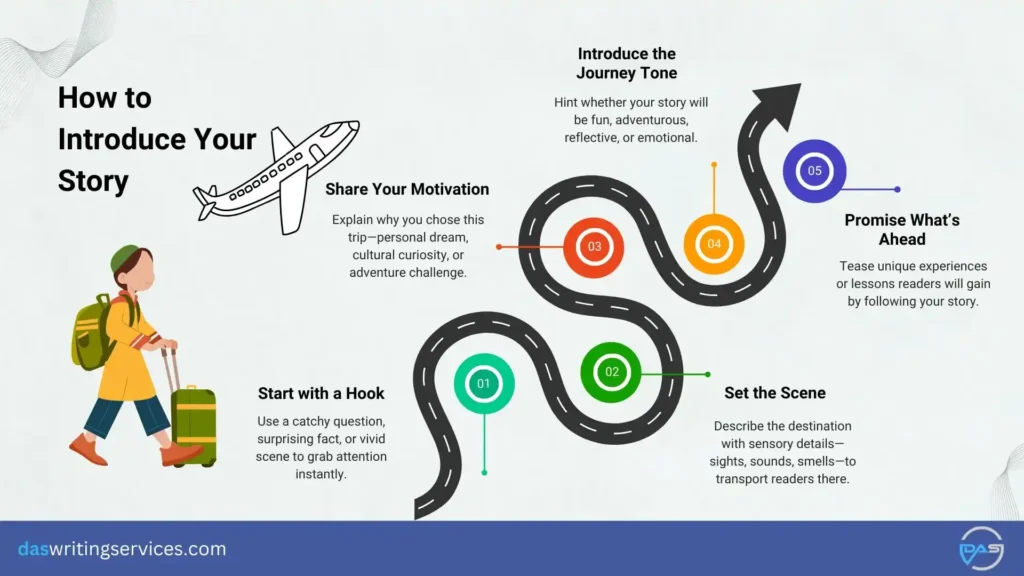
Start your travelogue writing with a compelling introduction. Whether it is an intriguing anecdote, a startling fact, or a vivid description, your opening should grab the reader’s attention. The introduction sets the tone for your entire travelogue.
A strong opening draws reader in, making them eager to continue reading. It is your chance to hook them with something memorable or thought-provoking. Begin with a scene that encapsulates the essence of your journey.
You might start with a sensory description, a moment of tension, or an encounter that had a significant impact on you. The goal is to create curiosity and pull the reader into your narrative.
Wondering how? Ask for a sample to learn how the experts do it

4. Choose Your POV Wisely
Decide on the point of view that best suits your story. A first-person perspective offers intimacy and immediacy, while a third-person view might provide broader insights. The point of view (POV) you choose affects how your readers experience the story.
A first-person POV allows readers to experience the journey through your eyes, creating a personal connection. A third-person POV can offer a more detached, objective view of the events.
Consider what you want your readers to take away from your travelogue. If your journey was deeply personal and introspective, a first-person POV might be more effective. If you are aiming to provide a comprehensive overview of a location or event, a third-person POV could be better.
5. Personalize It
The signs of a good travel blog are they always have something personal. Some can be humorous while others travelogue writers prefer an intense, deeply personal narrative style. Share your personal experiences, thoughts, and feelings to create a connection with your readers.
Readers are drawn to authentic, relatable stories. By sharing your personal experiences, you make your travelogue writing more engaging and give readers a reason to care about your journey.
Do not shy away from sharing your emotions, challenges, and triumphs. Whether you are describing the joy of discovering a hidden café or the frustration of a missed train, these personal touches make your travelogue stand out.
6. About You
Give your readers a sense of who you are. Share why you travel, what you seek, and how your journey shapes you. This adds depth to your narrative.
Readers often want to know the person behind the story. By sharing a bit about yourself, you create a deeper connection and help readers understand your motivations and perspective.
Include a brief introduction about yourself in the travelogue writing. Mention your travel style, interests, or any particular goals you had for the journey. This context helps readers relate to your experiences and see the journey through your eyes.
7. Conjure Up an Atmosphere
Use descriptive language to create an atmosphere. Whether it is the hustle and bustle of a market or the serene beauty of a landscape, your descriptions should transport the reader.
Atmosphere sets the mood for your travelogue and helps readers immerse themselves in your experiences. The more vivid and sensory your descriptions, the more engaged your readers will be.
Focus on the sensory details that define a place—sights, sounds, smells, textures, and even tastes. Describe the colors of the sunset, the aroma of street food, or the feeling of cobblestones underfoot. These details create a vivid picture in the reader’s mind.
8. Integrate Dialogue
Dialogue can bring your travelogue to life. Include conversations with locals or fellow travellers to add authenticity and immediacy to your story.
Dialogue adds realism to your travelogue, allowing readers to hear the voices of the people you meet and gain insight into their personalities and perspectives. It breaks up narrative text and makes your story more dynamic.
Recreate conversations you had during your travels, capturing the essence of what was said. Even if you do not remember the exact words, you can paraphrase while maintaining the spirit of the exchange. Dialogue can also reveal cultural nuances and provide context for your observations.
9. Engage the Senses
Do not just tell your readers what you saw. Describe what you heard, smelled, tasted, and touched. Engaging the senses makes your travelogue more immersive.
Sensory details allow readers to experience the environment as you did. By engaging multiple senses, you create a more immersive experience, making your travelogue more compelling and memorable.
Pay attention to the sensory details around you and include them in your writing. Describe the sound of waves crashing, the taste of a local delicacy, or the scent of fresh flowers in a market. These details make your narrative richer and more engaging.
10. Inject Humor
A little humor can make your travelogue more engaging and relatable. Share amusing anecdotes, cultural misunderstandings, or travel mishaps to add a light-hearted touch.
Humor adds personality to your travelogue and helps balance more serious or reflective moments. It makes your writing more approachable and relatable, encouraging readers to keep reading.
Share funny moments or cultural misunderstandings that happened during your travels. Did you struggle with the language? Did you get lost in a new city? These anecdotes can provide comic relief and make your travelogue writing more enjoyable.
11. Spice Up Your Narrative
Vary your sentence structure and use literary devices like metaphors and similes to make your writing more dynamic and engaging.
A well-spiced narrative keeps readers interested. By varying your sentence structure and incorporating literary devices, you create a more engaging rhythm and flow in your writing.
Experiment with different sentence lengths and structures. Use metaphors to draw comparisons and similes to add vividness to your descriptions. This variety makes your travelogue more enjoyable to read and adds depth to your storytelling.
12. Accuracy
Ensure the accuracy of the information you provide. Whether it is historical facts, writing a travelogue on your favorite place with accurate fact-checking is crucial to maintaining credibility.
Accurate information is essential for maintaining the credibility of your travelogue. Readers rely on your account to learn about the places you visit, so it is important to provide them with the correct details.
Double-check facts, dates, and names before publishing your travelogue. Use reliable sources to verify historical or cultural information, and correct any errors you find in your draft. This diligence ensures that your travelogue is both informative and trustworthy.
13. Edit and Proofread
The final step in writing your travelogue is editing. Trim unnecessary details, refine your descriptions, and proofread for grammar and spelling errors to ensure your narrative is polished.
Editing and proofreading are crucial for ensuring your travelogue is clear, concise, and free of errors. A polished narrative is more professional and enjoyable to read.
Set your draft aside for a few days before revising it with fresh eyes. Look for areas where you can tighten your writing, improve clarity, and enhance descriptions. After editing, proofread your travelogue carefully to catch any spelling or grammar mistakes.
Why is Travelogue Writing Important?
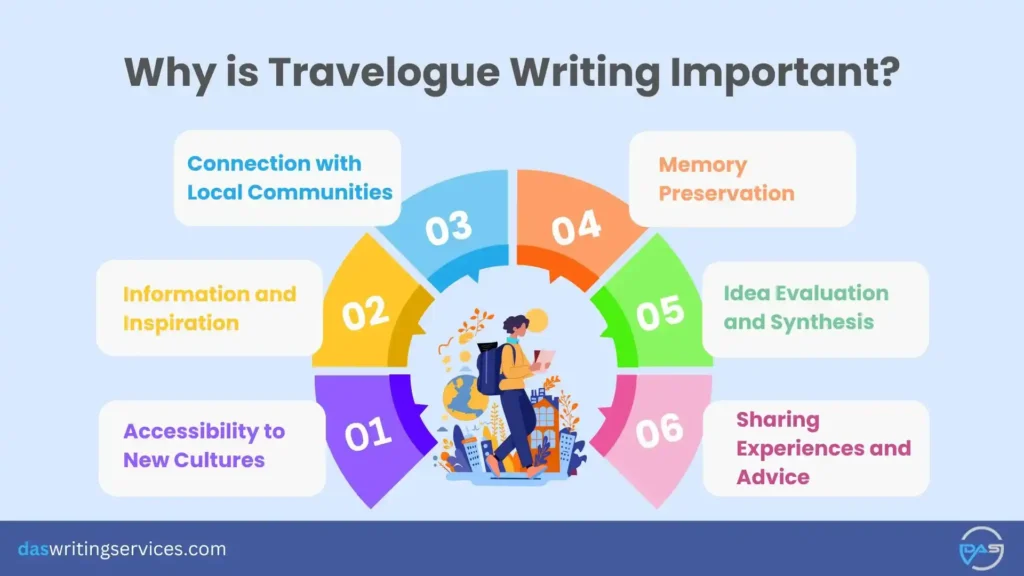
Travelogue writing serves multiple purposes, from preserving your memories to providing valuable information for future travellers. Here is why it matters for travelogue writing:
- Accessibility to New Cultures: A well-crafted travelogue can introduce readers to new cultures, traditions, and ways of life, making distant places feel more accessible and less intimidating.
- Information and Inspiration: Travelogues often contain practical tips, recommendations, and insights that inspire readers to plan their own trips. They provide a first-hand account that guidebooks often lack.
- Connection with Local Communities: By highlighting interactions with locals, a travelogue fosters a connection between the reader and the community, offering a more authentic and relatable perspective.
- Memory Preservation: Travelogues allow you to preserve the nuances of your experiences, helping you remember not just where you went, but how you felt, what you learned, and how you changed along the way.
- Idea Evaluation and Synthesis: Famous travelogue writers encourage deeper reflection on their experiences, helping you synthesise ideas and evaluate the journey’s impact on your worldview.
- Sharing Experiences and Advice: Through a travelogue, you share your experiences and lessons learned, offering advice that could be invaluable to someone planning a similar journey.
Also Read: Examples of Popular Travelogues
How to Engage Readers with Your Travel Stories?
Just dry documentation of one’s travel experience does not even cut the ice. Have you heard about El Dorado, the mythical city of gold? The origin of the myth is traced back to 16th century with Walter Raleigh writing A Discovery of Guiana. It convinced generations to fortune-seekers to chase the bounty. Imagine the engaging capacity of a single travelogue!
Of course, we are not talking about creating a myth, but you get the drift – it is all about engaging the reader. Here are some strategies you can use keep them hooked.
You May Also Like: How to Create Engaging Content
Tell a Specific Story
Focus on a particular event or experience based anecdotes. Specificity makes your travelogue more relatable and memorable.
Specific stories resonate more with readers because they offer a clear, focused narrative. Instead of a broad overview, a specific story provides depth and detail, making the experience more tangible.
Choose a memorable moment from your journey, whether it is an encounter with a local, a challenging hike, or a culinary adventure. Build your travelogue writing around this story, using it as a lens through which to explore the broader themes of your journey. If you are unable to write yourself or lack a finishing touch, hiring a top writing agency in India can be a wise option.
Describe the Outer World Using Vivid Descriptions
Use descriptive language to paint a vivid picture of the places you visit. Make the setting come alive for your readers.
Vivid descriptions transport readers to the location you are describing, allowing them to visualise the scene and feel as if they are experiencing it first-hand.
Focus on the unique characteristics of the place—its architecture, natural beauty, or atmosphere. Use specific, evocative language to describe the colours, shapes, and textures. For example, instead of saying “The sky was blue,” describe it as “a deep cerulean blue that stretched endlessly above, dotted with wisps of white clouds.”
Reveal the Inner World
Share your internal journey. Your thoughts, emotions and personal growth add depth to your travelogue and connect with readers on a deeper level.
A travelogue is not just about the physical journey, but also the emotional and intellectual one. By revealing your inner world, you allow readers to connect with you on a more personal level.
Reflect on how your experiences affected you. Did a particular moment challenge your beliefs? Did you experience a sense of awe or wonder? Share these reflections in your travelogue, offering insights into how your journey changed you.
Provide Informed Commentary
Enhance your narrative with informed commentary on the historical, political, or cultural aspects of the places you visit. This adds context and enriches your story.
Informed commentary provides readers with a deeper understanding of the places you visit. It adds layers to your travel blog, turning it into a rich, educational experience rather than just a series of events.
Research the history, culture, and politics of the destination. Include relevant background information in your travelogue, explaining how it relates to your experiences. For example, if you visit a historical site, discuss its significance and how it shaped the local culture.
Talk to Locals and Describe Your Interactions
Engage with local people and share your conversations. This brings authenticity to your narrative and provides unique insights into the culture.
Interactions with locals offer readers a glimpse into the culture and daily life of the destination. These interactions can reveal perspectives and stories that you would not encounter otherwise.
Strike up conversations with locals, whether it is a shopkeeper, a tour guide, or a fellow traveller. Pay attention to the nuances of these interactions—their language, gestures, and expressions. Include these details in your travelogue to add depth and authenticity.
Use a Conversational Tone
Write as if you are speaking to a friend. Avoid overly complex language, marketing jargon, or guidebook clichés. A conversational tone makes your travelogue more accessible.
A conversational tone makes your travelogue more approachable and enjoyable to read. It helps build a connection with your readers, making them feel like they are on the journey with you.
Write in the first person and use simple, direct language. Imagine you are recounting your trip to a friend, and let your personality shine through in your writing. Avoid jargon or technical terms that might alienate readers.
Begin with Intrigue
Start your travelogue with something intriguing—a mystery, a problem, or a captivating moment. Hook your readers from the first sentence.
The beginning of your travelogue is crucial for grabbing readers’ attention. An intriguing start makes them want to read more, setting the stage for the rest of your narrative.
Open with a scene that piques curiosity—a sudden challenge, an unexpected encounter, or a striking observation. For travelogue writing examples, you might start with “The road was supposed to be clear, but instead, we found ourselves surrounded by a sea of sheep.”
End with a Resolution
Conclude your travelogue with a resolution, a lesson learned, or a poignant reflection. Leave your readers with something to think about.
A strong conclusion leaves a lasting impression on your readers. It ties up your narrative and provides closure, while also giving readers something meaningful to take away.
Reflect on what the journey taught you, or how it changed you. Summarise the key takeaways from your experience, and end on a note that resonates emotionally or intellectually with your readers.
Takeaway
Travelogue writing is more than just documenting your journey, it is about crafting a compelling narrative that transports readers to the heart of your experiences. A well-written travelogue not only shares details about destinations but also invites readers to explore new cultures, reflect on personal insights, and feel the emotional highs and lows of your travels.
By incorporating vivid descriptions, engaging stories, and personal reflections, you can create a travelogue that resonates long after the final word is read.
Whether you are a seasoned traveller or just beginning your journey, these tips will help you turn your adventures into stories that inform, entertain, and inspire your readers to embark on their own travels.
Frequently Asked Questions
A travelogue is a detailed account of a specific journey or trip, often focusing on personal experiences, reflections, and storytelling. A travel blog, on the other hand, can include various types of content like travel tips, guides, and general travel-related articles in addition to personal travel experiences.
Yes, photos can enhance your travelogue by giving readers a visual sense of the places you are describing. However, ensure that your writing is strong enough to stand on its own, so the narrative remains engaging even without visual aids.
Break your travelogue into sections with clear subheadings, use engaging and varied sentence structures, and include anecdotes or personal reflections. Additionally, mixing in dialogue or sensory details can keep the narrative lively and engaging.
Yes, travelogues are about sharing personal experiences and emotions, which can resonate with readers regardless of your writing background. Focus on authenticity, vivid descriptions, and storytelling rather than perfect writing, and your travelogue will connect with readers.
Break your travelogue into sections with clear subheadings, use engaging and varied sentence structures, and include anecdotes or personal reflections. Additionally, mixing in dialogue or sensory details can keep the narrative lively and engaging.

Subhodip Das is the founder and CEO of Das Writing Services Pvt. Ltd. He has an experience of 12 years in the field of Digital Marketing and specialises in Content Writing and Marketing Strategies. He has worked with well-established organisations and startups helping them achieve increased Search Engine Rank visibility. If you want to grow your business online, you can reach out to him here.


Leave a comment