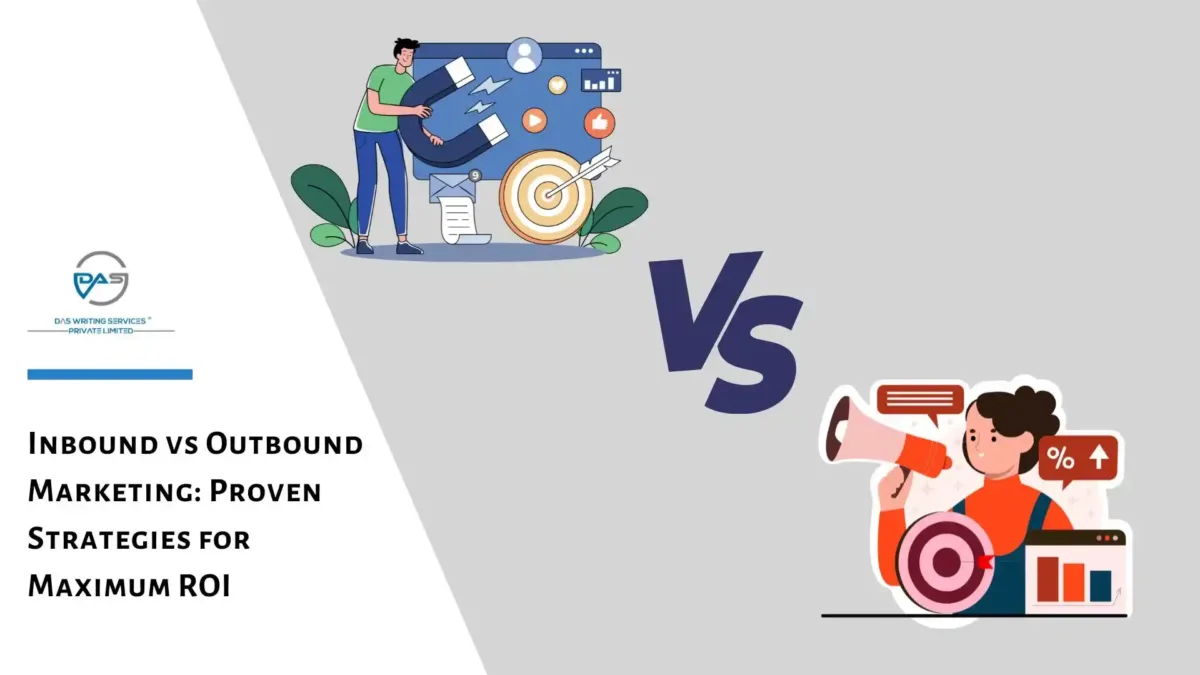
The difference between an inbound and outbound marketing campaign is straightforward – inbound marketing works by attracting users to the website with something of value. Whereas outbound marketing reaches out to the user.
So, when you see a kiosk in a mall giving out samples of a new ice cream – it is one of the classic outbound marketing strategies. In comparison an inbound marketing campaign would draw you in the website with value.
For instance, a gourmet vegan ice cream manufacturer may attract you to their website with a blog on benefits of a vegan diet. Only then, would they place the product in front of you.
So, between inbound vs outbound marketing, the promotional intent is quite indirect with inbound while for outbound campaigns, the promotional intent is more direct.
Prefer subtle brand promotions? Reach out to our experts on inbound marketing today.

7 Key Differences between Inbound and Outbound Marketing
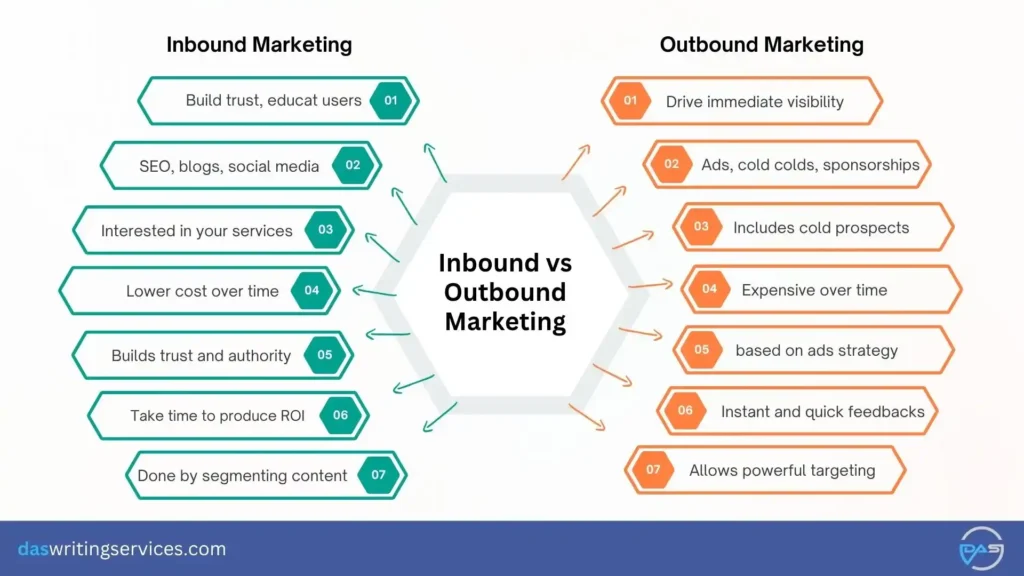
| Category | Inbound Marketing | Outbound Marketing |
| Goal | Build trust, educate and retain users with helpful content on website. | Drive immediate visibility with conversion by reaching out to people. |
| Channel | SEO, blogs, social media, webinar, case studies, whitepaper | Ads, cold colds, billboards, sponsorships |
| Target Audience | People who are already interested in your product/services | Wider demography which includes cold prospects as well |
| Cost Efficiency | Lower cost over time; offers sustainable engagement over time | Potentially expensive; engagement lasts as long as the campaign is running |
| Customer experience | Customer feels helped – less resistance. Builds trust and authority | Potential resistance towards interruption based strategy like ads |
| Impact time | Performance takes up to a year to produce ROI | Instant visibility and quick feedbacks for optimized budget allocation |
| Personalization | Done by segmenting content; ideal for lifecycle marketing | Allows powerful targeting in paid digital channels |
Also Read: Best Digital Marketing Channels for Engagement
Types of Inbound Marketing Channels
- Website blog posts
- Whitepaper and ebooks
- Infographics
- Educational videos
- Webinar
- Search engine optimization
- Social media marketing
Types of Outbound Marketing Channels
- Social media ads
- Cold calling
- Email marketing
- Event marketing
- Sponsorships
- PPC advertising
- Press Releases
Inbound vs Outbound Marketing: Which to Use
The type of marketing you go with ultimately affects the kind of brand identity your business commands. The decision can be tricky for a lot of businesses who are still at an early stage of its journey. But you may follow this cheat sheet for prompt decision-making.
Use inbound if:
- Looking for long-term brand growth
- Ready to invest time to sustainably create reputation
- Willing to create dedicated traffic sources
Use outbound if:
- Fast lead acquisition is preferred
- Willing to allocate larger budget in marketing
- Launching time/season sensitive campaigns or products
Looking for a marketing strategy that keeps giving compounding returns? Choose a marketing strategy
Know More: Top 17 Types of Branding with Examples
Inbound vs Outbound Marketing: Goal Based Use Cases Compared

| Business Goal | Inbound Marketing | Outbound Marketing |
| Brand Awareness | For long-term visibility with SEO, social media and organic reach Good for: Startups and niche brands | For quick reach with ads, sponsorships and mass emailers Good for: New product launches |
| Lead Generation | Effective for MoFU audience (nurture leads) via content, webinar, gated insights Good for: Knowledge and trust sensitive domains like SaaS & Fintech | Target wider audience base with PPC and direct mail campaigns Good for: Quick lead nurture in a competitive industry |
| Thought Leadership | Builds authority with blogs, whitepaper and case study Good for: B2B services & Consultancies | PR & Sponsored appearances Good for: Boosting established brand value |
| Engagement & Retention | To engage niche audience with original insights, survey, studies Good for: B2B companies catering to professionals | Engage and convert prospective buyers with offers and discounts Good for: Consumer facing brands looking to scale sales |
| Product Launch & Time Sensitive Offers | Build anticipation with blogs, teasers, BTS videos Good for: Demand generation in niche segments | Faster wide visibility with PPC and influencer shoutouts Good for: FMCG products with established market demand |
| Long Term ROI | Content marketing delivers compounding ROI over time Good for: Entering insulated industries with established players | Faster wide visibility with PPC and influencer shoutouts. Good for: FMCG products with established market demand |
Case Study of Inbound Marketing in India: Stable Money
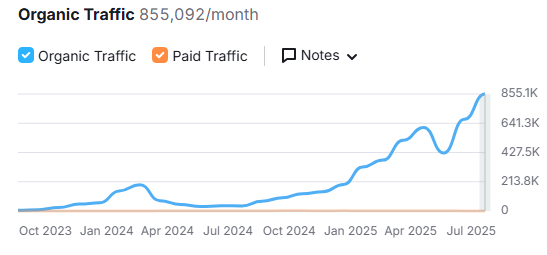
Companies notice more than 50% growth in sales by using inbound marketing to nurture prospects. Stable Money is one of the prominent examples of it. Started as a humble FD booking platform, Stable Money banked on India’s search for risk-free investment opportunities. With a thorough understanding of target user demography, Stable Money partnered with us to create strategic inbound marketing campaigns that grew their organic traffic acquisition steadily.
After the first leg of growth, Stable Money expanded their product offerings to include other investment instruments as well. To complement it, they launched a finance community – a comprehensive platform for investors to discuss and resolve their concerns.
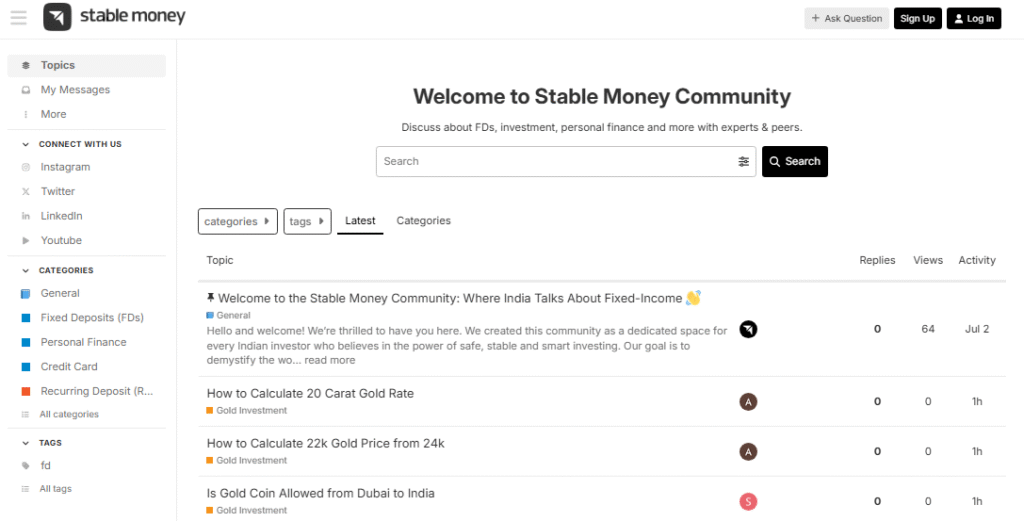
Analysis: By creating content first they were able to offer value and draw customers in the website. Eventually, with expansion, Stable Money is now hosting a dedicated platform that lets investors start conversations. This in turn helps the brand generate qualified inbound leads.
Case Study of Outbound Marketing in India: Frido
The consumer healthcare company, Frido, operates in a highly lucrative ₹8 lakh crore wellness industry. Here, innovations are frequent and earning consumer trust is a huge barrier. To mitigate the challenges, constant visibility is the key.
For such a segment, reaching out to the target group is vital to engage and convert them. With value propositions like foot care and pain relief through ergonomic products, they established their brand. Frido doubled down on this message with persistent outbound sales campaigns.
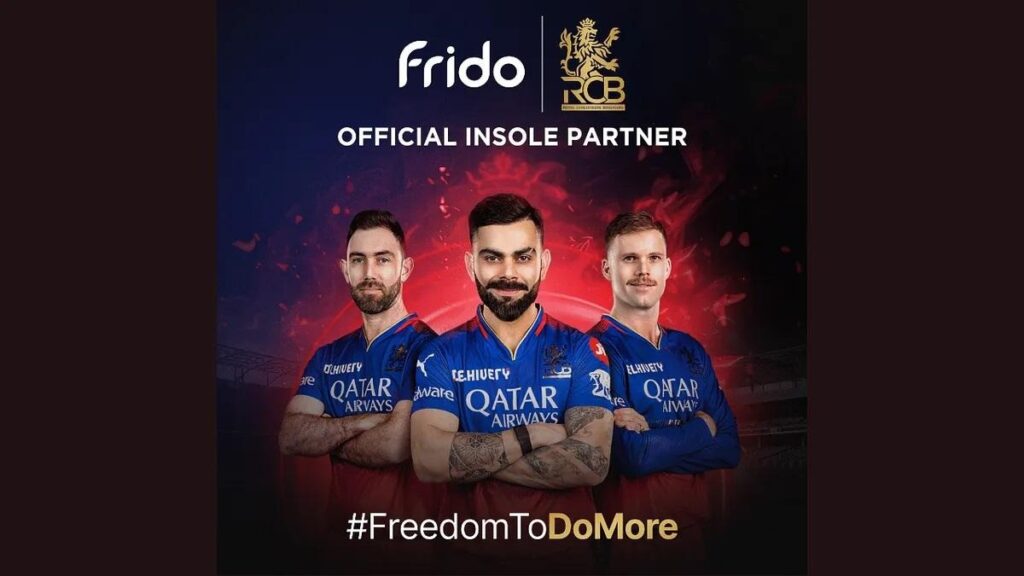
Along with social media ads with alluring offers, Frido also set out to sponsor the Bengaluru IPL team’s insoles. This boosted trust and credibility of one of the most popular SKUs i.e. the ergonomic and orthopedic insoles.
Analysis: Being a consumer facing brand with innovative solutions, for Frido inbound marketing would have taken a long way to sales. Rather by creating credibility with strategic sports partnership, Frido gained visibility among different age groups to accelerate their sales.
Takeaway
To be honest choosing between inbound vs outbound marketing strategies can be a bit tricky because it is not either-or kind of a deal. Each offers its unique benefits and drawbacks. For sustainable growth, businesses can choose a mix of both the channels to reap both short term as well as long-term benefits.
Frequently Asked Questions
1. Which is better, inbound or outbound?
Both inbound and outbound marketing serves different marketing goals and objectives. While some businesses actively need inbound marketing to create awareness, outbound marketing is more efficient for quick conversions.
2. Are paid ads inbound or outbound?
Generally paid ads are outbound – as the ads reach the customer and not vice versa. Yet, people are lately using ads creatively to attract customers at different stages of the buyer journey.
3. Does inbound work for all businesses?
Technically, inbound is beneficial for all businesses. But, depending on industry and market size the ROI will differ for inbound marketing.
4. Is SEO inbound or outbound?
SEO is an inbound marketing tactic. It uses search engines to create targeted content for audience groups. With specific, helpful content, SEO drives visitors to the website.
5. How can I measure inbound success?
You can measure the following KPIs:
- Website traffic source
- Visitor to lead conversion rate
- MQL (Marketing qualified leads) to SQL (Sales qualified leads) ratio
- Customer acquisition cost
- Customer lifetime value

Ritish Dutta is a seasoned Content Developer with over 7 years of experience in the industry. Currently, at Das Writing Services, he writes SEO-optimized content that caters to our diverse clientele. Ritish utilizes his critical insights and experience to talk about digital marketing, SEO content writing, content strategy, and AI.
Leave a comment