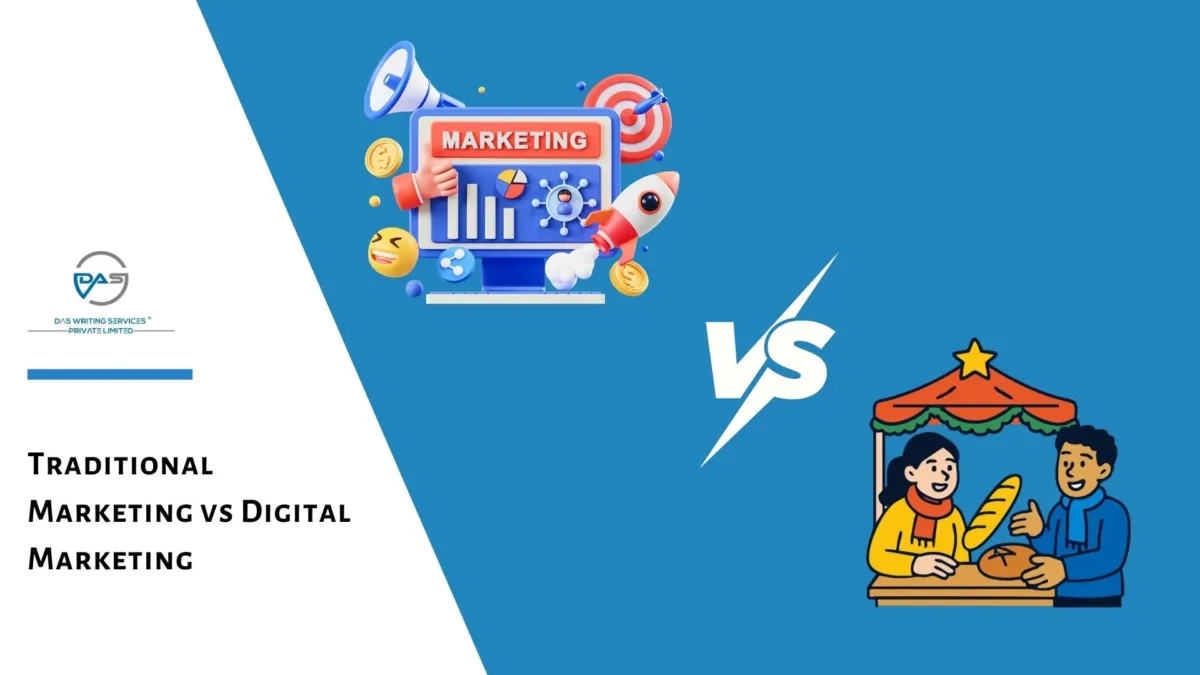

Get Free Content Sample

 Add as preferred on Google →
Marketing is one of the major pillars of any business. By enabling communication with the audience, marketing provides a channel to inform and educate people about products and services, thereby driving sales.
According to the GroupM Global Ad Forecast (2026), global advertising spending is expected to exceed $1 trillion for the first time. Digital advertising will reach about $835.82 billion, and this will account for 68.7% of total global ad spending.
Typically, the communication takes place via multiple channels like newspapers, TV, radio, billboards, sponsorships and so on.
However, in this age of seamless internet connectivity, new types of marketing strategies have emerged. This has created a clear difference between digital marketing and traditional marketing, primarily based on the media used for campaigns.
To better understand the traditional and digital marketing differences, the following comparison highlights the key aspects of both strategies.
Traditional Marketing vs Digital Marketing: What’s the Difference?
Back in the 90s and early 2000s, TV and radio ads really had their time. Almost all ads accompanied a witty and memorable jingle that made these brands and products a part of our childhood.
This rapid growth of internet users has significantly increased the digital marketing vs traditional marketing debate among businesses trying to decide the most effective strategy. The country is expected to have over 1 billion internet users and around 70% internet penetration by 2025.
As we are swamped today with subtle online ads all over the internet, popular Indian ads represent the golden age of traditional marketing before digital marketing came to redefine the marketing industry.
The table explains the difference between traditional and digital marketing in terms of reach, communication, targeting, campaign performance, and more.
| Specification | Traditional Marketing | Digital Marketing |
| Aim | The fundamental aim is to create brand awareness for a large section of the audience. | The aim is to engage and then guide the audience’s journey through the marketing funnel. |
| Scope | Traditional marketing is more effective for mass and offline audiences | Digital marketing is more suitable for internet users and tech-savvy audiences |
| Reach | Conventional marketing strategies have a limited reach, which restricts the marketing campaigns to a geographical area. | Digital marketing campaigns can reach a global audience without any geographic restrictions. |
| Medium | Traditional marketing uses conventional media like newspapers, radio, TV, billboards and posters to promote brand or product awareness. | Digital marketing uses the internet to promote a brand through search engines, social media ads, website ads, etc. |
| Communication | Uses one-way communication; the audience plays a passive role. | Promotes two-way communication; the audience plays an active role. |
| Cost | Due to its widespread distribution, traditional marketing operations tend to be more expensive. | Digital marketing has flexible budgets but can scale in cost. |
| Customisability | Once the campaigns are out, there is no scope to edit or customise them. | Even in the middle of a campaign, marketers can customise it for better performance. |
| Performance Tracking | Tracking the performance or effectiveness of conventional campaigns is not easy. | Tracking the performance and effectiveness of digital marketing campaigns is straightforward with tools like Analytics, SEMrush, and Google Ads. |
| ROI | Traditional marketing is a hit-or-miss approach which characteristically produces lower returns. | It is precise and accurate, thus producing higher returns on investments. |
| Conversion | The conversion rate is harder to track and measure. | Offers a higher conversion, which is easier to track and optimise. |
| Outcome | Generally, the campaign outcome gives long-term brand impact. | The results of the campaigns deliver faster, measurable results and are more effective. |
| Targeting | Targets a wider audience in a geographical location. | Targets audience with specific characteristics or preferences across different geographical locations. |
Know More: 7 Important Roles of Content Writing in Digital Marketing
What is Traditional Marketing?
Traditional marketing refers to conventional strategies for promoting a brand or a product to consumers. It uses established channels for communication, including television, radio, newspapers, flyers, billboards, text messages, etc.
Understanding these traditional methods helps businesses better evaluate the difference between digital and traditional marketing in modern marketing strategies.
Examples of Traditional Marketing:
- Newspaper advertisements published in The Times of India or The Hindu
- Television commercials by brands like Amul during prime-time shows.
Why Choose Traditional Marketing?
It is the most common marketing method that has been used by businesses for decades. Even today, in the debate between traditional marketing and digital marketing, traditional marketing offers enhanced customer engagement and boosts the credibility of the brand.
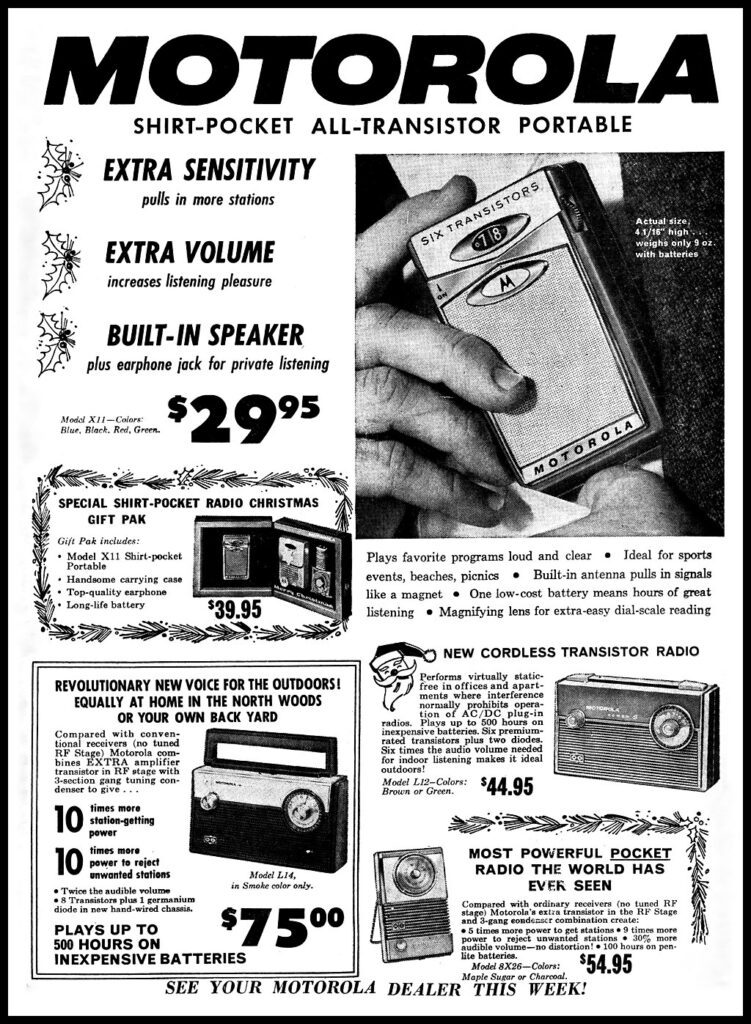
For instance, the above newspaper advertisement dates back to 1959, when Motorola would sell transistor radios. It is this strong brand identity that the brand leveraged to transition into different markets and products in later days.
The reason why many brands leverage conventional advertisement strategies to develop a robust brand image in society. The following are some of the features of traditional marketing:
- Creates intimate engagement between a brand and the audience
- Able to target the offline demographic
- Can foster wider brand awareness through billboards and event sponsorship
- More suitable for local businesses to create an immediate impact
- Targets larger audiences with general advertisements across newspapers and TV to enhance brand value.
What is Digital Marketing?
Digital marketing is an umbrella term including multiple marketing strategies like search engine optimisation, content marketing, email marketing, Google Ads, search engine marketing, influencer marketing, and affiliate marketing.
As the name suggests, digital marketing relies on the internet to generate awareness and curiosity among the audience to attract potential customers and convert them into paying clients.
These techniques highlight the traditional marketing and digital marketing difference, especially in terms of data tracking, audience targeting, and campaign optimisation.
Examples of Digital Marketing:
- Sponsored promotional posts on Instagram by influencers promoting fashion or beauty products.
- Paid advertisements on Google search results through Google Ads.
Know More: Essential Digital Marketing Tips for Beginners
Why Choose Digital Marketing
The benefits of digital marketing cannot be overstated. It offers more power and control to marketers to optimise and adjust a marketing strategy for optimal results. Enhanced customizability offered by digital marketing allows micro-targeting of the audience, thereby producing higher returns on investments for businesses.
Also, digital marketing strategies are mostly non-intrusive. The following is an example of Google Ads, which shows against relevant search queries.
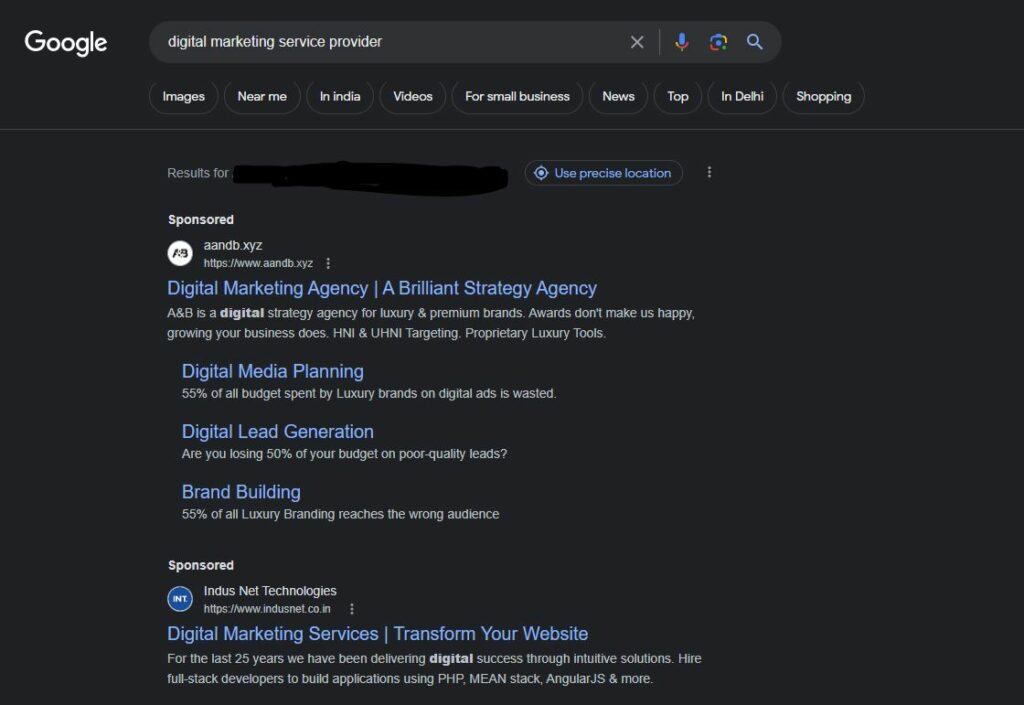
So, the ad will be seen only by people who are using the particular search query, ensuring higher CTR and qualified lead generation.
Some of the vital features of digital marketing include:
- Cost-effective
- Produces a higher return on investment
- Can target the global audience
- Allows data-driven performance tracking of ad campaigns
- Enables customizability of the campaigns.
- Can be implemented with minimal budget allocation.
To further differentiate between traditional marketing and digital marketing, it is important to analyse their advantages and limitations.
Pros & Cons of Digital Marketing
While marketing using digital channels is more seamless and efficient, online marketing has its own share of pros and cons. Learn about it below to make an informed decision:
Pros
- Offers flexibility
- Promotes two-way communication between the business and the audience
- Cost-effective solution
- Promotes informed decision-making with data-driven strategies
- Can have a global reach without additional costs
- Allows micro-targeting the audience as per the buyer persona for better results
Cons
- Mostly useful for an urban tech-savvy audience
- Easy to ignore with ad blockers
- Conversion is not straightforward
- Needs skilled professionals to assess the campaign performance
Know More: 13 Digital Marketing Channels to Focus on in 2025
Pros & Cons of Traditional Marketing
In spite of being typical and old-school, conventional marketing strategies have their own share of advantages for a certain category of businesses. Here is a list of the pros and cons of the same:
Pros
- Strong relationship with the audience and customers
- Target audience across all age groups
- Has more credibility
- Enhances brand value
- Useful to target offline users
- Wider impact
Cons
- Less scope for customization
- Difficult to track the performance of campaigns
- Can be expensive
- Restricted by geographical limitations
Digital Marketing vs Traditional Marketing: Final Verdict
One key point in the difference between traditional marketing and digital marketing is that digital marketing offers marketers more control over targeting, performance tracking, and campaign optimisation.
While the job of traditional marketers ends with releasing a campaign to the public, digital marketers continue to look closely into the campaign to gauge its effectiveness.
Digital marketing allows better control to nurture leads by guiding a user through different stages of the marketing funnel. This produces more effective conversions that stick around.
So, adopting a mix of both can be the best strategy for any business. Because digital marketing takes care of the present concerns about business and driving ROI, traditional marketing ensures to future-proof the business against competitors by establishing an unparalleled reputation.
Businesses require more than just advertisements to attract customers. They need high-quality, strategic content that aligns with their marketing goals and audience behaviour.
This is where Das Writing Services supports businesses by creating content tailored for both digital marketing and brand communication. Contact our team now!
How Das Writing Services Can Help Brands in Digital Content Marketing?
Content acts as the foundation of both traditional and digital marketing strategies. In traditional marketing, persuasive content is used in advertisements, brochures, and newspaper campaigns to build brand recognition.
In digital marketing, content becomes even more critical as it drives search visibility, audience engagement, and lead generation.
Professional content writing agencies like Das Writing Services help businesses bridge the gap between these two marketing approaches.
By producing SEO-friendly website content, informative blogs, landing pages, and marketing copy, businesses can strengthen their online presence while also supporting broader branding initiatives.
This integrated approach ensures that marketing campaigns remain consistent, informative, and aligned with user intent, which is a key factor for achieving sustainable digital growth.
Takeaway
When analysing the digital marketing and traditional marketing differences, businesses should consider their audience, marketing goals, and available budget.
To put it in a nutshell, digital marketing can efficiently take care of the present here-and-now stuff to boost your market reputation and draw new customers.
While digital marketing is more effective at driving business, traditional marketing strategies like offline advertisements work better to create an enduring brand image in the market.
From the perspective of our company, Das Writing Services, the most effective marketing strategy today is not choosing between digital and traditional marketing but integrating both approaches strategically.
Businesses that combine data-driven digital campaigns with strong brand storytelling often achieve higher engagement, stronger brand credibility, and better long-term results. Contact our team now and get started with the best content strategy.
Frequently Asked Questions
Typically, traditional marketing is costlier than digital marketing. Thanks to the multiple channels and strategies, digital marketing proves less costly than conventional marketing strategies.
Ad commercials on television are one of the most prevalent forms of traditional marketing strategies.
The vital difference between traditional and new marketing strategies is the medium used to run the campaigns. While traditional marketing utilises physical communication channels like TV, newspapers, billboards, etc., new marketing or digital marketing leverages the power of the internet to promote a brand or product.
SEO or search engine optimisation is an important type of digital marketing where webpages are optimised to increase visibility and drive new audiences to the website.
Some of the popular types of digital marketing include Search Engine Optimisation, content marketing, affiliate marketing, email marketing, social media marketing and PPC marketing.

Subhodip Das is the founder and CEO of Das Writing Services Pvt. Ltd. He has an experience of 12 years in the field of Digital Marketing and specialises in Content Writing and Marketing Strategies. He has worked with well-established organisations and startups helping them achieve increased Search Engine Rank visibility. If you want to grow your business online, you can reach out to him here.


All Comments
Anupam
Thanks for sharing insights into digital vs traditional marketings.
Teg Bahadur
Thanks for the insights! The pros and cons sections really helped clarify the strengths of each marketing types.
Shankari Roy
I used to think traditional marketing was outdated, but this blog showed me how it still plays a vital role in building brand credibility.