Did you know, around 73% of consumers prefer to buy a product or service from a company that communicates in their native language? In fact, when a user can connect with the content, platform engagement increases by almost 63%.
In a growing market where hyper personalization is the norm, content localization can give your website considerable engagement and in turn help drive minimum 2x more conversions.
So, let us discuss the ways you can localize your content and get the benefits. If you want a localization strategy that is optimized for your business – connect with experts below!

What is Content Localization?
Content localization is a strategic process of tailoring your communications according to the specific cultural, linguistic, and regional preferences of the audience. It goes far beyond translating your content from one language to another.
Localization process helps your content resonate with the targeted audience, helping you make your brand visible, relevant, and accessible to particular audience groups.
For instance, localizing a food product description for an Indian audience should involve communication in native language, using proper currency signs, adjusting tone, and using culturally relevant hooks to match Indian user expectations.
You May Also Like: 23+ Content Writing Topics to Increase Organic Clicks
Why Do You Need Content Localization?
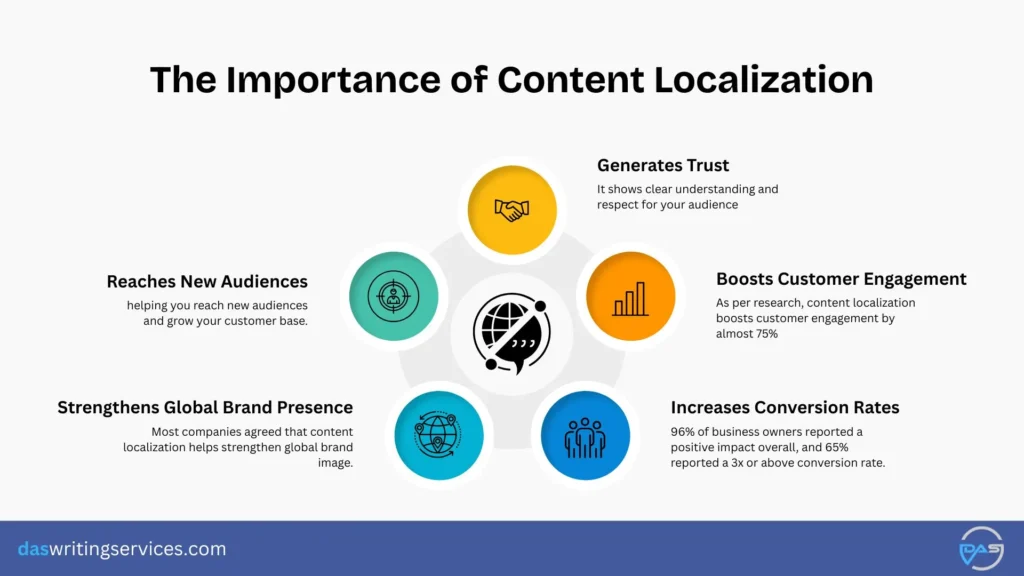
1. Generates Trust
Localized content reflects societal norms, user preferences, relevant images, and idioms suitable for the local market. It shows clear understanding and respect for your audience, helping develop trust and credibility.
2. Boosts Customer Engagement
As per research, content localization boosts customer engagement by almost 75%. When readers find content in their native language and reflect local culture, they connect better.
3. Increases Conversion Rates
With content localization, 96% of business owners reported a positive impact overall, and 65% reported a 3x or above conversion rate. That is why companies consider adopting localization strategies to achieve more ROI.
4. Reaches New Audiences
When you tailor content for different regions, your chances of exploring new markets increase by 35%, helping you reach new audiences and grow your customer base.
5. Strengthens Global Brand Presence
Most companies agreed that content localization helps strengthen global brand image to the audience, one of the significant benefits of content localization.
If you own a start-up and are looking for expert guidance to establish your brand presence in the global market then reach out for our all-inclusive content marketing packages that caters your marketing communication for local markets. Request your free sample now!

8 Best Practices for Content Localization to Fuel Global Growth
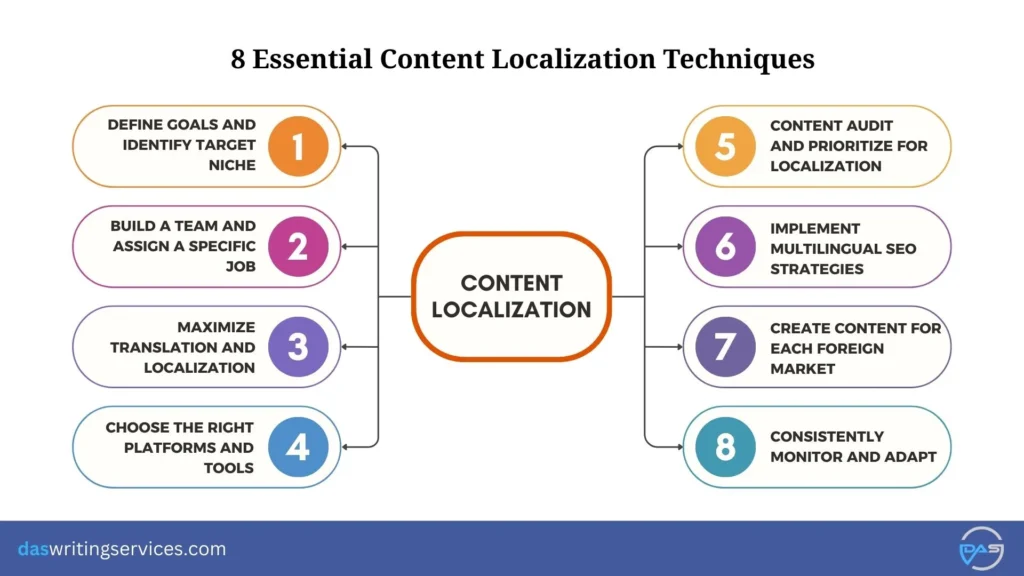
1. Define Goals and Identify Target Niche
First things first, be clear about what to achieve with these strategies. Do you want to
- Increase sales in particular areas?
- Improve user experience?
- Build brand awareness?
When you are clear about your goal, start researching your target market, specifically the target audience. Understand their cultural nuances, particular way of communication, and regulatory requirements, and find your local competitors.
2. Build a Team and Assign a Specific Job
Content localization is not a one-person job. To get it right, you need the right individual across departments to drive process alignment and accountability.
Appoint designers to create proper visuals that resonate with local audiences, developers to ensure the code supports multiple languages, marketers to design region-specific, high-impact campaigns, expert writers to create content material across different business verticals, and product managers to manage timelines and market-specific features.
3. Maximize Translation and Localization
Consider website localization by translating content into the target language(s). Moreover, ensure they include cultural sensitivity, linguistic accuracy, idioms, and other region or language-specific elements to enhance the appeal of your content.
Other than that, it is essential to maintain brand consistency across all localized content. For that, you need to follow a particular brand’s style guidelines and terminology.
4. Choose the Right Platforms and Tools
Different countries prefer different platforms when it comes to consuming content. For instance, WhatsApp is vastly popular in Europe, while WeChat dominates in China.
Similarly, the right content localization tools can get you where you want to go or what you wish to achieve. Translation management systems, like Smartling or Phrase, can seamlessly streamline the process of publishing and maintaining localized content.
5. Content Audit and Prioritize for Localization
Do you think all your content needs localization immediately? No, right? This approach only costs your time and budget and delivers little value.
Follow the 80/20 rule here to prioritize content for localization. Find out the 20% of your content that generates 80% of revenue from it gets uploaded. Most likely, that same content has the highest potential to create the most impact when localized.
6. Implement Multilingual SEO Strategies
When you include localized keywords or phrases into your content, the visibility automatically improves on regional search engines. So, rely on experts to optimize meta title, description, headers, and URLs.
Also Read: How to Rank Your Website on Google’s First Page
We, at Das Writing Services Private Limited, have proficient content writers in India. Our team not only delivers SEO optimized content writing services but also offers comprehensive content marketing solutions. So, contact us!
7. Create Content for Each Foreign Market
As of February 2025, 63.9% of the world’s population uses social media and 50% engagement comes from local Facebook pages. To reach these billions of people, you should consider the most popular platforms of a particular area to connect with your target demographic.
Sometimes, one social media account to emerge as a global brand would not be enough. Create specific accounts for every geographic area, optimize campaigns by keeping the cultural differences in mind, and build one level deeper connection with customers.
8. Consistently Monitor and Adapt
Continuous review and adapting localization best practices ensure your localized content is still relevant and aligned with the evolving preferences of your target market. So, follow the recent trends and apply them to build organic connections with your potential consumers.
When Should You Go for Content Localization?
1. Build a Genuine Relationship
If you want to develop a genuine, long-lasting connection with your customer, you need to speak in your customer’s language. It is one of the most effective ways to make them feel heard, understood, and valued.
2. Level Up Your SEO Performance
Imagine you run an online clothing store in Germany. If your landing pages and blog posts are not translated into German, your chances of ranking in the local market will be quite low, as most customers will search using German keywords and phrases. Also, research suggests that 50% of all Google queries are in different languages other than English.
3. Improve User Experience
Potential customers expect an immersive experience when reading a blog, browsing product pages, or chatting with your customer support team. So, you need to use localization strategies to provide that experience from start to finish.
4. Outperform Your Competitors
Suppose you run an online skincare brand in India. If your website and social media content are only in English, you could be missing out on a huge audience (over 528 million) that prefers browsing content in Hindi. Localizing your content into Hindi can help you not only connect better but also gain a competitive edge.
5 Types of Content Localization & Use Cases
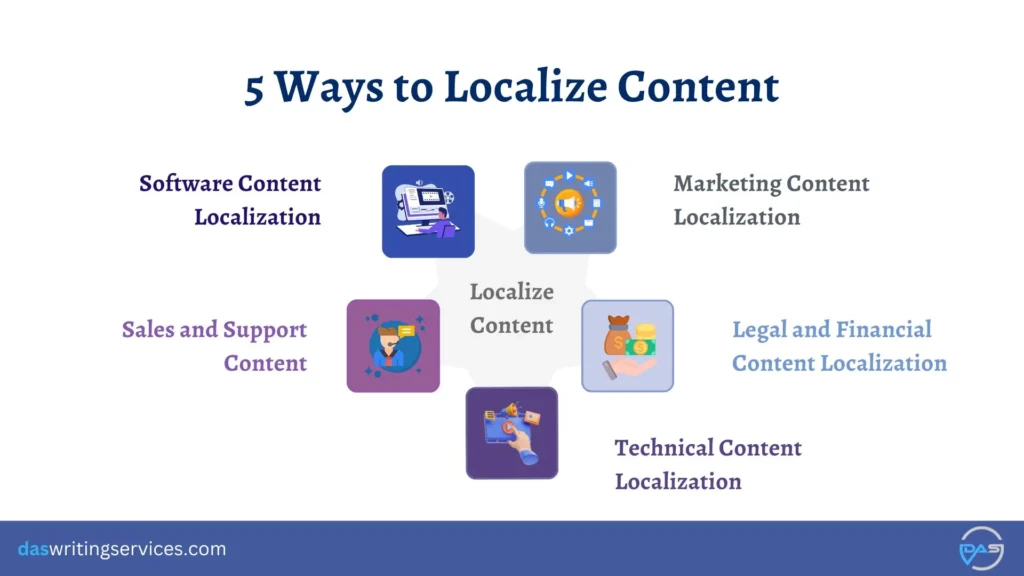
1. Marketing Content Localization
Content materials, including brochures, pamphlets, and flyers, are used to promote your products and services. Simply translating them is not enough to engage your audience. To truly connect, you need localization strategies, like adapting the design, visuals, and messaging to reflect local culture.
This makes your marketing materials not just readable, but also relevant and relatable to the target audience.
Used by: global businesses seeking local clients
Good for: Creating loyal audience, increase returning customers
2. Legal and Financial Content Localization
It is essential when expanding to new markets. Legal content, such as local regulations related to establishing entities, terms and conditions related to hiring employees, registering intellectual property, data security, etc., needs localization over translation as employment benefits, legislation, and formats can vary between regions.
It is best to take the help of legal and financial localization experts for each region or country to ensure compliance accuracy.
Used by: Multinational corporations
Good for: Ensure compliance with local authorities
3. Technical Content Localization
Technical documents, such as product manuals, documentation, or how-to guides, convey valuable information to the customers about using your products or services with ease, so great attention to detail is essential.
Here also, you need expert technical translators who have industry-specific knowledge required for content localization.
Used by: Global corporation
Good for: Engage new users and reduce
4. Sales and Support Content
Sales and support content includes transactional emails, customer communications, surveys, FAQ pages, help documents, and chat support. By localizing this content—adapting the tone, using local communication styles, and including familiar idiomatic expressions- you can create a stronger connection with your audience and offer an engaging experience.
The language tone can vary based on the content type. It will be personal for chat support content and impersonal for help docs.
Used by: Any business operating in multilingual industry
Good for: Customer satisfaction and complain resolution
5. Software Content Localization
Software localization denotes the process of tailoring user interfaces (UI), user experiences (UX), and technical elements to align with local preferences. For instance, time and date formats, numerical digit display, and even color schemes may need to be adjusted to fit cultural norms.
It is advisable to consider software content localization tactics at the initial stage of development. It ensures your product’s relevancy to customers in the target market.
Used by: IT & SaaS Enterprises
Good for: Overcome language barrier in a new market
Which Tools Can be Used for Content Localization?
- Translation Management Systems (TMS):
TMS Tools like Smartling, Phrase, Lokalise, etc., help streamline content localization tasks and translation tasks.
- SEO Tools:
Advanced-feature backed SEO Tools like SEMrush, Wordstream, and Ahrefs help you get a list of region-specific long and short tail keywords.
- Testing Platforms:
Tools like UserTesting help bring human feedback to companies, helping content marketing, product, and UX teams evaluate every decision.
- Collaboration Tools:
Platforms like Slack and Trello bring teams together to work on localization projects effectively.
Case Studies: Brands That Excelled with the Help of Content Localization
- Uber
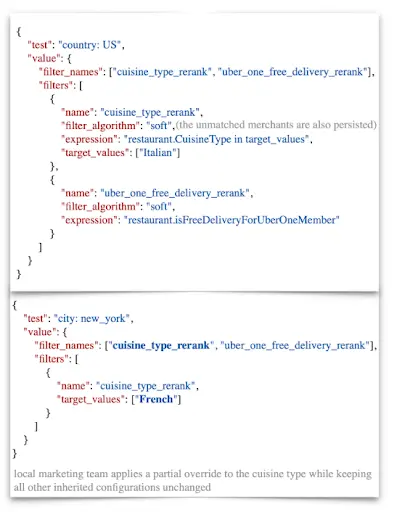
The above image was taken from Uber’s blog where they discuss the personalized marketing campaigns. This gives us a behind the scene view into how the ride hailing platform localizes marketing communications. From offering customized city specific services, Uber also tweaks the marketing communication based on user city and their habits and preferences.
- Coca-Cola

Coca-Cola designs its marketing campaigns considering local festivals and rituals. For instance, during Ramadan, they produce content targeting Muslim communities all over the globe. With more than 2.05 billion Muslims , personalized campaigns like this helps the company better engage audience.
- Canva
Insert Canva south korea vs Norway image
Canva’s marketing content localization strategy is a masterclass at effective optimization for target audiences. The following are two distinct landing pages for Norway and South Korea. Not only do they translate the caption and texts based on the countries, but the templates are also tailored as per the local cultural preferences.
How to Measure Your Localization Success?
1. Engagement Metrics:
Monitor how many likes and shares you are getting after implementing localization strategies. It helps track the audience engagement rate.
2. Session Time:
For on-page marketing content, average user session time is a vital metric indicating usefulness of the localization campaign. Having an average 50s to 1 minute session time is usually good enough.
3. Conversion Rates:
Monitor how well localized content is performing in terms of driving sales or filling forms, sign-ups in specific regions. You can set up events via Google Analytics to track user journey from location optimized content pages.
Read More: A Complete Guide on Content Optimization for Better SEO
4. User Feedback:
You can also gather customer feedback through comments and user surveys to identify areas that need improvement.
Takeaway
In brief, content localization is no longer optional. It becomes a necessary step to consider for brands that want to connect with local audiences and drive engagement. In this process, you need the appropriate strategy, tools, and experts to get the desired outcome.
Frequently Asked Questions
Content localization, includes translating content into local language variations, creating marketing content that aligns with cultural preferences, customizing product descriptions, and adding subtitles in videos.
To create localized content, first research your target audience, prioritize content you want to localize, set goals, hire experts, and keep monitoring the performance metrics.
Content localization positively impacts SEO ranking. It makes content relevant to specific demographics and languages, thereby improving visibility and rankings in SERPs.
The primary two types of localization are linguistic, cultural and technical localization.
The primary purpose of content localization is to make content accessible and relevant to a specific target market by adapting it to their language, communication, culture, and other local preferences.

Ritish Dutta is a seasoned Content Developer with over 7 years of experience in the industry. Currently, at Das Writing Services, he writes SEO-optimized content that caters to our diverse clientele. Ritish utilizes his critical insights and experience to talk about digital marketing, SEO content writing, content strategy, and AI.

Leave a comment